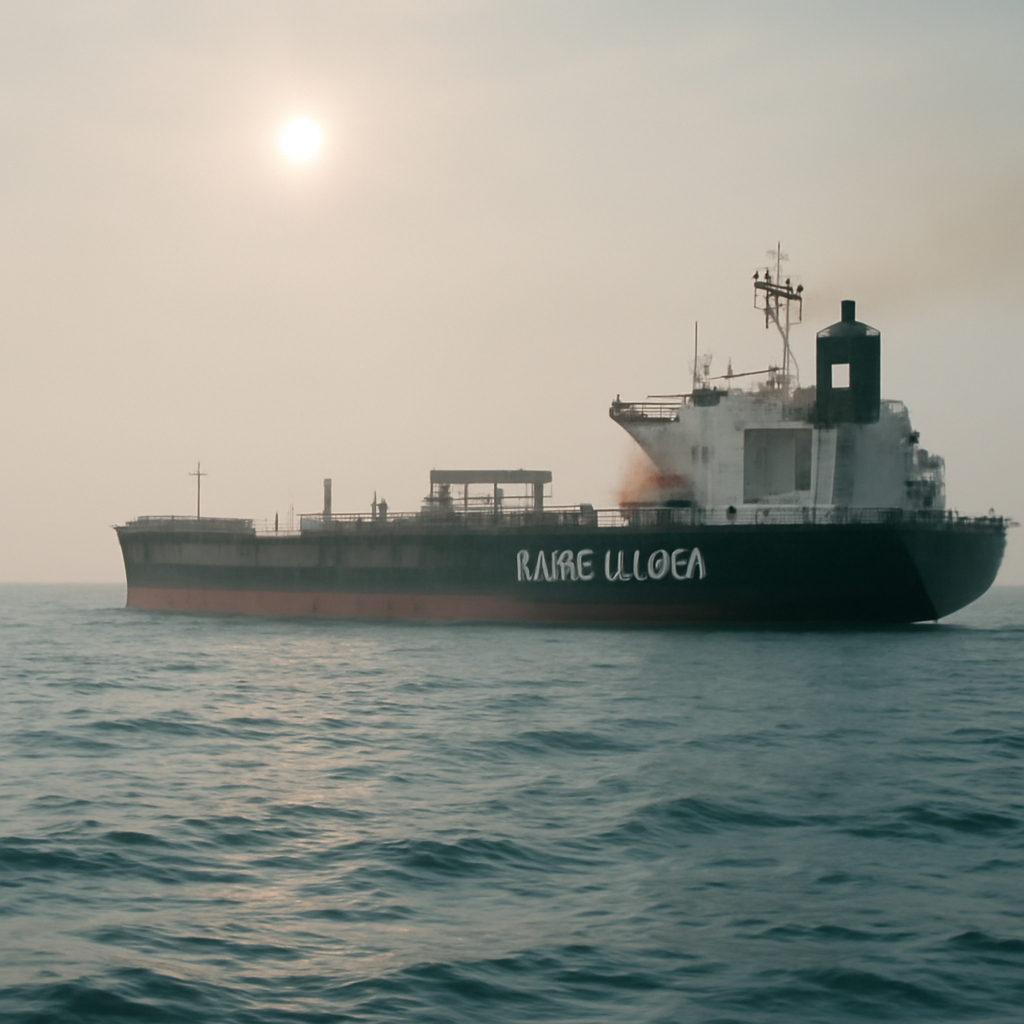
"By God’s grace, the Yemeni Armed Forces succeeded in striking the Saudi oil vessel Wafa in the northern Red Sea off the area of Yanbu, using a number of ballistic missiles — and the hit was precise, by God’s grace," Houthi spokesman Yahya Saree wrote on X.
What the Houthis say they have done
The Houthi rebels publicly claimed today that they struck the Saudi oil tanker NCC Wafa north of the Red Sea, off Yanbu, using ballistic missiles and achieving a "precise" hit, according to the group's spokesman Yahya Saree on X. The statement framed the action as part of an expansion of Houthi kinetic operations into the northern Red Sea aimed at preventing transits through the Suez Canal and enforcing what the group called a "blockade for blockade" equation.
Previous Houthi campaign and immediate verification
TWZ noted that the Houthis had already struck Saudi ships in the southern Red Sea and had attacked refineries along the northern Red Sea after imposing a blockade on the Bab al‑Mandeb Strait (BAM). The report also says there was no immediate statement from the Saudis and that TWZ cannot independently verify the Houthis' claims about the Wafa strike.

This site is the portfolio.
OSINTSights runs on Cloudflare Workers, D1, R2, and Vectorize, with an AI pipeline on Hetzner ARM. Nubivance designed, built, and operates it. We do the same for clients.
See what we buildEnergy routes: Yanbu pipelines, the Suez Canal and the risk to Bab al‑Mandeb
The kingdom has diverted "millions of barrels of oil per day" through pipelines to its Yanbu port on the Red Sea to reduce energy disruption caused by hostilities in the Persian Gulf, TWZ reported. That pipeline traffic has helped sustain exports even as tanker transits through the BAM have fallen sharply. The Suez Canal remains an important alternate artery for Saudi energy shipments, but routing via Suez increases export costs because ships must travel around Africa. TWZ warned that expanding Houthi attacks into the northern Red Sea — and direct strikes on Saudi oil terminals there — could make the canal route perilous and could render shipping moot if transfer stations are put out of operation.
Strait of Hormuz: mixed signals on reopening and U.S. involvement
Simultaneously, negotiations and military posture around the Strait of Hormuz show competing narratives. Axios reported that the U.S., Iran and Oman were "closing in on an interim agreement to reopen the Strait of Hormuz," describing a 60‑day temporary arrangement under discussion that would route inbound traffic through Iranian waters and outbound traffic through Omani waters, impose no fees during the interim and aim to clear the median lane of mines within 30 days. TWZ also cited Iran's Press TV cautioning that a bilateral Tehran‑Muscat deal would "not automatically lead to the immediate re‑opening" of the waterway, and Reuters reporting that a proposed deal would give Tehran control over ships entering the Gulf.
The political tenor was unmistakable: President Donald Trump told Fox News that negotiations were ongoing while warning that Iran would "get hit really hard" if it backed out, and he reiterated that Tehran "cannot have a nuclear weapon." At the same time, U.S. Central Command said the southern route along the coast of Oman "remains open" and that over the past three months "U.S. forces have assisted more than 1,000 vessels in successfully transiting the strait."
Maritime traffic, markets, and domestic politics
Real‑time traffic patterns are fragile. MarineTraffic reported that Strait of Hormuz crossings fell from 10 to 8 on 4 August, with seven vessels exiting the Middle East Gulf and one entering; five of those eight used the Iranian Unilateral Scheme and none used the Hormuz Traffic Separation Scheme. At the Bab el‑Mandeb, traffic rose from 25 to 34 on the same day, including 18 entering the Red Sea and 16 exiting, but the data also recorded "four dark transits, two sanctioned crossings and six shadow fleet movements."
Despite the tensions, Brent Crude prices were reported at slightly over $79 a barrel, down from nearly $85 the previous day. TWZ also underscored the wider toll of the conflict: 18 American troops killed, "hundreds more" wounded, depleted U.S. weapons stocks, and disruption to international relations and global financial markets. Domestic political pressure is visible in polling cited by Fox News: 56% of respondents oppose U.S. military action against Iran (40% "strongly" oppose), and nearly two‑thirds expect the conflict to last at least a year.
What this means for the United States, Saudi Arabia, and Egypt
- The United States: could face renewed pressure to protect shipping lanes and may have to divert resources back toward Red Sea operations — a prospect TWZ says could "pull resources away from Iranian‑focused operations."
- Saudi Arabia: is already routing "millions of barrels per day" through Yanbu pipelines and must weigh continued pipeline use, the vulnerability of Red Sea terminals, and the rising cost and risk of rerouting via the Suez Canal.
- Egypt: would likely face a major problem if Houthi actions threaten Suez Canal traffic and revenue, with TWZ noting potential impacts to the Canal’s income and freedom of movement that could widen the conflict.
The Houthi announcement shifts the geography of risk: what began as pressure in the southern Red Sea now threatens the northern approach to a global export artery. With contested claims about Strait of Hormuz arrangements, persistent naval escorts and fluctuating traffic patterns, the immediate course is uncertain — but the reported Wafa strike, if confirmed, would make the Red Sea itself a more hazardous chokepoint for oil flows and for the strategic calculations of regional and extra‑regional powers.