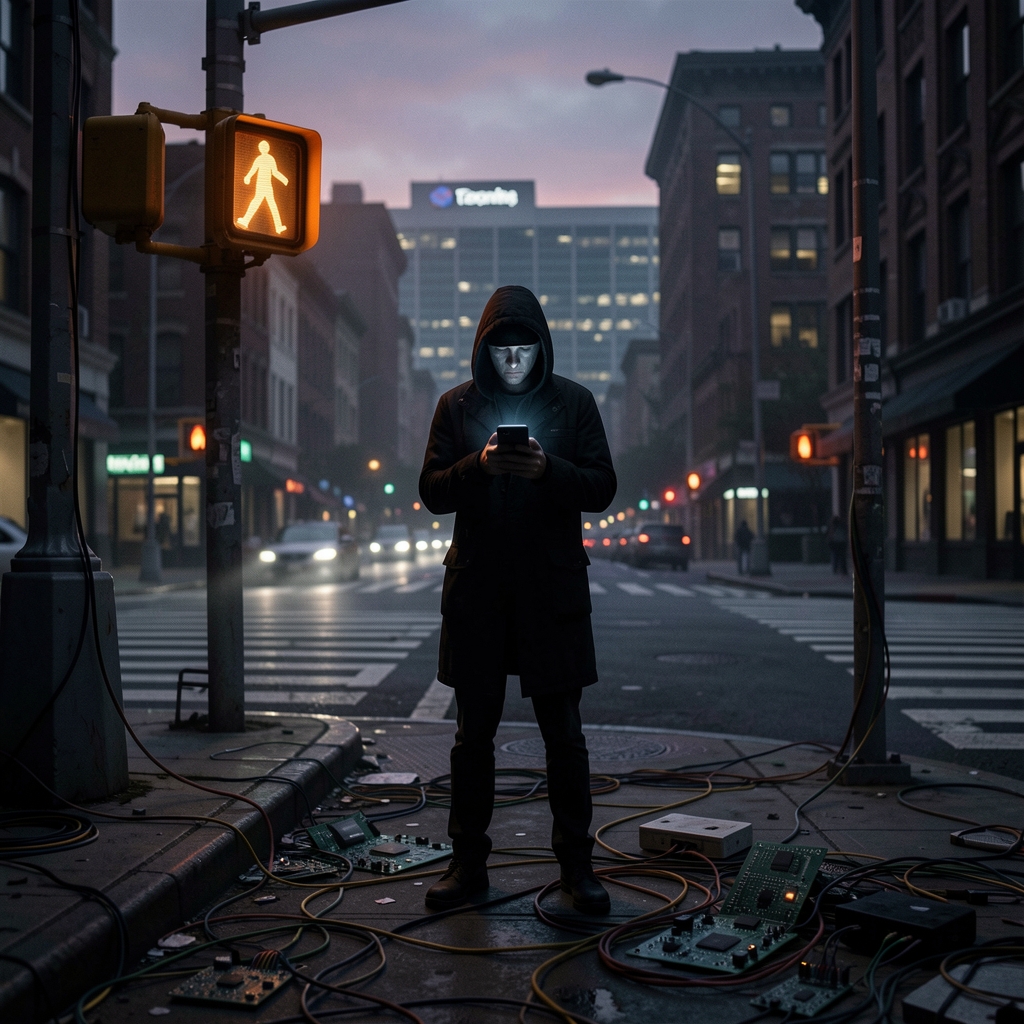
When Billionaire Voices Take Over: The Curious Case of Hacked Crosswalks
In an era where technology intertwines seamlessly with daily life, the recent hijacking of crosswalk buttons in several U.S. cities raises profound questions about security, trust, and the implications of artificial intelligence. Imagine pressing a button to cross the street, only to be greeted by the unmistakable voice of a billionaire tech mogul, offering a bizarre twist on pedestrian safety. How did we arrive at a point where the voices of Jeff Bezos, Elon Musk, and Mark Zuckerberg could be spoofed to guide our daily commutes?
The phenomenon, which has captivated social media and news outlets alike, is not merely a prank; it is a stark reminder of the vulnerabilities embedded in our increasingly automated urban environments. As cities adopt smart technologies to enhance public safety and efficiency, the potential for misuse becomes alarmingly apparent. The question looms: what safeguards are in place to protect the public from such digital hijinks?
To understand the current situation, we must first consider the context. The integration of technology into urban infrastructure has accelerated over the past decade. Smart traffic systems, including crosswalk signals, are designed to improve pedestrian safety and traffic flow. However, as these systems become more interconnected, they also become more susceptible to cyber threats. The recent incidents suggest that the hacking of crosswalk buttons was likely achieved through a combination of social engineering and technical manipulation, exploiting weaknesses in the systems that govern these public utilities.
As of now, reports indicate that the crosswalk buttons in cities like San Francisco and New York City were compromised, with the AI-generated voices of prominent billionaires replacing the standard robotic announcements. Local authorities have confirmed that they are investigating the incidents, but details remain sparse. The Federal Bureau of Investigation (FBI) has also been alerted, emphasizing the seriousness of the breach. In a statement, an FBI spokesperson noted, “We are aware of the situation and are working with local law enforcement to assess the implications of these actions.”
Why does this matter? The implications extend beyond mere inconvenience or amusement. The integrity of public infrastructure is paramount to urban safety. When citizens lose trust in the systems designed to protect them, the consequences can be dire. A compromised crosswalk signal could lead to accidents, injuries, or worse. Moreover, this incident raises broader concerns about the security of smart city technologies, which are increasingly relied upon to manage everything from traffic to emergency services.
Experts in cybersecurity and urban planning have weighed in on the matter. Dr. Emily Chen, a cybersecurity analyst at the Urban Institute, stated, “This incident highlights a critical gap in our approach to smart city technologies. As we integrate more AI and automation, we must also prioritize robust security measures to prevent exploitation.” Her insights underscore the need for a comprehensive strategy that includes not only technological safeguards but also public awareness and education about potential vulnerabilities.
Looking ahead, the fallout from these incidents may prompt a reevaluation of how cities implement and manage smart technologies. Policymakers may be compelled to establish stricter regulations governing the security of public infrastructure. Additionally, there may be a push for greater transparency in how these systems operate and are maintained. As cities continue to evolve into smart ecosystems, the balance between innovation and security will be crucial.
In conclusion, the hacking of crosswalk buttons serves as a cautionary tale about the intersection of technology and public safety. As we navigate this brave new world, one must ponder: how do we ensure that the voices guiding us—whether they belong to billionaires or automated systems—are trustworthy? The answer may lie in a collective commitment to safeguarding our digital landscapes, ensuring that they serve the public good rather than becoming tools for mischief.



