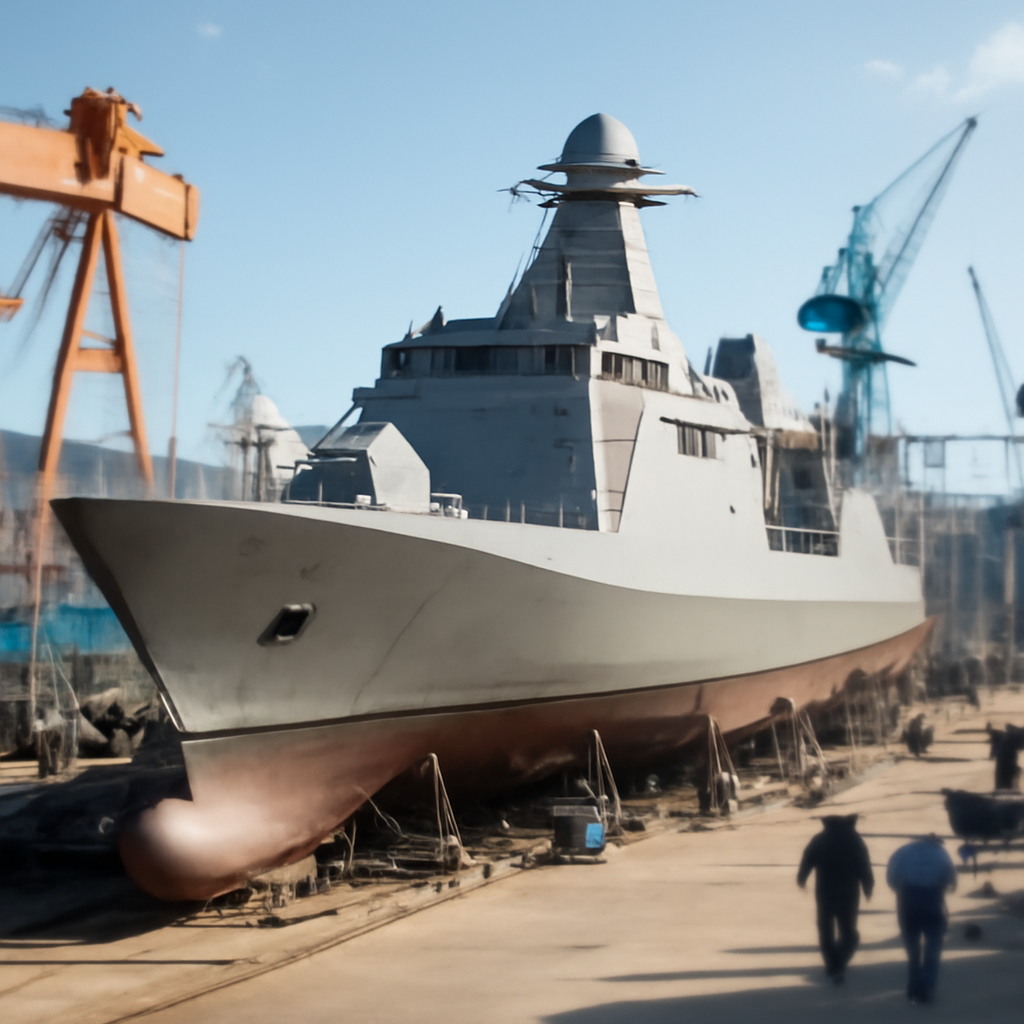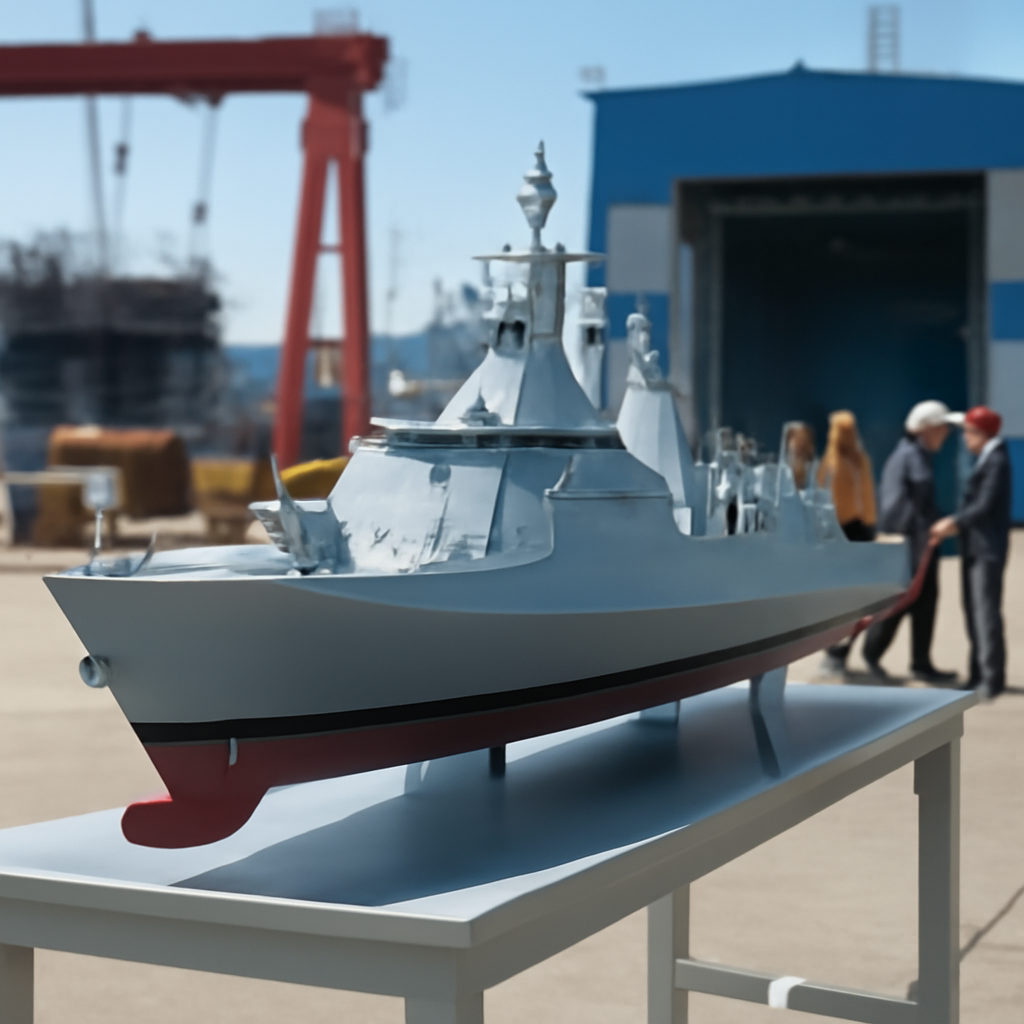
"It is better to have a tough ending than a drawn-out state of limbo," Defence Minister Boris Pistorius said as Berlin announced on 24 June 2026 that it is cancelling the F126 anti‑submarine frigate program and moving to procure Multi‑purpose Combination (MEKO) A‑200 DEU frigates from Thyssenkrupp Marine Systems (TKMS).
Why the F126 was halted and what the ministry cited
The Federal Ministry of Defence (BMVg) ended what would have been Germany’s largest post‑war surface‑combatant program after finding “significant delays, steep cost growth and ... unpredictable program risk.” The F126 program — originally awarded to Damen Schelde Naval Shipbuilding (DSNS) under a contract signed on 19 June 2020 and later known as the Mehrzweckkampfschiff 180 (MKS180) — had an initial contract value of around €10 billion (US$11.3 billion). Damen formally told the ministry it could not meet the agreed schedule or budget, with first delivery slipping to 2032 from an original 2028.
Berlin examined transferring prime‑contractor responsibility to Naval Vessels Lürssen (NVL), the shipbuilding group acquired by Rheinmetall. Negotiations on an NVL‑led continuation were placed at roughly €15.2 billion for six ships, but the ministry estimated the total financial requirement to complete the class at more than €18 billion — close to double the original estimate. The BMVg also concluded that a contractor change would have required waiving potential damage claims against Damen, a step it said would run counter to the responsible use of public funds. The ministry has spent about €2.3 billion on the program since 2020, and it sees little prospect of recovering damages; any claims against Damen are under legal review.
What TKMS’s MEKO A‑200 DEU offers instead
The Bundeswehr intends to procure up to eight MEKO A‑200 DEU frigates, subject to approval by the Bundestag’s budget committee (Haushaltsausschuss). TKMS describes the A‑200 family as a multi‑mission frigate built for “full‑spectrum 4‑dimensional warfare” across air, surface, subsurface and electronic‑warfare domains. The German design is reported at roughly 4,000 tonnes — a marked reduction from the F126’s planned 10,550 tonnes — and sits between TKMS’s in‑service A‑200 (near 3,600 tonnes) and the larger A‑210 marketed at about 4,700 tonnes.
TKMS product material emphasizes signature reduction measures: an X‑form hull, screened deck equipment, funnel‑less exhausts vented at or below the waterline with active cooling to suppress infrared signature, and a tri‑axial degaussing system to reduce magnetic signature. The propulsion is a Combined Diesel and Gas, Water‑jet and Refined Propeller (CODAG‑WARP) arrangement pairing two diesels driving refined propellers with a single gas turbine on a centreline water‑jet — a layout TKMS says provides both transit speed and low acoustic self‑noise, a key attribute for anti‑submarine operations.

This site is the portfolio.
OSINTSights runs on Cloudflare Workers, D1, R2, and Vectorize, with an AI pipeline on Hetzner ARM. Nubivance designed, built, and operates it. We do the same for clients.
See what we buildWeapons, sensors and the German fit
The BMVg said navy‑requested modifications account for about five percent of cost, signalling a near‑baseline design; the German configuration has not been formally disclosed. Reporting by hartpunkt (translated by Naval News) indicates TKMS’s offering for Australia supplied the basis for the German sensor and effector package, with radar and the combat management system (CMS) sourced from Sweden and a reduced role for German suppliers such as Hensoldt and Thales relative to the F126. That reporting also notes the Swedish CMS could ultimately be replaced by the German Navy’s emerging standard, the CMS 330 supplied by Lockheed Martin Canada.
On the ASW fit, the MEKO A‑200 DEU is to retain the Atlas Elektronik towed‑array sonar originally selected for the F126; that same system is being fitted to three F123 Brandenburg‑class frigates undergoing ASW refit to standardize the fleet’s sonar and embarked‑helicopter ASW package. Reported anti‑surface armament is the Kongsberg Naval Strike Missile (NSM) in preference to the Swedish RBS15. For air defence the baseline A‑200 pattern pairs a Mk 41 vertical‑launching system firing the Evolved Sea Sparrow Missile (ESSM) with a RIM‑116 Rolling Airframe Missile (RAM) point‑defence launcher; cell count and gun calibre for the German ships have not been confirmed.
Industry, legal fallout and timetable
TKMS said it began preliminary work in February and expects to deliver the lead MEKO A‑200 DEU in 2029, with subsequent ships following at intervals of about nine months. TKMS chief executive Oliver Burkhard called the decision “great news” and indicated scope to involve additional German yards if the four‑ship option is exercised. The BMVg’s procurement estimate places the first four MEKO A‑200 DEU frigates at roughly €6.3 billion (US$7.15 billion), with an option for four more — exercisable by the end of 2026 — at about €5.3 billion, for a combined €11.6 billion.
Damen’s formal notice that it could not meet schedule or budget triggered the exploration of alternatives and now leaves the scale of any damages claim under legal review. The BMVg said a change of contractor earlier would have required waiving potential claims — a condition it rejected as fiscally irresponsible.
How the German Navy, the Haushaltsausschuss, and shipbuilders will react
- German Navy and NATO: Inspector of the Navy Vice Admiral Jan Christian Kaack confirmed the MEKO A‑200 DEU design can fulfil the navy’s core ASW mission and Germany’s NATO obligations; the ministry characterized sea‑based ASW as both an alliance and a national priority.
- Haushaltsausschuss and policymakers: The Bundestag’s budget committee must now schedule and approve procurement. The committee has tracked the F126’s troubled history and will set the timetable and budget that determine whether the MEKO path proceeds at the proposed cadence and cost.
- Damen, NVL/Rheinmetall and TKMS: Damen faces legal review over the program’s collapse and potential claims; Rheinmetall‑owned NVL earlier proposed a continuation priced at roughly €15.2 billion; TKMS has an immediate commercial opportunity and anticipates accelerated work if the option for more ships is exercised.
Cross‑party voices welcomed the pivot. Bastian Ernst, the CDU/CSU parliamentary group’s spokesperson on naval affairs, said the F126 had been an over‑ambitious “jack‑of‑all‑trades” whose schedule conflicted with alliance commitments. The Bundestag’s Haushaltsausschuss now holds the decisive next step: approve the MEKO procurement and its schedule, or reopen debate over funding, timing and the remaining legal questions tied to the cancelled F126 program.