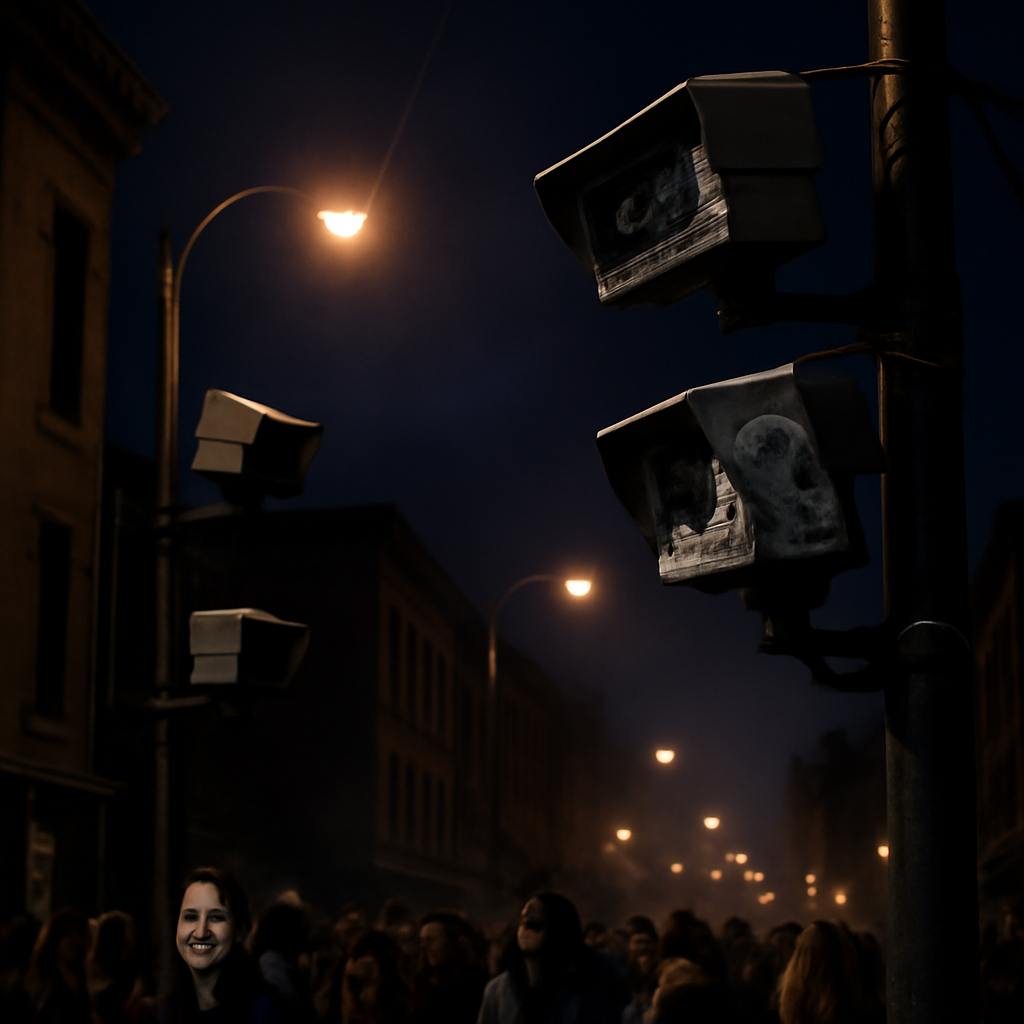
More than 36,500 social posts about a coordinated campaign to disable Flock’s automated license plate readers (ALPRs) appeared on X over two days, and similar calls spread across other platforms — a surge that has sharpened scrutiny of the company, its customers and the cameras dotting U.S. streets.
De‑Flock America social campaign and vandalism
This week, U.S. social media users began promoting Halloween 2026 as "a night of action" against Flock’s ALPR network, with posts grouped into a dedicated trending story on X that recorded more than 36,500 posts over two days. The messages encourage participants to wear costumes, leave their smartphones at home, disable nearby ALPRs while concealing their identities, and to move as a crowd. Similar calls appeared on other major platforms. Those online calls have coincided with an increase in vandalism targeting Flock cameras, according to reporting.
Flock media response: automated reply and apology
The Register reached out to Flock’s media team about the Halloween campaign and received an automated email that read: "Thanks for reaching out to Flock. Our media team is currently touching grass and taking a break. Unlike our cameras, we can't work 24/7, so we'll get back to you when we've had a snack and regained the ability to form coherent sentences." Separately, Flock CEO Garrett Langley issued a public apology after a documented stalking case involving the company’s system. "It kills me that she went through that," Langley told CBS News in an interview, remarks that came as the company announced a suite of operational changes.

Audit-ready is a season. It shouldn't be.
Evidence in spreadsheets, controls drifting between audits, frameworks multiplying on flat headcount. Nubivance runs continuous compliance on Rapid7 Cyber GRC - SOC 2, HIPAA, ISO 27001, PCI, CMMC.
End the scrambleDocumented abuses, ICE access, and the Goodson case
Coverage in The Washington Post highlighted 46 cases involving U.S. police officers abusing access to Flock’s system, with several alleging officers used the technology to stalk women. Reports have also said U.S. Immigration and Customs Enforcement (ICE) agents accessed local police forces’ Flock systems without a dedicated contract, a point that has been cited by Flock in shaping new controls. Separately, People reported that Haines City police officer Christopher Goodson, 31, allegedly searched his estranged wife's license plate 717 times between September 1, 2024, and June 30, 2026, according to a probable cause affidavit. Goodson was suspended with pay pending further investigation.
Flock’s product and policy changes
In response to the backlash and documented abuses, Flock announced several changes to its data practices and customer controls. The company reduced its standard data retention period from 30 days to seven, while allowing customers the option to retain information longer. A new "Evidence Mode" permits law enforcement customers to retain data beyond seven days when required for ongoing casework. Flock also introduced controls that let agencies restrict the types of searches outside forces can run against their data—for example, enabling one city to block another from running searches related to "immigration enforcement"—an explicit nod to the reports of ICE accessing local systems.
Flock said it will require customers to enable its existing Audit Assistance feature by year‑end. Audit Assistance, currently optional, detects unusual search activity and flags it for review; Flock cited that the tool has been "associated with arrests of several law enforcement officers who allegedly abused the system." The company reported that more than a third of customers have voluntarily opted into Audit Assistance so far.
What this means for law enforcement, Flock customers, and the public
- Law enforcement: Agencies retain the ability to use Evidence Mode and to set inter‑agency search restrictions, but the publicity and documented abuses have placed those practices under heightened review and prompted internal and external investigations.
- Flock customers (police departments and agencies): Departments must prepare to enable Audit Assistance by year‑end, and each retains discretion to extend data retention beyond the new seven‑day default—choices that will shape both investigatory workflows and public accountability.
- The public: Organizers and social posts advocating for physical action against ALPRs reflect a broader mistrust of mass license‑plate data collection; alongside increased vandalism, those campaigns raise questions about safety, legal exposure, and the effectiveness of company changes in addressing misuse.
Flock’s announced changes respond directly to documented misuse, but the company’s short automated reply to media inquiries and the rapid spread of the "De‑Flock America" campaign underline an unresolved tension: whether policy adjustments, mandatory audit tooling by year‑end and retention limits will be enough to restore confidence—and whether the staging of mass action on Halloween 2026 will force a different outcome. The coming months, including the Audit Assistance deadline and any results from ongoing investigations, will be the first concrete indicators of whether those technical and contractual changes alter behavior on the ground.