“The way that the ML [machine learning] works is it correctly read what it was supposed to read. It was fed those characters that you said, 34 DTM, and it spit back out [a result] with the characters, 34 DTM,” Thomas said.
How a police report turned 34 10 DTM into a nationwide alert
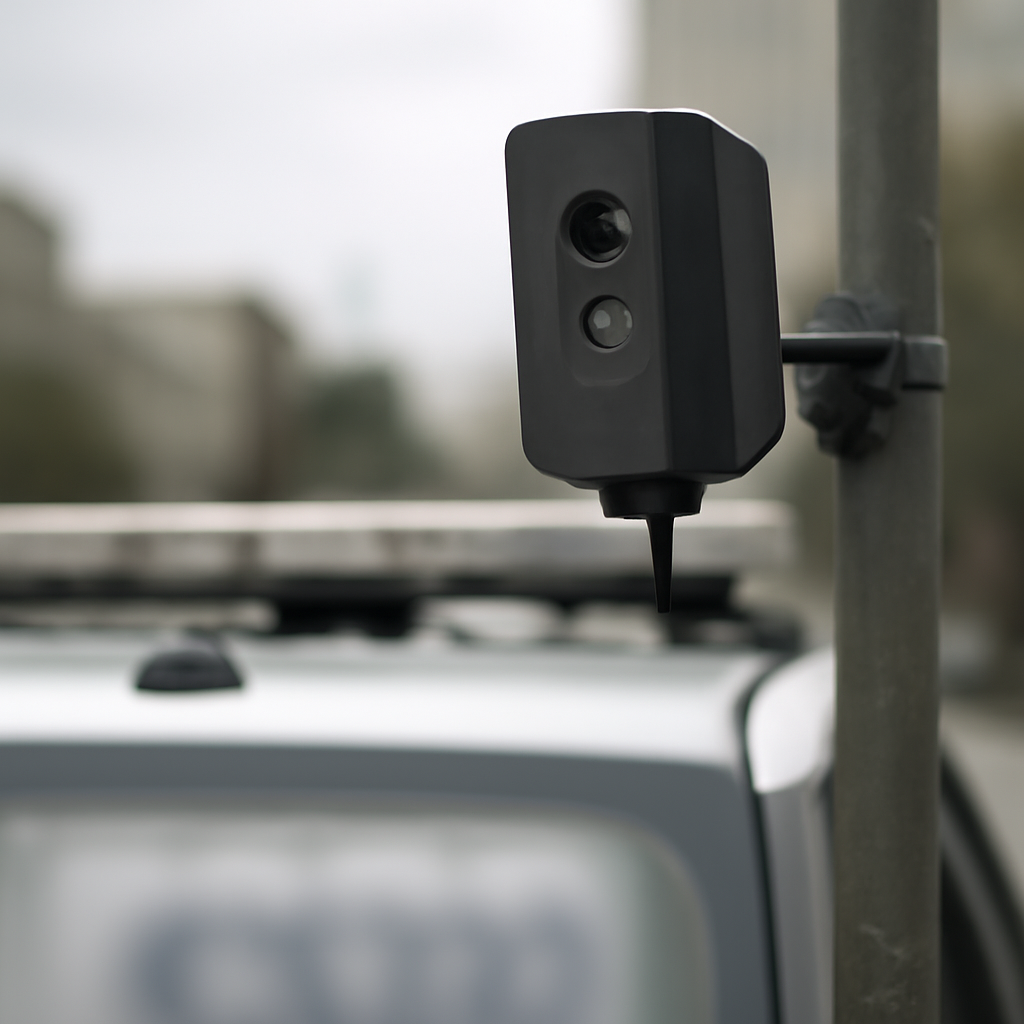
A writer was mistakenly identified, tracked, and arrested after license-plate data from Flock cameras matched a simplified plate entry. The New Jersey plates that were allegedly stolen from the LA dealer were 34 03 DTM, not 34 10 DTM. But when the police report was created and the plate was entered into Flock’s system, it was recorded as 34 DTM — only the five large characters, omitting the small numeric element in the middle. Flock’s AI did not register that non-standard little number and began alerting local police whenever it detected the sequence 34 DTM on a vehicle.
Thomas on Flock’s machine learning: matching partial character sets
Flock representatives defended the system by describing how their machine learning was instructed to operate. “It was asked, can you find this? And it did find that. It just didn’t say if there’s more here, then don’t do it. It just simply said, is it there? And the answer was yes,” Thomas said, explaining that the system returned a match to the characters it was fed.
Flock framed this behavior as consistent with law-enforcement use: sometimes investigations begin with partial plate information, and agencies request alerts when any characters in a watchlist are read. Thomas said Flock trains officers to verify matches in the field — for example, to confirm that “34 DTM is what I’m looking for, and what I’m seeing is 34 10 DTM.”

Audit-ready is a season. It shouldn't be.
Evidence in spreadsheets, controls drifting between audits, frameworks multiplying on flat headcount. Nubivance runs continuous compliance on Rapid7 Cyber GRC - SOC 2, HIPAA, ISO 27001, PCI, CMMC.
End the scrambleOfficer Ganshyn, Jaguar Land Rover, and the propagation of alerts
Officer Ganshyn observed that the JLR (Jaguar Land Rover) media fleet includes many New Jersey manufacturer plates using the same alphanumeric structure — 34 ## DTM — which made the problem broader than a single car. According to Officer Ganshyn, four other 34 ## DTM cars were being tracked around Minnesota that week. Because Flock’s alerts were triggered by the truncated five-character entry, any other JLR-owned car sharing that structure could be flagged where police departments partner with Flock.
The immediate technical remedy, per the account, was for the Los Angeles Police Department to correct the initial report and update Flock’s system. Jaguar Land Rover contacted the LAPD after a phone call, and the company was “racing to make [the correction] happen.”
Flock’s public posture: apology and prior rhetoric
Flock has pushed back against the bad press in two ways. First, it affirmed that its systems behaved according to the data they were given and that alerts reflected the characters entered into watchlists. Second, the company’s CEO — who last year called one group that tracks the location of Flock cameras “terrorists” — has apologized for that comment, signaling a change in tone or PR strategy following criticism.
404 Media’s data: searches for people, not just cars
Separately, data reviewed by 404 Media shows police departments have used Flock cameras at least hundreds of times to search for specific people rather than vehicles. The searches cited include textual, descriptive queries such as “heavy-set male with a black and white hat,” “person on skateboard,” and “person wearing orange vest and construction hat.” The dataset also indicates that some searches reference a target’s race or signs of political affiliation. The account notes that, as with other surveillance tools, abuses can and do occur.
What this means for law enforcement, Jaguar Land Rover, and the public
- Law enforcement: agencies that configure hotlists to match partial character strings will continue to receive broader alerts unless reporting and watchlist entries are corrected. Training officers to verify full plate details in the field is part of Flock’s stated mitigation.
- Jaguar Land Rover (automakers and fleet operators): manufacturers with nonstandard plate formats — in this case, New Jersey manufacturer plates with a small middle number — face the risk of repeated false flags across jurisdictions where Flock is used; the company moved to have the LAPD correct the report after being notified.
- The public and privacy advocates: the incident highlights how small transcription decisions and ML matching rules can cascade into detentions and broader tracking; 404 Media’s review that searches for people — sometimes invoking race or political signs — underscores the civil liberties concerns tied to camera networks.
The episode is a compact example of how human entry, configured matching rules, and machine perception interact. A five-character truncation in a police report was enough to set an AI-powered alerting system in motion across jurisdictions; correcting it required action from the reporting agency and intervention by the vehicle owner’s company. The facts in the record point to two immediate, concrete touchpoints: the LAPD updating its report in Flock’s system, and Flock continuing to train officers to verify matches in the field. Beyond those steps, the incident raises a specific operational question the record leaves open — how watchlist inputs and ML matching thresholds will be reviewed and changed, if at all, to prevent similar misidentifications in the future.
https://www.schneier.com/blog/archives/2026/07/on-flock-license-plate-tracking-cameras.html