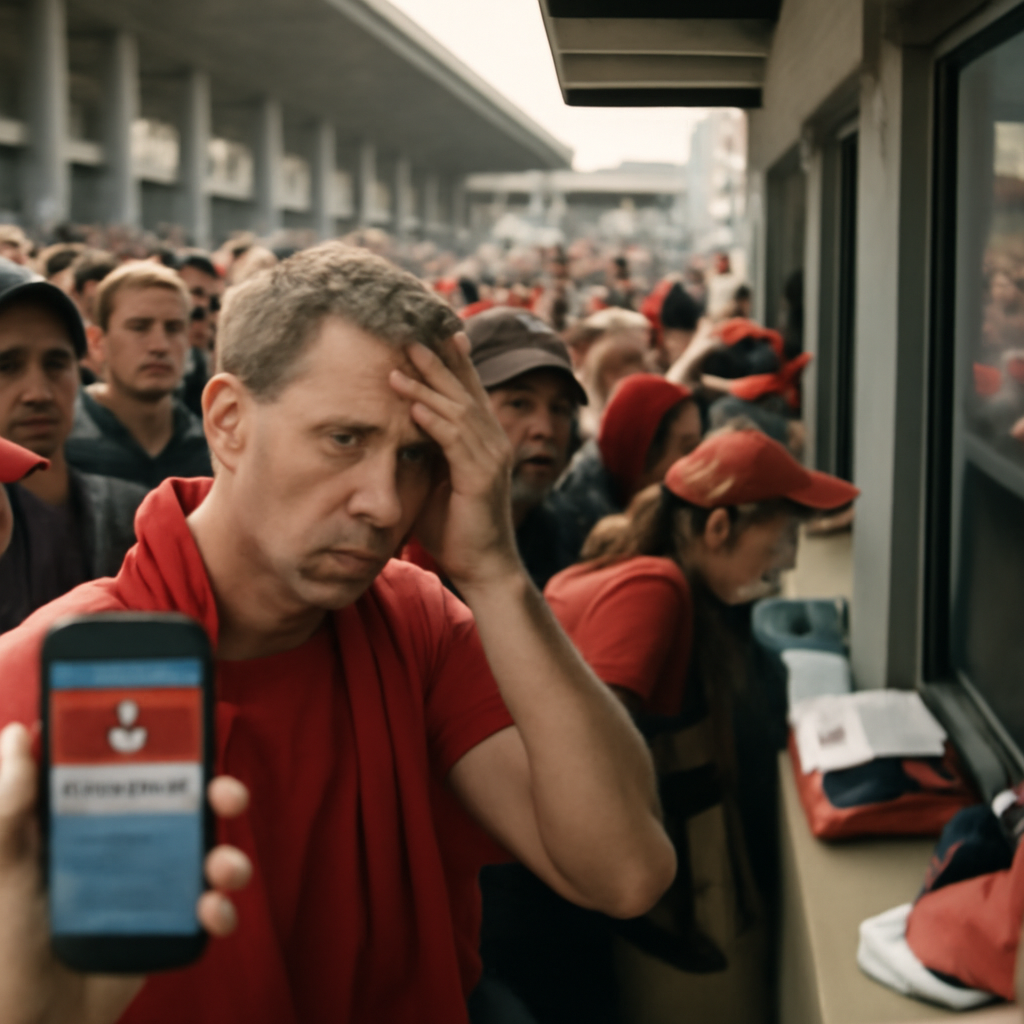
The World Cup’s long lead‑up has become a fraud magnet. Security firms and the FBI warn that ticket scams, cloned login pages, counterfeit merchandise, banking malware in pirate streaming apps, and stolen credentials are already in circulation days before the June 11 kickoff. With FIFA reporting more than 150 million ticket requests in the first 15 days and more than six million fans expected across 16 host cities, attackers are exploiting scarcity, anxious buyers, and high‑velocity payments.
GHOST STADIUM: cloned fifa.com logins and ticket takeovers
Group‑IB named a central operator GHOST STADIUM, which deployed a near‑perfect copy of fifa.com’s single sign‑on page. The fake mimics FIFA’s real login flow — run by PingIdentity — and even reuses the genuine client ID from the live site. It loads images directly from FIFA’s servers to appear authentic and evade image‑based detectors.
The cloned page goes further: it prompts victims to reset passwords. When credentials are captured, attackers can lock legitimate owners out of their accounts and resell any tickets tied to those accounts. Group‑IB reports that most traffic to these sites comes from Facebook ads, with the same tracking codes reused across the cluster, plus links shared on Telegram, WhatsApp, and appearing in search results.
Payment options on the fraudulent sites include straight card entry, outside gateways, regional processors, money‑transfer apps such as Chime and Nequi, and a crypto option that converts card payments into cryptocurrency — a practice FIFA’s official ticketing never uses and a red flag experts call out.
Group‑IB’s visible infrastructure places estimated losses from premium and hospitality ticket fraud between $71 million and $474 million, with the firm warning the overall campaign could reach into the billions — these are infrastructure‑based estimates, not confirmed loss totals.
Thousands of domains, social accounts, and credential dumps
Other telemetry shows the problem’s scale: FortiGuard Labs counted more than 13,000 World Cup–themed domains registered between January and May, and marked about 8.8% as malicious or suspicious. The FBI advisory lists dozens of fake FIFA domains — from simple typosquats to phony jobs pages — and cautions more are forthcoming.
Fortinet found over 1,700 spoofed FIFA accounts, nearly 90% on Facebook and Instagram, and documented a scheme using fake FIFA job ads and calendar invites to lure people to a lookalike Google login. Bitdefender found more than 55 football‑themed ad campaigns on Facebook and Instagram selling counterfeit kits, fake Panini stickers, and phishing pages; two of those merchandise operations traced back to Chinese operators via their ad tracking tags.
Stolen FIFA logins are already circulating. Fortinet found hundreds of thousands of user credentials, and researchers located more than 4,600 FIFA web addresses in data harvested by credential‑stealing malware families such as Vidar, LummaC2, and RedLine.

This site is the portfolio.
OSINTSights runs on Cloudflare Workers, D1, R2, and Vectorize, with an AI pipeline on Hetzner ARM. Nubivance designed, built, and operates it. We do the same for clients.
See what we buildBanking trojans hidden in pirate streaming apps: Massiv and Perseus
ThreatFabric and Kaspersky warn that unofficial streaming apps — particularly those distributed outside Google Play — have carried Android banking trojans. ThreatFabric saw a spike in malicious apps around the Champions League final and expects a larger wave at the World Cup.
Kaspersky tied those apps to banking‑trojan families Massiv and Perseus. The malware abuses Android’s accessibility features to overlay fake bank login screens, record keystrokes, intercept one‑time codes from SMS and authenticator apps, and remotely control the device. Perseus, built on leaked Cerberus code, also searches note‑taking apps for stored passwords and crypto recovery phrases. A clear device‑level red flag: a streaming app that requests accessibility access it has no legitimate need for.
Host‑city Wi‑Fi, parked domains, and the peak fraud window
Kaspersky’s survey of Mexico City, Monterrey, and Guadalajara found 10%–12% of networks open and password‑free, with WPS pairing still enabled across nearly half — conditions that make “evil twin” hotspot attacks easier. Group‑IB also counted roughly 3,800 fraudulent FIFA domains currently parked and unused, ready to be activated.
Researchers and law enforcement point to a clear high‑risk period: June 11 to July 19, when ticket, stream, and travel searches will peak and ready‑made scam kits and ticket‑buying bots are already available on criminal markets.
What this means for security teams, fans, and Meta/Visa
- Security teams and fraud departments: watch for new FIFA‑themed domains and lookalike login pages, flag staff or customer logins appearing in Vidar, LummaC2, or RedLine logs, and prepare for ticket and chargeback spikes through mid‑July.
- Fans and end users: buy only through fifa.com (type the address manually), enable multi‑factor authentication, refuse sellers who demand cryptocurrency, avoid sideloading streaming apps that ask for accessibility access, and prefer mobile data over open host‑city Wi‑Fi for sensitive transactions.
- Meta and payment partners: Meta is already showing warning pop‑ups when people search Facebook for FIFA tickets and worked with Visa to take down a Facebook network linked to fake World Cup gambling sites; continued ad monitoring and rapid takedowns will remain critical as fraud actors reuse tracking tags and ad channels.
The wave is underway, and so are the counters: researchers are mapping domains, Meta and Visa have taken down networks, and the FBI asks victims to report fraud via IC3. But with thousands of live or parked domains, ready‑made phishing kits, and banking trojans waiting in unofficial streaming apps, the busiest window for fraud — and the clearest opportunity for defenders — is unmistakable: June 11 through July 19.