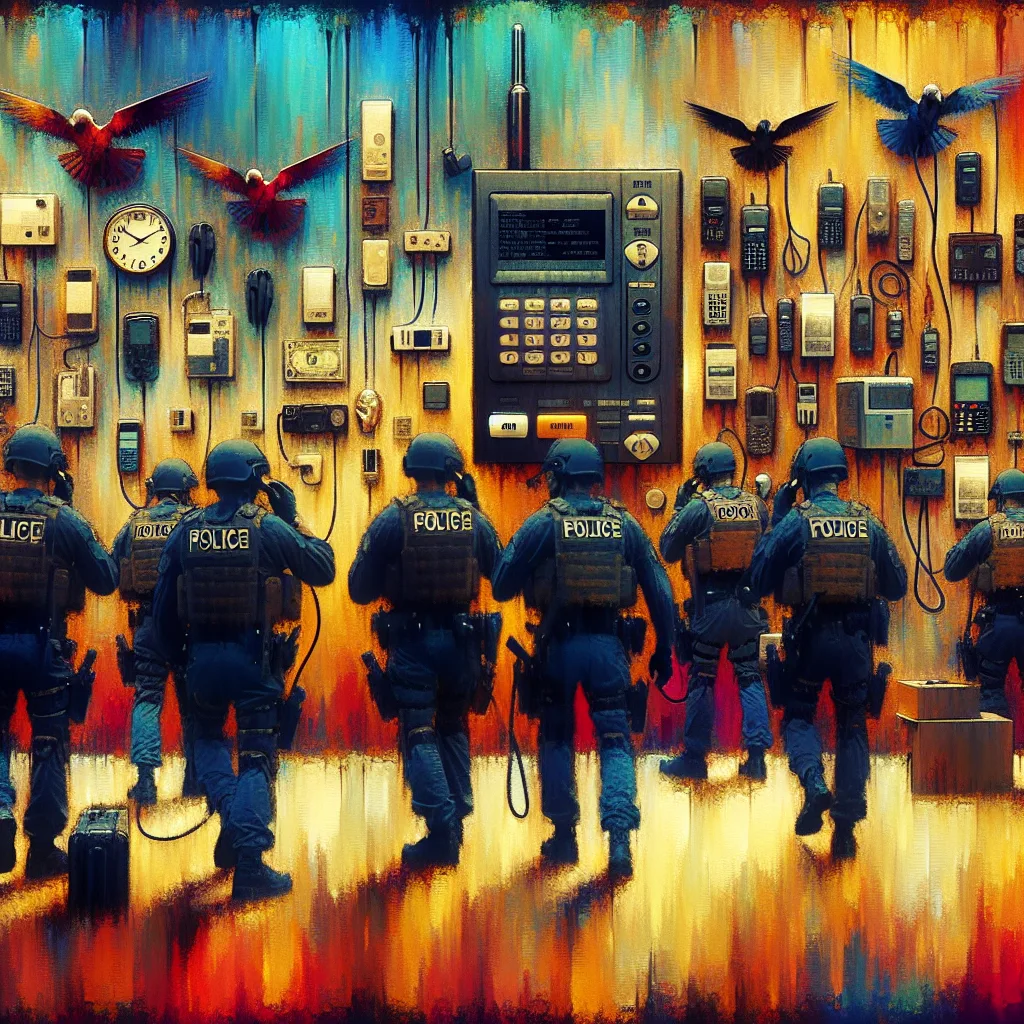
When a Prank Turns Perilous: The FBI and the Rise of Politically Charged Swatting
The United States is witnessing a disturbing trend where politically charged swatting incidents have escalated from mere pranks to potentially deadly confrontations. In recent weeks, law enforcement officials, led by the Federal Bureau of Investigation, have intensified their awareness campaign against this dangerous practice. The campaign comes at a time when no specific federal law exists to prosecute swatting as a standalone offense, though lawmakers are actively working to change that.
Swatting, the tactic of making a false report to provoke a law enforcement response to an unsuspecting target’s address, has evolved from juvenile mischief into a tool of political intimidation and harassment. As these politically motivated incidents grow more frequent, the risks to public safety and individual rights have become impossible to ignore. The FBI’s involvement signals a critical juncture in both the legal and tactical responses to a phenomenon that increasingly blurs the line between political protest and criminal behavior.
Historically, swatting began as a minor nuisance in the realm of online gaming and social media disputes. However, over the past decade, its usage has spread beyond the virtual world. High-profile cases in which swatting resulted in police interventions have underscored the real, sometimes lethal, consequences of what was once viewed merely as a disruptive prank. The shift aligns with the broader trend of technology-enabled intimidation, where misinformation and social media amplification transform isolated acts into nationally significant events.
In recent months, a spate of swatting incidents targeting political figures and activists has driven the FBI to act. An FBI spokesperson confirmed that the bureau’s new awareness campaign aims to educate both the public and local law enforcement agencies about the dangers and deceptive tactics associated with swatting. While no single law currently criminalizes swatting in its entirety, legal experts assert that existing statutes on harassment, making false statements, and the misuse of communication channels could be tightened in legislative revisions. Lawmakers are expected to introduce targeted reforms designed to specifically address the nuances of politically charged swatting.
The FBI’s initiative arrives at a moment when political discourse is already highly polarized. In several cases, politically motivated swatting has almost cost innocent lives. One incident in a midwestern community led to an armed response that, while ultimately resulting in no fatalities, left the individuals involved traumatized and deeply distrustful of law enforcement procedures. Such events raise challenging questions about the balance between free political protest and the abuse of a system intended to protect and serve the public.
Observers from a range of sectors have weighed in on this issue. Law enforcement agencies at both the local and federal levels note that swatting incidents, when politically charged, add a layer of complexity to investigations. They must consider not only the criminal aspects but also the potential political motivations behind the false alarms. Security expert and former FBI consultant, Michael Daniel, has pointed out that “as technology makes it easier to fabricate emergencies, the danger of escalating tensions and unintended violence grows exponentially.” While these comments reflect Daniel’s long-standing expertise in cyber-enabled threats, it is essential to underscore the fact that his insights are informed by past experiences rather than speculative future crises.
For many Americans, the rise in politically motivated swatting incidents is a stark reminder that the digital era demands innovations in law enforcement tactics as well as legislative measures. The lack of a specific law against swatting, which experts agree is due for a regulatory update, now represents a significant gap in the nation’s legal framework. Under current statutes, individuals responsible for swatting may evade prosecution if their actions are reclassified under broader categories of harassment or fraud—a loophole that challenges both prosecutors and defenders alike.
Local police departments have expressed support for the FBI’s new campaign, emphasizing the importance of community education and improved coordination between agencies. In several cities, joint task forces have been established to monitor and respond to emerging swatting threats. These local responses are critical because the first line of defense against a swatting incident is often the rapid and informed reaction of community law enforcement. Their improved ability to discern genuine emergencies from malicious hoaxes could save lives and preserve public trust.
Political analysts note that the current focus on swatting may also be an indicator of broader shifts in how politically motivated behaviors are being targeted by federal authorities. With legislative reforms on the horizon, the FBI’s involvement not only serves as a temporary measure to mitigate risks but also as a signal of what may come. While some view these moves as necessary to protect public safety, others caution that any expansion of law enforcement authority must be carefully balanced to avoid encroaching on civil liberties or inadvertently stifling legitimate political expression.
Looking forward, the landscape of digital and political security is likely to see substantial shifts. Lawmakers and advocacy groups alike are closely watching the development of new proposals aimed at specifically criminalizing swatting. Future legislation will need to address both the digital mechanisms that enable these hoaxes and the broader social context in which they occur. National security experts emphasize that any successful legislative framework must protect the freedom of political assembly while deterring acts that risk public safety.
For citizens and law enforcement officials, the continuing evolution of swatting incidents is a call to adopt both innovative strategies and traditional legal reforms. The FBI’s campaign, while a reactive measure to a growing threat, also represents an opportunity to foster a more informed public dialogue about how digital tools can be both empowering and dangerous. As authorities ramp up efforts to combat this phenomenon, one cannot help but wonder: in a society where information travels at the speed of light, how do we ensure that technology remains a tool for progress rather than a weapon for intimidation?