"Threatening election officials and attempting to intimidate public servants is a serious federal offense and will not be tolerated," said U.S. Attorney Robert J. Troester for the Western District of Oklahoma.
The mailings: scope, timing and immediate pattern
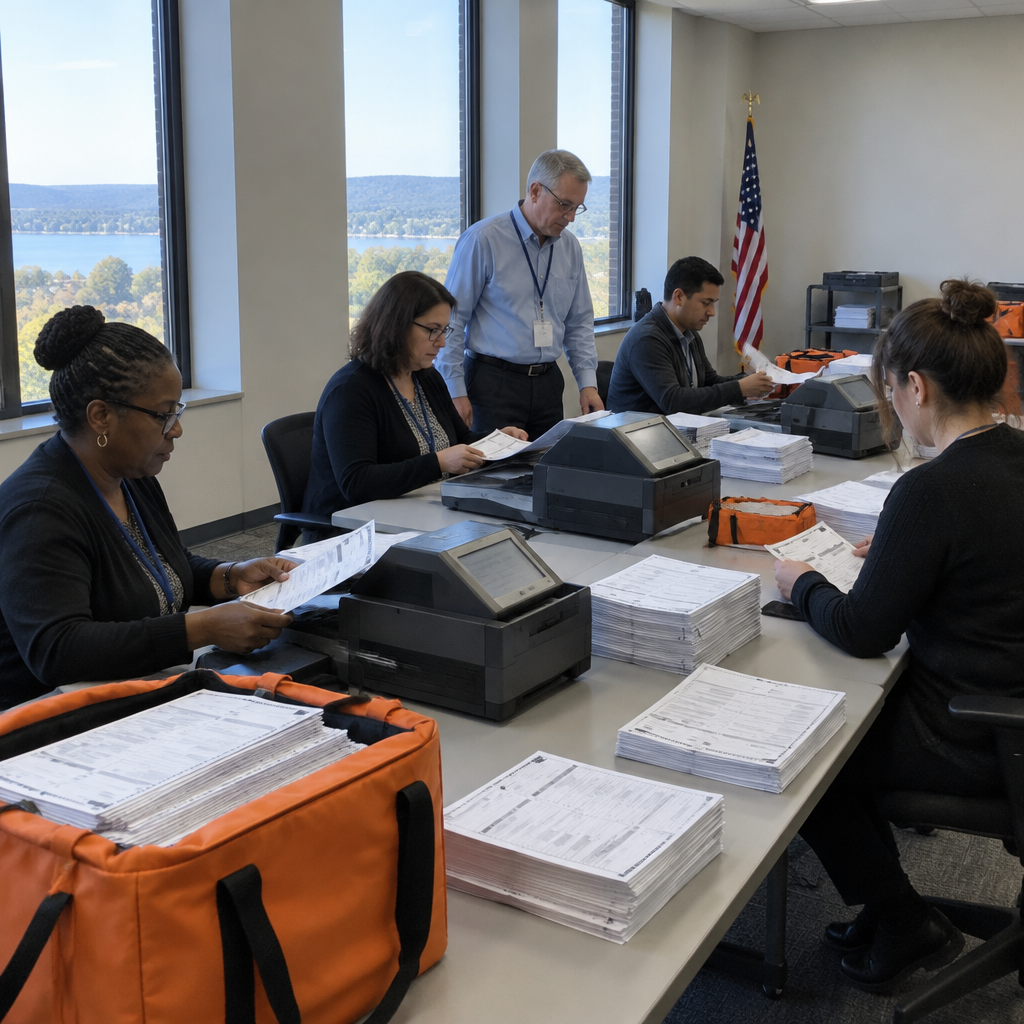
Federal prosecutors say an Oklahoma man, identified as Robin Patrick Martin, mailed suspicious white powders and threatening letters to election officials around the United States. The criminal complaint traces the campaign to letters beginning on Sept. 16, 2024, and continuing in the months leading up to the Nov. 2024 presidential election, with similar mailings reported to officials in nearly every state over the subsequent two years. FBI Director Kash Patel said Martin sent letters to "well over 100 locations including multiple state secretary offices, election offices, and more."
Letter content and unconventional tactics
The letters were three pages long and headed "DECLARATION OF WAR." They included claims tied to the belief — promoted by some supporters of President Donald Trump, according to the complaint — that the 2020 election was marred by voter fraud, and raised similar concerns about the 2024 election. Many envelopes bore a return address for "The United States Traitor Elimination Army" in Takoma Park, Maryland. Some contained additional visible messages that could only be read under ultraviolet light, and others carried handwritten lines such as "No US Jurisdiction!," "Mailed from the Indian Nation," and "Are you for us? Or against us?"
One envelope included an explicit note directed to the FBI: "To FBI: What do you want for your children? Peace through strength or nuclear war? Use your common sense! Protect Trump! Protect the election! Protect Legal votes! Throw out illegal votes! That is the motive!"

This site is the portfolio.
OSINTSights runs on Cloudflare Workers, D1, R2, and Vectorize, with an AI pipeline on Hetzner ARM. Nubivance designed, built, and operates it. We do the same for clients.
See what we buildInvestigative trail: surveillance, purchases and phone records
According to the complaint, investigators followed a paper and digital trail that tied mailings to Martin. Authorities subpoenaed email and phone records associated with the Takoma Park return address and linked those records to a burner phone purchased at a Walmart Supercenter in Northwest Oklahoma City. Surveillance video captured an "older white man matching Martin’s description" buying the phone and leaving in a car registered to Martin. Other items traced to purchases at that same Walmart — a booklet of stamps, privacy envelopes, turmeric, white vinegar and povidone-iodine — were noted in filings; the complaint says those substances can be used to make invisible ink. Phone records also placed the phone, and by extension Martin, at various postal distribution centers around Oklahoma.
Charges filed and federal oversight
Robin Patrick Martin has been charged with conveying false or misleading information and hoaxes, and with mailing threatening communications. Federal authorities framed the charges as alleging a nationwide effort to intimidate election officials and to support President Donald Trump. The case was first reported by the Associated Press, and the Trump administration has overseen the investigation since January 2025.
In a release quoted by investigators, FBI Director Kash Patel said the bureau identified the scope of the mailings and publicly characterized the operation as reaching "well over 100 locations." U.S. Attorney Troester emphasized the federal commitment to investigate and hold accountable those who "seek to spread fear and intimidation in our communities," adding that the U.S. Attorney's Office is "working alongside our federal law enforcement partners."
What this means for election officials, the FBI, and postal/retail security
- Election officials: Agencies at the state and local level will need to continue processing reports of suspicious mail while coordinating with federal authorities. The complaint documents a pattern of targeted mailings to "multiple state secretary offices, election offices, and more," indicating persistent, wide-ranging attempts to intimidate election administrators.
- The FBI and federal prosecutors: The charges demonstrate a multipart investigative approach — subpoenaing digital records, reviewing surveillance footage, tracing retail purchases and mapping phone locations to postal distribution centers — and signal continued federal involvement in threats to public servants and election infrastructure.
- Postal and retail security: Postal distribution centers and retail outlets where evidence-linked purchases occurred are now part of the documented chain linking physical purchases to mailed threats, underscoring the forensic value of surveillance footage, transactional records, and phone-location data in follow-on criminal investigations.
The criminal complaint, surveillance evidence and purchase records together form the basis for the federal case against Martin, who faces charges tied to both hoax communications and threats. Prosecutors have framed the alleged campaign as an attempt to intimidate officials and influence perceptions about recent elections; the investigation, which federal authorities say identified mailings to "well over 100 locations," remains a concrete example of how physical letters and simple, low‑tech items can trigger a nationwide law-enforcement response. The CyberScoop story that first summarized the filings and statements is linked below for readers who want the original reporting.