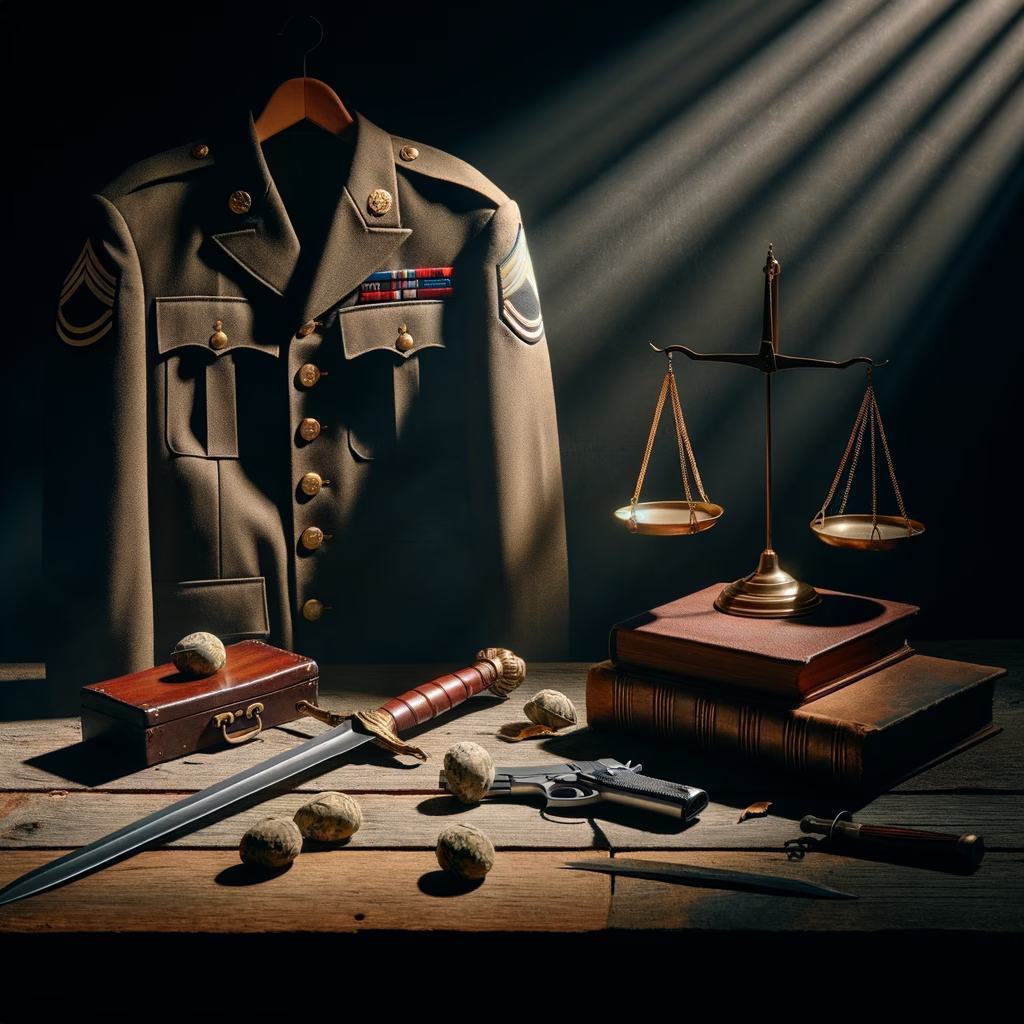
“Can hacking be treason?” It is a question that might strike many as academic or hypothetical—until it is typed into a search bar by someone entangled in the very act it describes. Such was the case with a former U.S. Army soldier who found himself at the crossroads of cybercrime, national security, and legal jeopardy after engaging in a brazen hacking scheme against major telecommunications companies.
The ex-soldier, identified in court documents as having unauthorized access to AT&T’s networks, pleaded guilty to conspiring to infiltrate telecom databases and extorting at least $1 million. His criminal activities went beyond mere financial gain; he reportedly boasted of accessing sensitive call logs belonging to then-President Donald Trump. Ironically, his digital footprint revealed searches like “can hacking be treason” and “US military personnel defecting to Russia,” underscoring the gravity and complexity of the case.

At the heart of this saga lies a troubling intersection of cyber vulnerabilities and insider threats. Telecommunications companies, by virtue of their infrastructure, hold vast amounts of personal and national data, making them lucrative targets for hackers. When a former military member leverages their skills against these critical networks, it raises alarms not only about security protocols but also about the potential motivations behind such acts. Was this purely a criminal endeavor, or did it harbor deeper implications tied to espionage or national loyalty?
Experts in cybersecurity, like Katie Moussouris, CEO of Luta Security, emphasize that insider knowledge combined with technical expertise is a potent threat vector. “When someone with legitimate access turns rogue, it challenges the very foundation of trust within our defense and communication systems,” she noted in a recent interview. This case exemplifies how digital footprints, including seemingly innocuous internet searches, can become critical evidence in unraveling the intentions behind cybercrimes.
From a policy standpoint, the incident highlights the need for robust monitoring and support systems within the military and defense sectors. Dr. Thomas Wingfield, a former cybersecurity advisor to the Department of Defense, stresses the importance of addressing not just technical vulnerabilities but also the human element. “Preventing insider threats requires comprehensive strategies—background checks, mental health resources, and ongoing security education,” Wingfield explained.
For the average user, the breach underscores the fragility of the networks they rely on daily. The idea that a former soldier could tap into presidential call logs signals a broader risk that cyber intrusions can impact anyone, from top officials to private citizens. It also raises questions about privacy and the safeguards telecommunications providers have in place.
Adversaries observing this episode may take note of the challenges inherent in securing sprawling communications infrastructures. Whether state-sponsored actors or independent cybercriminals, the potential for exploitation remains a pressing concern. The blend of technical know-how and insider access remains a persistent threat in an era when data is currency, and information security is national security.
As the former soldier faces legal consequences, this case serves as a stark reminder: in the digital age, actions reverberate far beyond the individual. Searching for answers online after committing a crime is not a strategy but a misstep that often leads to deeper scrutiny and harsher penalties. It begs the question—how prepared are our institutions to detect and deter those who once vowed to protect but choose to exploit our vulnerabilities instead?



