The charges and the court's detention order
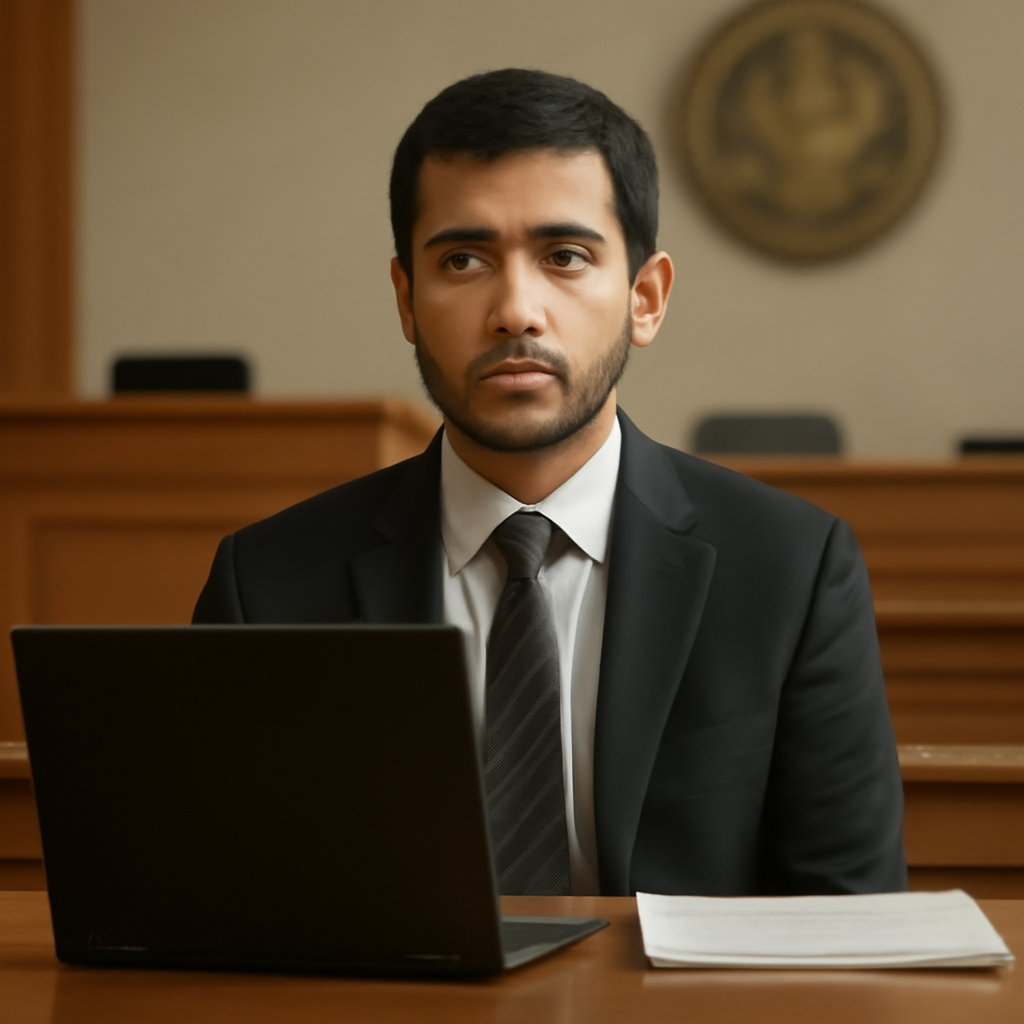
Federal prosecutors in a new court filing say Abdulrahman Alfozan, a 35-year-old Saudi national who joined OpenAI around July 2025, has been charged with using or endeavoring to use an electronic, mechanical, or other device to intercept oral communications. If convicted, the filing notes, he faces a maximum possible sentence of five years in prison. A U.S. court on Monday granted the government's request to detain him pending further proceedings.
Prosecutors explicitly described Alfozan as a flight risk, writing that he has "ample resources... and what appears to be considerable support from a foreign government that has (i) no extradition treaty with the United States; (ii) limitless resources; and (iii) the ability to provide extraordinary travel assistance." The filing also states the government's investigation is ongoing.
The alleged device and tradecraft
The Department of Justice revealed that investigators say Alfozan inserted a stealthy audio recording device into a USB port on the back of a television in an OpenAI executive conference room to capture conversations. The filing states he modified the device to prevent data transfer between it and the television and encrypted the content stored on the device's microSD card.
Prosecutors say Alfozan used his wife's personal ChatGPT account to research how to "build a continuous audio recorder" to "captur[e] microphone audio and save compressed WAV recordings to an SD card." They also allege he used an OpenAI productivity agent to determine which "meeting rooms" OpenAI "leadership and exec[utives]" used and where they met with "external partners," and that he "spent considerable time near the conference room where he later installed the device."

The cyber insurance questionnaire just landed. Now what?
SOC 2, HIPAA, insurance renewals - someone has to own security strategy. Nubivance provides fractional CISO leadership without the full-time salary.
Get a security leadCommunications with a member of the Saudi Royal Family
The court filing discloses that Alfozan was "in frequent communications via WhatsApp with a member of the Saudi Royal Family" throughout 2025 and 2026. Those communications continued as recently as October 5, 2026, four days before his arrest, prosecutors say.
According to the filing, the royal contact repeatedly attempted to recruit Alfozan, telling him that an artificial intelligence initiative was being launched in Saudi Arabia and asking when he planned to leave OpenAI. The filing quotes the royal as saying, "Saudi needs you more then [sic] the US!" and reports the defendant replied "100," indicating agreement. In May 2026, the royal asked when Alfozan would leave OpenAI; prosecutors said Alfozan told the royal he would not do so until his stock vested.
Searches, seized evidence, and timeline details
Prosecutors reported a search of Alfozan's residence and a "preliminary review" of his electronic devices that turned up multiple items cited in the filing:
- Electronic components in his residence similar to those in the customized devices allegedly installed in the OpenAI conference room and that were in his missing bag.
- Photographs from his iPhone dated between September 22 and 28, 2026, depicting an additional concealed recording device and images that appear to show input/output panels on TVs and other electronics in various OpenAI locations, including a second conference room where sensitive meetings took place.
- A deleted note from September 2026 on his cellphone containing links to various recording devices, including those made by Seeed Studio—the same manufacturer whose devices were found both in OpenAI's offices and in his residence, the filing says.
- Browsing history showing access to a folder called "Saudi Gov Docs" on October 4, 2026, and queries made with an OpenAI productivity agent about Saudi-related business and government engagements from the Saudi Ministry of Communication and Information Technology (MCIT) between July 6, 2026, and September 21, 2026.
The filing places these digital traces alongside other operational steps: a planned one-way departure to Riyadh with his wife and son on October 12, 2026 (the filing says Alfozan was arrested three days earlier); the government's account notes his wife and son already left the U.S. without him, and that she told FBI agents her U.S. visa was expiring and that the family was "permanently shifting back to Saudi Arabia."
What this means for technologists, policymakers, and affected enterprises
Technologists and security teams: The case highlights an alleged blend of physical and digital tradecraft—customized hardware concealed in office AV infrastructure coupled with the use of productivity agents and personal AI accounts for technical research. Teams responsible for executive meeting security will likely revisit who has physical access to sensitive rooms and how AV ports and devices are monitored.
Policymakers and regulators: Prosecutors framed the conduct as presenting "a danger to innovation in the Silicon Valley and a concern for the national security of the United States." The filing's emphasis on foreign recruitment and potential state interest may push renewed attention to foreign engagement policies, visa and travel indicators, and mechanisms for investigating suspected insider compromise.
Affected enterprises and procurement leaders: The filing documents links between commercial off-the-shelf components (including devices from Seeed Studio) and alleged concealment efforts. That connection will be of particular interest to procurement teams reviewing supply-chain and device-hardening practices for meeting-room equipment.
Prosecutors say the investigation continues, and the court has detained the defendant as the case proceeds. The record filed so far ties encrypted, modified recording devices, targeted reconnaissance of executive meeting spaces, and repeated outreach from a Saudi royal contact into a single prosecutorial narrative—one that leaves open the full extent of intent the government says it is still investigating.