"Unauthenticated, Internet-exposed interfaces on critical infrastructure threaten regional grid resilience and create operational, legal, and reputational risk across renewable energy portfolios," said Damon Small, Board of Directors, Xcape, Inc.
The discovery by NCSC‑NL and Modat
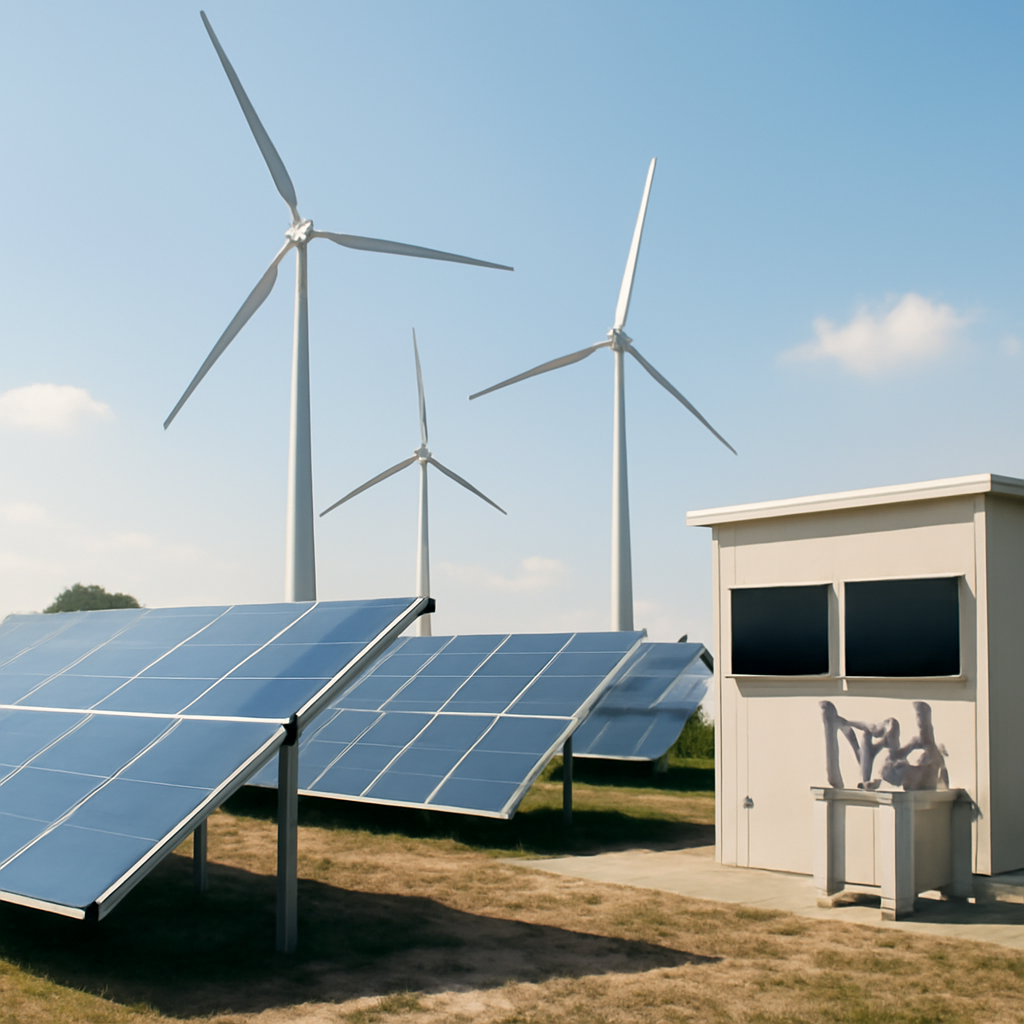
The Dutch National Cyber Security Centre (NCSC‑NL) and cybersecurity organization Modat found more than 8,500 Internet‑exposed systems tied to European wind farms and solar parks. The survey covered 40 European countries and found exposed systems in 35 of them. Solar installations accounted for 7,942 of the exposures across 34 countries, while wind farms accounted for 605 exposures across 23 countries.
What the exposures actually allowed
The scanning and analysis revealed more than simple information leaks. Some exposed endpoints included sensitive operational panels, and researchers estimated 181 sites could have permitted full operational control. That combination—management interfaces visible on the public Internet and live operational panels—was identified as a direct pathway to interfering with generation equipment or configurations.

This site is the portfolio.
OSINTSights runs on Cloudflare Workers, D1, R2, and Vectorize, with an AI pipeline on Hetzner ARM. Nubivance designed, built, and operates it. We do the same for clients.
See what we buildExperts on architecture and attacker tooling
Damon Small warned that exposing OT control interfaces to the Internet reflects "fundamental identity and network perimeter failures." He urged that remote access, while operationally valid, be mediated through zero‑trust access, network segmentation and multi‑factor authentication, and that organizations "immediately pull existing interfaces behind secure gateways and enforce credential rotation."
Steven Swift, Managing Director of Suzu Labs, placed the finding in a familiar pattern: "This isn’t an AI problem, even if the authors of the research claim that 'AI made things a little faster.' We’ve seen decades of organizations putting resources directly onto the public internet with minimal to no protections in place, and then act surprised when its found and exploited." Swift added that established, non‑AI automation can map public IP attack surfaces at scale and that an exposed device will be documented and indexed automatically.
Both experts articulated complementary practical remedies in the published comments: move management interfaces off the public Internet, require secure remote tunnels such as VPNs or zero‑trust gateways, segment operational networks, mandate credential rotation, and perform architecture reviews and threat modeling before systems go live. The researchers’ critical takeaways also include that threat modeling before deployment is far cheaper than incident response after a breach.
Why some exposures matter more than others
Not every exposed endpoint is equally consequential. Steven Swift noted a structural point from the research: the renewable sector is often decentralized, so an attacker would likely be limited to affecting a subset of assets at any given time. That restraint does not remove the risk: the research and the experts warned that an adversary need not simply switch generation off to cause harm. Tampering with configuration—misconfiguration that could overload equipment, for example—could cause lasting damage rather than a temporary outage.
What this means for technologists, policymakers, and renewable operators
- Technologists and security teams: prioritize pulling exposed OT interfaces behind secure gateways, deploy multi‑factor authentication and network segmentation, and conduct mandatory threat‑modeling and architecture reviews before production deployments, as recommended in the published comments.
- Policymakers and regulators: the geographic breadth of the exposures—35 countries affected—underscores cross‑border implications for grid resilience and suggests a role for regulatory standards or guidance that require secure remote access and pre‑deployment architecture reviews.
- Renewable operators and procurement leaders: the report highlights immediate operational actions—credential rotation, removal of direct Internet exposure for management panels, and adoption of secure access mechanisms—to reduce the 181 highest‑risk sites and the broader set of 8,500+ exposed endpoints.
The practical contours are clear in the research: thousands of exposed endpoints, hundreds of sensitive interfaces, and nearly two hundred sites that could be taken over entirely. The response the experts describe is equally straightforward—move management out of the clear, wrap it in modern access controls, and stop letting production systems go live without formal threat modeling. Whether operators, regulators and technology teams act on that logic will determine if these discoveries become a contained fix or a rehearsal for a wider, costlier incident.
https://www.securitymagazine.com/articles/102635-8-500-european-wind-solar-systems-exposed