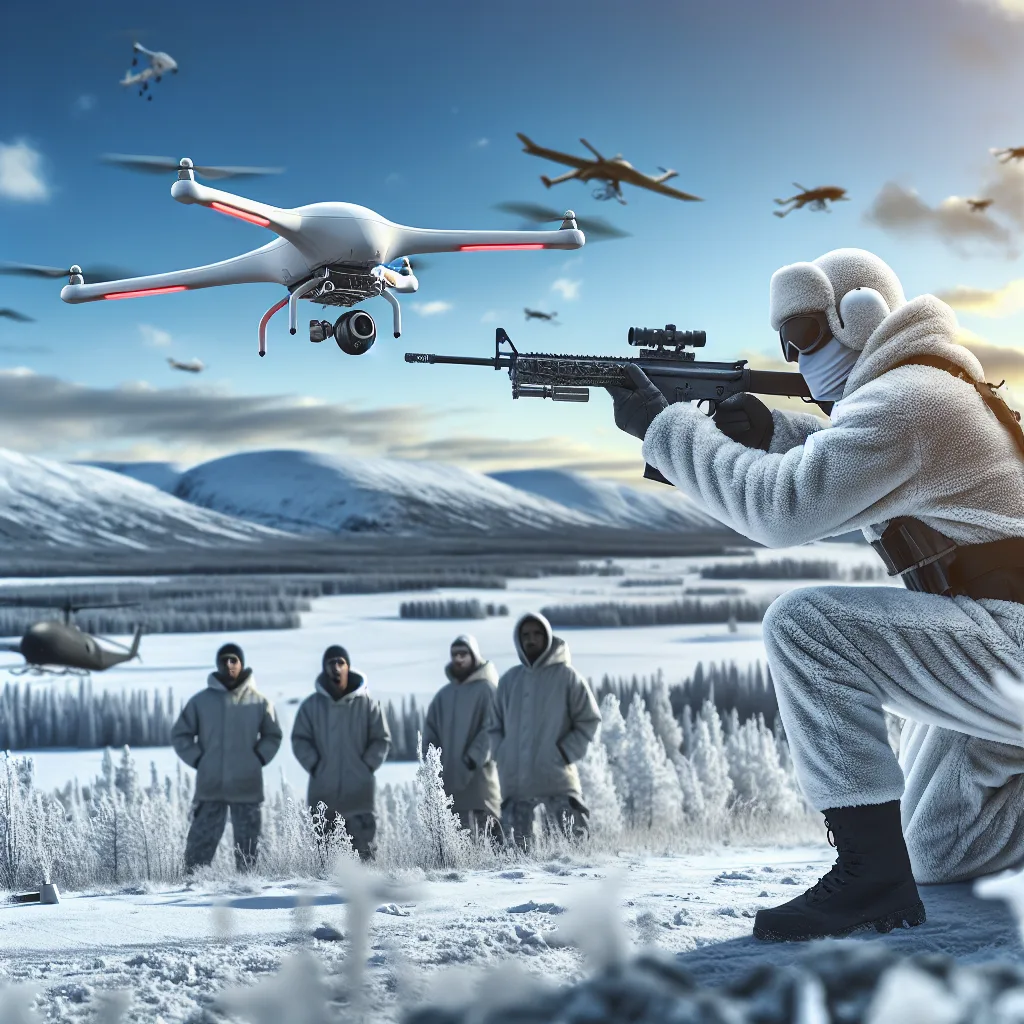
Estonian Startup Pioneers Affordable Drone Defense in a Shifting Battlefield
In a landscape where unmanned aerial systems increasingly dictate the terms of modern warfare, Estonian defense startup Frankenburg Technologies is reshaping the counter-drone paradigm with its Frankenburg Mark 1 interceptor missile. As drone swarms and loitering munitions become entrenched in contested conflicts worldwide, the startup’s innovative approach—emphasizing speed, cost efficiency, and mass production—promises to recalibrate how nations address emergent aerial threats.
Modern conflict has, in many ways, evolved beyond traditional land, sea, and air domains, placing a premium on technological agility and rapid response. The proliferation of commercial drones repurposed for military ends has forced defense organizations to confront an asymmetric threat environment. Against this backdrop, Frankenburg Technologies stands at a critical intersection of innovation and necessity, aiming to provide a low-cost yet effective defense tool that can be rapidly deployed.
Backed by a wave of governmental and private funding initiatives across Europe, the development of cost-effective counter-drone technologies has become a focal point for many small to mid-sized defense enterprises. The Frankenburg Mark 1, described as a fast, solid-fueled interceptor missile, is designed to counter the nimble and often unpredictable nature of drone incursions. This solution, as reported by Defence Blog, underscores a growing trend among defense startups worldwide: leveraging solid, proven technological frameworks while adapting them to current warfare challenges.
At its core, the Frankenburg Mark 1 is engineered as a conventional interceptor with an eye toward scalability and affordability. Its solid-fueled composition allows for a streamlined production process, paving the way for mass manufacturing—a crucial factor when budgets and response times are under constant scrutiny. The design philosophy behind the missile not only addresses the immediate tactical need for drone neutralization but also embeds a broader strategic shift, wherein smaller nations and non-traditional defense contractors can contribute meaningfully to national and allied security frameworks.
The emergence of fast, cost-effective counter-drone systems is not happening in a vacuum. Recent events on global battlefields have underscored the vulnerabilities central to many conventional military assets. Drone swarms, already a staple in conflicts from the Middle East to Eastern Europe, pose a challenge that is both technically and logistically demanding. The Mark 1 missile represents an attempt to equip forces with a nimble, easily deployable asset capable of responding to these threats before they escalate into more complex vulnerabilities.
Significantly, Frankenburg Technologies’ approach encapsulates a few key transitional trends in modern defense strategy:
- Affordability and Accessibility: By emphasizing low-cost production, the Mark 1 is designed to democratize access to advanced counter-drone capabilities, potentially enabling smaller nations and budget-constrained forces to secure their airspace more effectively.
- Rapid Scalability: The optimization for mass production underscores a recognition of the unpredictable and often overwhelming volume of drone threats. This focus on scalability is critical for maintaining an advantage on dynamic battlefields.
- Conventional Foundations: Leveraging traditional, time-tested missile technology ensures that while the fighter is new in concept, it remains grounded in proven design principles, reducing the risk associated with adopting entirely novel systems.
Experts in the defense sector have been watching these developments with a keen eye. Analysts from the Stockholm International Peace Research Institute (SIPRI) have noted that initiatives like the Mark 1 missile could signal a broader shift in how technology is being repurposed for the modern battlefield. While specific quotes from SIPRI experts have not been publicly disclosed regarding this particular project, the broader consensus identifies low-cost, agile defense tools as essential given today’s asymmetrical warfare dynamics.
Crucially, the timing of Frankenburg Technologies’ announcement is emblematic of a much larger strategic calculus. Nations are increasingly compelled to consider not only how they counter conventional threats but also how they mitigate the risks posed by unconventional warfare. The rise of inexpensive, commercially available drones heightens the urgency for defense innovation that prioritizes rapid reaction over prolonged developmental cycles. In this respect, the Mark 1 missile offers a tangible solution to a multifaceted problem, integrating the lessons from decades of missile technology development with the pressing needs of the present.
It is also important to consider the dual-use nature of many emerging defense technologies. While the primary focus of the Mark 1 is counter-drone operations, its underlying technology and manufacturing framework could be adapted for a range of applications. This versatility is crucial in an era where technological convergence influences not just combat strategies, but also civil and commercial domains. For instance, rapid missile production techniques might eventually benefit disaster response or border security initiatives, further blurring the lines between military and civil applications.
Looking ahead, several factors will determine the trajectory of systems like Frankenburg Technologies’ Mark 1 interceptor missile. First, regulatory environments within the European Union and NATO allies will play a pivotal role. Harmonizing procurement policies and technological standards across allied nations will be essential to ensure interoperability and rapid deployment in joint operations.
Second, advancements in drone technology itself will continue to evolve at a brisk pace. As adversaries adopt more sophisticated capabilities—ranging from stealth features to networked swarm intelligence—countermeasures must likewise evolve. This creates both a technical arms race and a strategic imperative for startups and established defense firms to innovate continuously.
Third, the broader geopolitical context cannot be ignored. Conflicts that mobilize unconventional warfare tactics often serve as catalysts for accelerated defense spending and rapid technological advancements. The current emphasis on counter-drone capabilities is only likely to intensify, given the probability of future conflicts displacing conventional warfare norms and necessitating rapid adaptation.
In this light, Frankenburg Technologies’ Mark 1 missile is more than just an isolated technological development; it is a harbinger of a new age in defense strategy. As more nations confront the twin challenges of budget constraints and evolving aerial threats, affordable solutions like those emerging from Estonia could prove pivotal. The Mark 1 may well serve as a blueprint for future defense systems that prioritize cost, speed, and adaptability over sheer technological complexity.
The narrative unfolding around counter-drone technology is a reminder of the complexity and urgency inherent in modern defense innovation. The human dimension of this story remains critical—behind each technological breakthrough are strategic decisions that impact the lives of soldiers, citizens, and global communities. As governments and defense industries worldwide grapple with the rapid evolution of warfare, the choices made today will shape security landscapes for generations to come.
Looking ahead, observers and policymakers alike will be keenly tracking developments from Frankenburg Technologies. Will this new class of missile prompt broader innovations across the counter-drone field? Could its low-cost, scalable model inspire similar initiatives in other regions facing asymmetric threats? These questions underscore the broader conversation about innovation, resilience, and the future of global security, challenging stakeholders to balance technological advances with sound policy and pragmatic implementation.
In the final analysis, the story of Frankenburg Technologies and its Mark 1 interceptor missile is not merely about the introduction of a new counter-drone weapon—it is about redefining strategic priorities in an era where speed and cost matter as much as firepower. As adversaries continuously adapt and emerging threats reshape the operational environment, the weaponized responses that combine tactical effectiveness with economic prudence may well define the next chapter of modern warfare. The battlefield is evolving, and so too must the innovations that aim to secure it.



