"For a public company, a material cyber incident is a disclosure obligation. You're on a four-business-day clock from the moment you determine its material," explains NETSCOUT director of enterprise strategy, Jack Callahan.
MELT's limits in modern, distributed systems
The industry-standard observability stack—metrics, events, logs and traces (MELT)—remains widespread but increasingly insufficient. NETSCOUT’s research finds 96 percent of organizations use metrics and logs, yet 82 percent report visibility gaps and nearly all (96 percent) lack sufficient data to determine root cause during incidents. The firm identifies several technical failures: inconsistent timestamps, identifiers lost across architectural boundaries, sampling and aggregation that strip out vital detail, and telemetry siloed in different tools with incompatible schemas. Teams typically lose visibility where systems meet—between on-premises and cloud (58 percent), at the edge (51 percent) or in service-to-service interactions (39 percent).
AI-driven operations raise the bar for evidence
As organizations deploy autonomous AI to operate systems, NETSCOUT argues, the data bar rises from “useful” to “forensic-grade.” The company warns that sampled or partial telemetry can lead to false correlation, ambiguous root causes and overconfident automation. "An agent is not going to apply human intelligence to troubleshoot an issue. It's going to make a decision based on the data it has," Callahan says. The research shows the concern is widespread: only 41 percent describe AI-assisted insights as “very or extremely consistent,” 38 percent say they lack forensic-grade data to validate automated actions, 29 percent lack real-time visibility across environments, and 28 percent do not fully trust automation output.

Audit-ready is a season. It shouldn't be.
Evidence in spreadsheets, controls drifting between audits, frameworks multiplying on flat headcount. Nubivance runs continuous compliance on Rapid7 Cyber GRC - SOC 2, HIPAA, ISO 27001, PCI, CMMC.
End the scramblePacket data, "Smart Data," and NETSCOUT’s MELT+
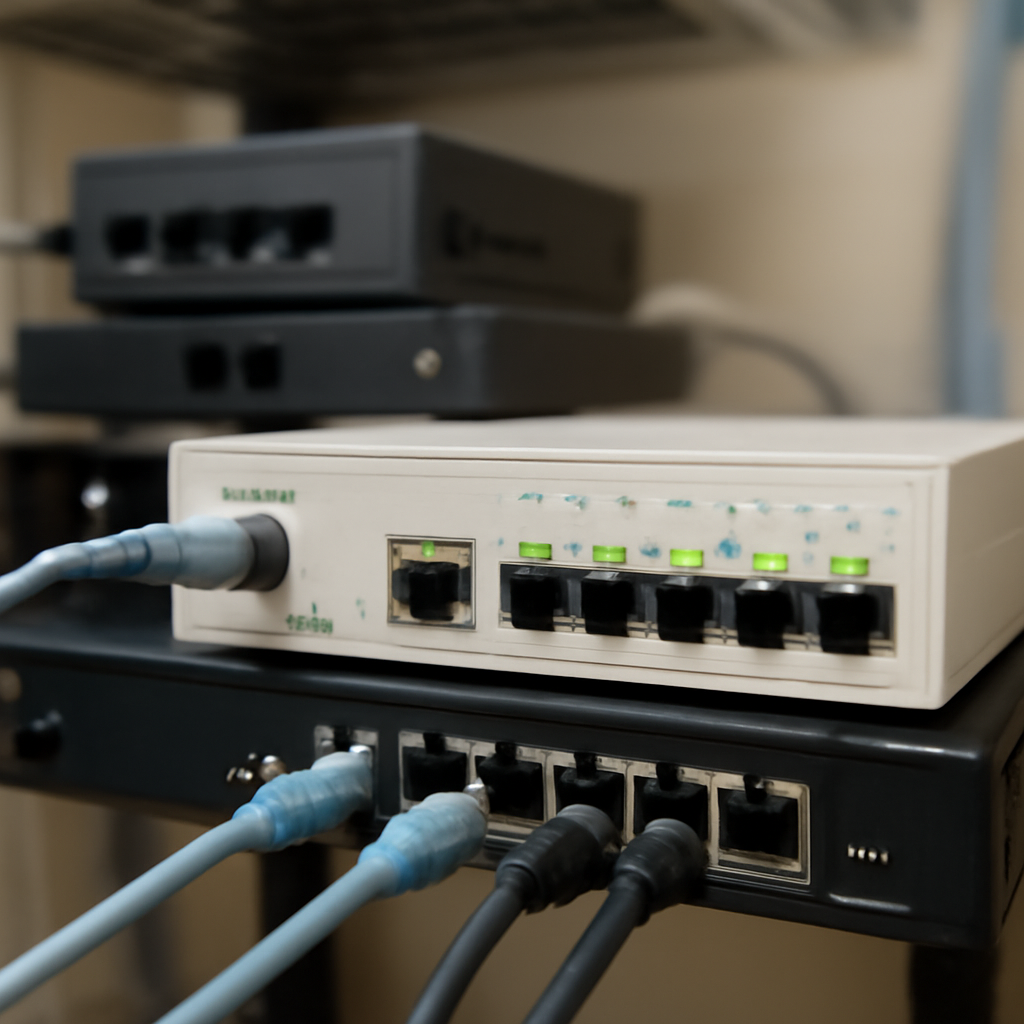
NETSCOUT proposes treating packet data—the authoritative record of what traversed the network—as the missing element. Using deep packet inspection (DPI) to observe live, unsampled packets and converting them into high-fidelity metadata via Adaptive Service Intelligence (ASI), the company calls this enriched stack “MELT+.” The approach emphasizes observing interactions at strategic network points rather than instrumenting each application or server, which NETSCOUT says reduces telemetry volume, ingestion cost and complexity. The resulting metadata, branded Smart Data, is generated at capture to lower downstream movement and storage costs while feeding existing observability platforms. The firm cites analyst firm Futurum as describing this packet-derived data as the critical foundation for autonomous AI operations.
Real-world outcome: a global manufacturer and failing AGVs
NETSCOUT describes a manufacturing case where wireless connectivity problems caused automated guided vehicles (AGVs) to fail in global facilities, producing outages roughly every three weeks and costing the company $500,000 per hour in lost productivity. Native robotics telemetry failed to locate the root cause. After NETSCOUT intervened, the source was pinpointed and a proactive monitoring model deployed that detects AGV failures within seconds. Troubleshooting time fell from hours to minutes, and the company reportedly saved tens of millions of dollars annually.
What this means for technologists, security teams, and CIOs
- Technologists and security teams: NETSCOUT argues packet-derived Smart Data gives a single, consistent evidentiary record of interactions that can show transaction success, where delay or failure appeared, which services were affected and, when identity context exists, which users experienced impact. Callahan emphasizes a packet record’s higher veracity for forensic analysis: "Once an attacker has privilege on a host, the telemetry that host generates about itself is within reach. Sophisticated attackers hide lateral movement exactly that way. What they can't do is go back and change the packets that already crossed the network."
- CIOs and procurement leaders: only 11 percent of organizations currently treat full-fidelity network data as authoritative. NETSCOUT recommends evaluating observability data by five criteria from COO Sanjay Munshi—comprehensive, curated, credible, consistent and continuous real-time insight into data in motion—so that AI pilots and compliance reporting can be supported without prohibitive telemetry cost.
NETSCOUT quantifies the practical advantage: organizations that treat network traffic data as authoritative are nearly three times more likely to report that visibility gaps occur infrequently (50 percent versus 18 percent). The claim ties the technical argument to operational outcomes and, in Callahan’s words, to executive decision timelines: better context reduces guesswork and shortens the window in which a board or public company must decide materiality and disclosure.
For enterprises moving toward higher automation, the choice described here is precise: continue expanding sampled MELT telemetry and accept incomplete context, or augment MELT with packet-derived Smart Data to produce continuous, unsampled records that show sequence and causality across service boundaries. As Callahan concludes, that approach can "strengthen what you are already doing in the platforms you use every day."