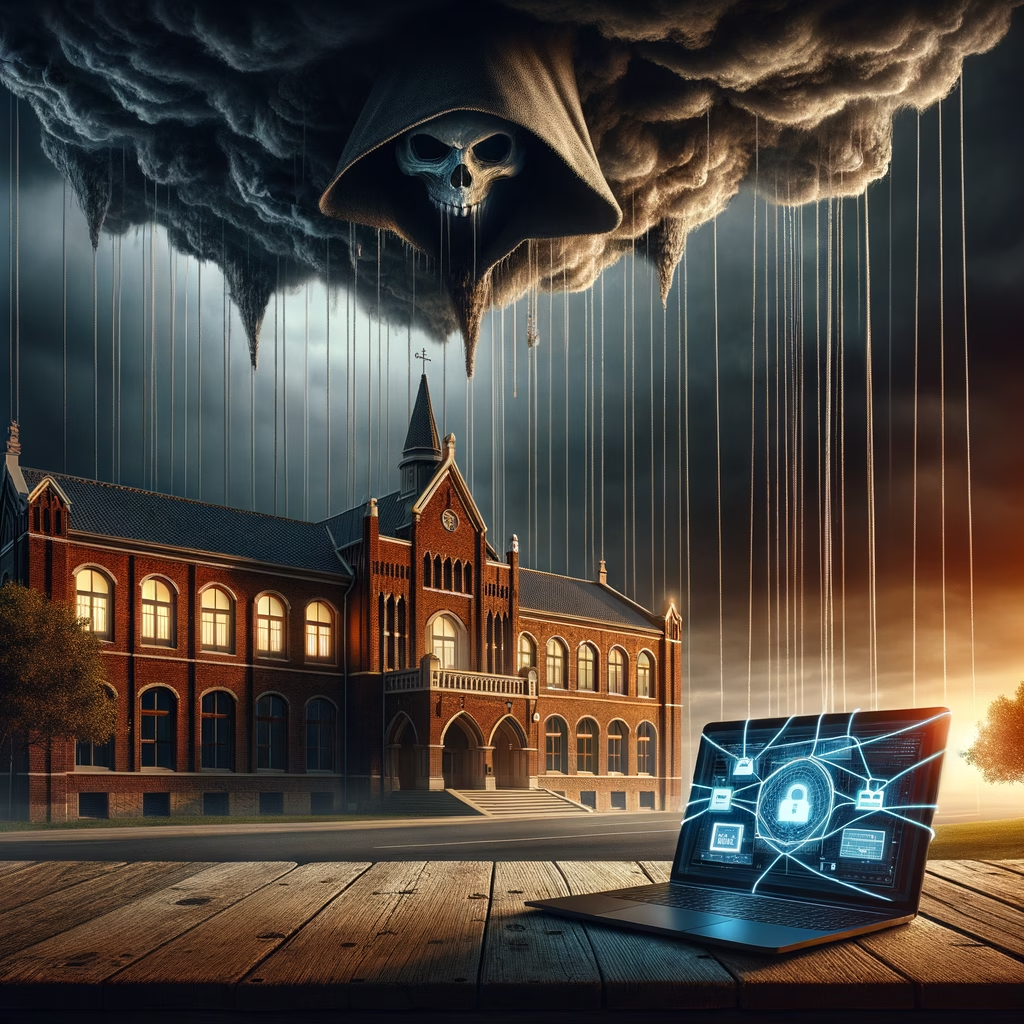
“We think of schools and universities as sanctuaries of knowledge, but increasingly, they are battlegrounds in the cyber realm.” This stark reality, articulated by cybersecurity analyst Raj Samani, underscores a growing crisis in the education sector. Recent research indicates that educational institutions face the highest risk of remote cyber attacks, a predicament that poses unique challenges and far-reaching consequences for students, faculty, and administrators alike.
The education sector’s rapid digital transformation, accelerated by the COVID-19 pandemic, has turned classrooms virtual and campuses into complex networks of interconnected APIs, web applications, and cloud services. However, this expansion has opened doors to cyber adversaries with alarming ease. According to a recent study by CyCognito, roughly one-third of the education sector’s APIs, web apps, and cloud assets remain exposed to potential cyberattacks. This level of vulnerability eclipses other sectors, making education a prime target for exploitation.

To understand the significance, it’s essential to examine how the sector’s digital assets have evolved. Schools and universities now rely heavily on cloud-based learning management systems, student information systems, and third-party educational software. These tools facilitate remote learning and administrative functions but also multiply the attack surface. APIs, which connect disparate software systems, are particularly attractive to hackers because they often lack stringent security protocols, creating backdoors to sensitive data.
Cybersecurity experts highlight that educational institutions frequently struggle with limited resources and expertise to implement robust defenses. “Unlike financial or healthcare sectors that invest heavily in cybersecurity, many schools operate on tight budgets with competing priorities,” notes Dr. Michael Bailey, a cybersecurity researcher at the University of Maryland. This imbalance leaves student records, research data, and intellectual property exposed to phishing schemes, ransomware, and data breaches.
Policymakers are beginning to recognize these risks. Recent legislative discussions aim to increase funding and set stricter cybersecurity standards for educational institutions. Still, critics argue that policy lags behind the rapid digital adoption. “Legislation must be agile enough to address evolving threats without hampering educational innovation,” says Monica Patel, a cybersecurity policy advisor at the Department of Education.
From the perspective of users—students, parents, and educators—the stakes are personal. A data breach can lead to identity theft, loss of academic records, or unauthorized surveillance. As virtual classrooms integrate with video conferencing and cloud storage, privacy concerns intensify. Experts warn that adversaries often exploit these vulnerabilities remotely, capitalizing on inadequate security to launch attacks from anywhere in the world.
Adversaries themselves are adaptive and opportunistic. Hackers targeting the education sector range from financially motivated cybercriminals deploying ransomware to state-sponsored actors seeking intellectual property or influence. The sector’s diversity—in terms of institution size, budget, and technical sophistication—creates a fragmented security landscape ripe for exploitation.
The implications extend beyond immediate financial or data losses. A successful cyberattack on an educational institution can disrupt learning for thousands of students, compromise research integrity, and erode public trust. As remote education becomes more ingrained in society, these risks will only deepen.
So, where does the path forward lie? Strengthening cybersecurity in education requires a multifaceted approach—investment in technology, workforce training, policy reform, and community awareness. It demands that technologists engineer resilient systems, policymakers craft flexible regulations, and users adopt vigilant digital habits. Without this concerted effort, the sanctuaries of learning risk becoming the soft underbelly of our digital age.
In a world increasingly reliant on digital education, can we afford to let our schools and universities remain the most exposed sector to cyber threats? Or will they become the crucibles where we forge stronger defenses for the generations to come?
Source: https://www.infosecurity-magazine.com/news/education-sector-most-exposed-to/



