DIU awards Mach Industries a RIMES contract
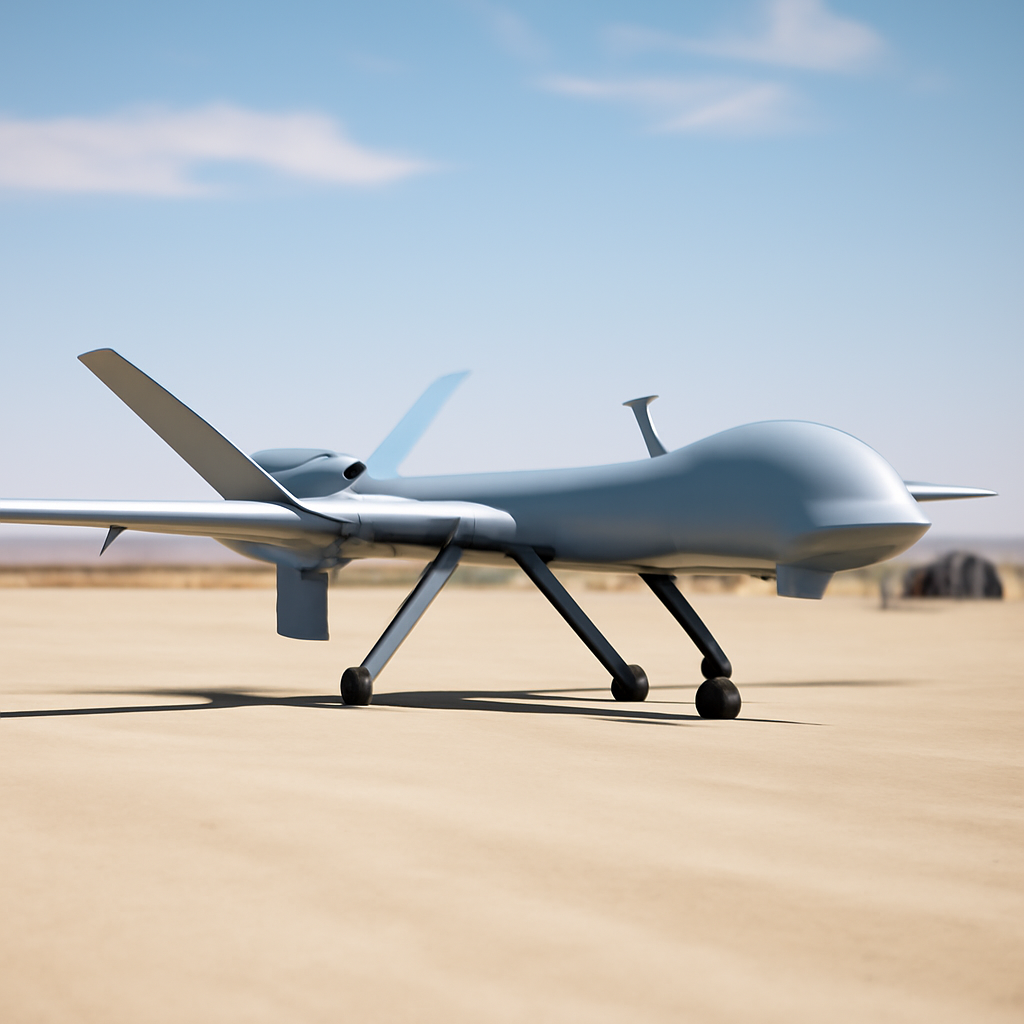
The Defense Innovation Unit (DIU) has awarded Mach Industries a contract for the Runway Independent Maritime Expeditionary Strike (RIMES) program, an effort to field an unmanned aerial system capable of long-range strikes that requires minimal infrastructure. Mach Industries confirmed it will lead development and program execution for a next-generation aircraft the company calls Atlas, and said it will partner with propulsion provider Whisper Aero on the program.
RIMES solicitation: range, payload, and launch constraints
The RIMES program solicitation, published in February, sets specific technical targets and operational constraints that frame the competition. The DIU notice seeks a drone with a one-way range of at least 1,400 nautical miles and the ability to carry 1,000-pound munitions comparable to those that arm aircraft such as the F/A-18 Super Hornet. The drone must also be capable of launching from:
- “Expeditionary locations with minimal infrastructure,” and
- “Ships without large flight decks,” such as Arleigh Burke-class destroyers, according to the solicitation.

Audit-ready is a season. It shouldn't be.
Evidence in spreadsheets, controls drifting between audits, frameworks multiplying on flat headcount. Nubivance runs continuous compliance on Rapid7 Cyber GRC - SOC 2, HIPAA, ISO 27001, PCI, CMMC.
End the scrambleAtlas, JetFoil propulsion, and the promise of lower acoustic signature
Mach Industries said Atlas will employ Whisper Aero’s JetFoil propulsion system to meet DIU requirements for runway-independent operations. Mark Moore, CEO of Whisper Aero, said in a statement that the company “developed JetFoil to propel the next generation of conventional, short, and vertical takeoff and landing aircraft silently and efficiently,” and that with JetFoil “Atlas can effectively meet the needs of the RIMES mission to operate even from Destroyer class vessels.”
Mach Industries emphasizes that Atlas’s design aims to combine the simple control characteristics of fixed-wing aircraft with the ability to use unimproved, rotary-wing-type landing zones and a thrust-to-weight ratio substantially lower than that required for vertical flight—changes the company says will increase range and “radical reductions in acoustic signature.”
Operational problem RIMES is meant to address
The DIU solicitation frames RIMES as a response to current limits on surface combatants’ ability to sustain long-range strike operations. The notice states that naval surface combatants are “constrained in their ability to support long-range strikes over extended combat operations due to reliance on single-use missile systems, with limited magazine depth and limited at-sea munition replenishment capability.” RIMES seeks cost-effective, runway-independent strike options that could expand at-sea strike capacity beyond existing missile magazines.
What this means for naval surface combatants, DIU, and Mach Industries
- The Navy’s surface combatants: A successful RIMES platform would offer a new option to extend strike reach from ships “without large flight decks,” potentially changing how at-sea strike capacity is planned around magazine depth and replenishment constraints outlined in the solicitation.
- DIU and acquisition timelines: The DIU notice explicitly sought solutions ready for “significant physical prototyping within 12 months of agreement award,” placing a near-term development rhythm on awardees and on DIU’s evaluation and integration timeline.
- Mach Industries and Whisper Aero: The award positions both companies to demonstrate JetFoil-powered, runway-independent operations at scale; success will hinge on meeting the 1,400-nautical-mile, 1,000-pound-payload thresholds and proving launch operations from expeditionary sites and smaller ships.
Mach Industries confirmed it is not the only firm receiving a contract for RIMES, and Breaking Defense reported that DIU did not respond to a request for comment by publication time on contract value or which other firms received awards. The record provided by the solicitation and company statements sets clear performance gates—range, payload, runway independence, and a rapid prototyping deadline—that will determine whether Atlas advances beyond prototype into operational testing.
The next concrete milestones will be technical: demonstrating a propulsion and airframe combination that achieves the solicitation’s range and payload figures while operating from unimproved sites and small-deck ships within the 12-month prototyping window DIU specified. If Atlas meets those metrics, it would address the particular limits DIU described around single-use missile dependence and magazine depth; if not, the program will remain one of several pathways the department is exploring to expand at-sea long-range strike options.
Original reporting: breakingdefense.com: Mach Industries wins DIU contract for maritime, long-range strike drone