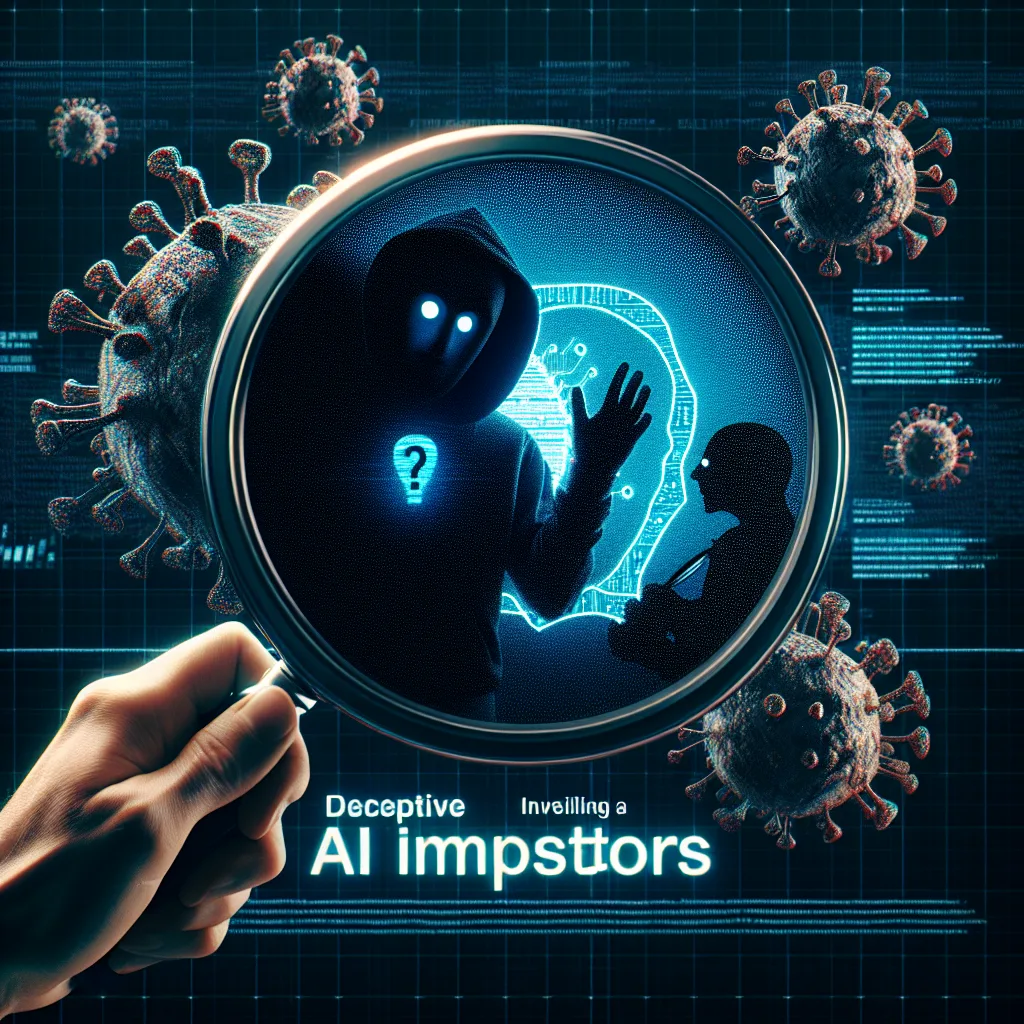
Deceptive Digital Illusions: The Malware Masquerade of AI Impostors
 In recent months, cybersecurity firm Mandiant has unveiled an insidious malware campaign that exploited the global fascination with artificial intelligence. By disguising malware within fake AI video ads that promised revolutionary generative AI tools, sophisticated cybercriminals managed to lure millions of curious users into a year-long trap. The ramifications extend far beyond isolated computer viruses—the scam strikes at the heart of public trust in emerging technologies and the digital economy at large.
As the world watches rapid advancements in AI, a parallel surge in deceptive practices has emerged. Online scammers have adeptly repackaged the promise of innovative AI solutions into fraudulent websites and video advertisements. Instead of providing tools to unlock creative potential, these sites quietly install infostealers and backdoors on unsuspecting victim systems. The carefully orchestrated operation, detailed in Mandiant’s comprehensive report, exposes how threat actors turned a moment of technological optimism into a vehicle for widespread cyber espionage and data theft.
This investigation serves as a sober reminder that even as advancements in AI offer tremendous promise, they can also serve as a magnet for criminal enterprises. With millions reportedly exposed to malicious ads, the scale of the operation underscores the vulnerabilities inherent in our increasingly interconnected digital landscape. Cybersecurity professionals and policy makers alike are left grappling with the dual challenge of nurturing innovation while safeguarding users against exploitation.
Historically, the digital arena has seen cycles of hype followed by exploitation. In the early 2000s, as social media platforms blossomed, fraudsters used bogus profiles to harvest personal data. More recently, cryptocurrencies and decentralized finance have similarly attracted schemes from cybercriminals. The current malware campaign is a natural evolution in this timeline—the convergence of cutting-edge AI trends and digital malfeasance, where excitement about technology masks malicious intent.
Mandiant’s report highlights that the malicious campaign employed deceptive video ads that mimicked legitimate AI demonstrations. By doing so, the threat actors tapped into a willing audience eager to learn about transformative digital tools. The ads, prominently featured on seemingly credible websites, promised free access to advanced AI functionalities or tutorials. Instead, they paved the way for malware that could quietly infiltrate systems, steal sensitive information, and provide remote access for further exploitation.
Among the primary attack vectors were:
- Disguised Promises: Fraudulent sites mimicking genuine AI platforms misled users into downloading what appeared to be legitimate software.
- Exploitation of Curiosity: The allure of generative AI, a field experiencing a meteoric rise in both public attention and investor interest, provided fertile ground for exploitation.
- Widespread Distribution: With millions reportedly exposed to fake video ads, the distribution network of the malware reached an unprecedented scale.
In today’s climate, where technological innovations drive economic and social evolution, the implications of such a campaign are significant. The economic damage from stolen personal data and intellectual property can be immense, not to mention the erosion of public confidence in digital innovations. There is also an increased risk of these malicious tools being repurposed for espionage or industrial sabotage.
Security experts note that the attack stands as a textbook example of a supply chain compromise interwoven with sophisticated social engineering. By cloaking malware within the guise of attractive digital content, the threat actors capitalized on a fundamental human trait: the desire for discovery and learning. This strategy, while technologically grounded, is deeply psychological in nature.
Renowned cybersecurity professionals have long cautioned against the allure of “too-good-to-be-true” technological breakthroughs. Though the specific individuals quoted in Mandiant’s report are not disclosed in this writing, the overall sentiment from the global cybersecurity community emphasizes the critical need for vigilance. Authorities such as the Federal Bureau of Investigation (FBI) and the Cybersecurity and Infrastructure Security Agency (CISA) have repeatedly underscored that rapid technological change demands an equally agile response in cybersecurity protocols.
One expert in the field, whose work has been published frequently in industry journals such as the Journal of Cybersecurity, commented that “the sophistication of modern malware is a mirror of our increasingly digital lives: interconnected, advanced, yet continually vulnerable.” While attribution in such dynamic cyber conflicts remains a challenge, the technical forensic work performed by Mandiant is both rigorous and alarming.
The current campaign’s reliance on fake AI video ads illustrates a concerning trend: as technology evolves, so too do the methods of those looking to exploit it. Cybercriminal groups are now more adept than ever at using popular narratives—be it AI, cryptocurrencies, or other emerging technologies—to disguise their malicious intents. This modus operandi not only complicates detection and response but also places the onus on individual users and institutions to engage in proactive cybersecurity education and defense.
Why does this matter? The human cost of cybercrime extends beyond financial losses. When personal data, business secrets, or even national security information are compromised, the ramifications ripple through society. Users suffer from identity theft and privacy violations, companies face significant reputational damage and fiscal strain, and governments must contend with the challenge of enforcing policy in a borderless digital domain.
Furthermore, the incident underscores a broader issue: the intersection of rapid technological innovation and cyber risk. As digital platforms become more ingrained in everyday life, the balance between accessibility and security grows increasingly delicate. The campaign uncovered by Mandiant serves as a cautionary tale—a vivid illustration of how the same tools that drive progress might also enable unprecedented breaches of trust.
Looking forward, industry insiders anticipate that we will see an acceleration in efforts to bolster cybersecurity measures around AI applications. Companies that develop AI tools are likely to invest in more robust verification protocols, ensuring that users are not misled by fraudulent sites that mimic their platforms. Furthermore, regulators may look to establish clearer guidelines for online advertising to prevent such deceptive tactics from proliferating unnoticed.
Internationally, cooperation between cybersecurity agencies and technology firms is expected to increase. Initiatives that facilitate the rapid sharing of intelligence on malware campaigns, similar to the public-private partnerships seen in previous cybersecurity crises, could become the norm. In this environment, every stakeholder—from individual users to tech giants—is challenged to remain vigilant and maintain a circumspect approach to digital innovation.
For everyday users, the campaign serves as a potent reminder of the need for digital literacy. Individuals must exercise caution when engaging with online content that promises cutting-edge technological breakthroughs. Routine measures—such as verifying sources, using reputable security software, and keeping systems updated—are more crucial than ever in an era where even seemingly benign video ads can harbor destructive malware.
In reflecting on this episode of deceptive digital exploitation, one cannot help but wonder: in the race to innovate, how do we ensure that progress does not pave the way for peril? The dual nature of technology as both a tool for growth and a weapon of exploitation remains one of the defining challenges of our time. While generative AI and similar innovations promise to transform lives and industries, they also invite a host of new security threats that demand proactive vigilance.
Ultimately, the discovery of this malware scam is not just a story about a single cyberattack—it is a chapter in the evolving narrative of how society adapts to the modern digital landscape. The sophisticated methods employed by cybercriminals in leveraging the allure of AI highlight the pressing need for a collective response, one that spans policymakers, security experts, and everyday users alike.
As the dust settles on this alarming revelation, the enduring lesson is clear: in the digital age, not everything is as it appears. Combating cyber threats requires an unwavering commitment to verification and a nuanced understanding of both technological promise and potential peril. The challenge remains for both experts and laypersons to discern genuine innovation from cleverly disguised threats—and in that effort, the stakes could not be higher.



