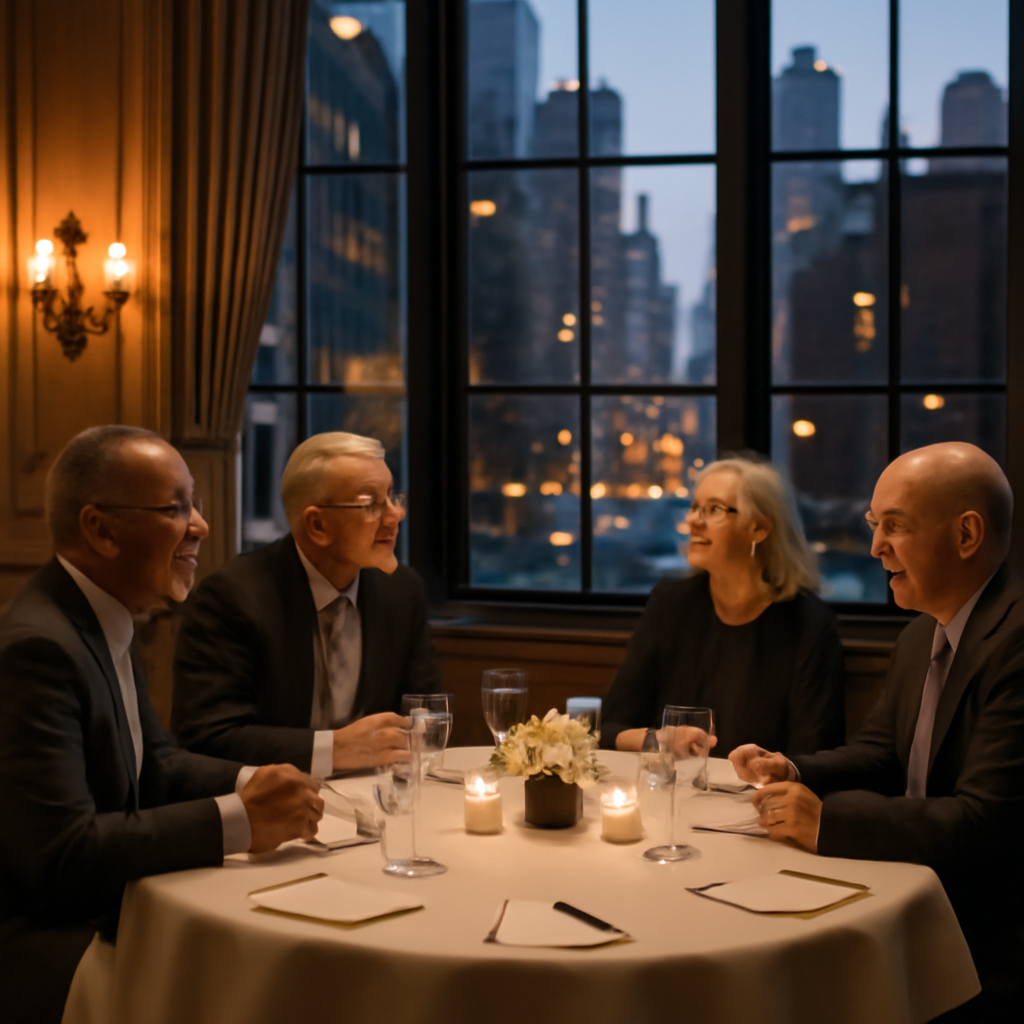
"Nothing said leaves the table," The Register writes — a strict promise that frames a private, peer-only conversation about one of the quotidian but costly problems in modern IT: which copy of a working file is the real one once a team no longer shares a building.
Dinner format and ground rules
The Register is hosting a private dinner in New York on Tuesday 27 October that will run under the Chatham House Rule and is explicitly off the record. Joe Fay will take the chair, and the evening is structured to prevent pitching: the chair's role includes stopping anyone who starts to pitch. The session runs from 6.00pm to 8.30pm at The Capital Grille, 120 W 51st Street. Places are limited and go by invitation.
Who will sit at the table
The table is reserved for "senior technology, infrastructure and data leaders" who are described as people "carrying this now, not planning for it later." Attendees will convene as peers for a short sequence — drinks, a handful of questions across the table, then more drinks — in order to elicit candid accounts of day-to-day operational choices that rarely survive a recorded webinar or a public slide deck.

This site is the portfolio.
OSINTSights runs on Cloudflare Workers, D1, R2, and Vectorize, with an AI pipeline on Hetzner ARM. Nubivance designed, built, and operates it. We do the same for clients.
See what we buildThe operational problem on the table
The topic is straightforward: distributed teams are producing more unstructured file data than ever, and most still reach it through infrastructure designed for an office. The source lists three legacy access patterns in common use — legacy NAS, a VPN, and a sync-and-download habit nobody actually chose — and observes that those systems "rarely fail outright" yet "charge rent somewhere else." That rent, the copy argues, is paid in duplicated storage, in waiting, in governance gaps, and "in the hour somebody loses working out which version of a file is current."
Modernize around what you already have — not rip and replace
The Register sets the premise for the conversation deliberately: it is "not rip and replace." Instead the evening aims to focus on modernizing around the storage and governance investments an organization already has, rather than pretending those investments are not there. Conversation prompts flagged in the notice include: what a team did when it stopped being in one building; which workaround somebody has quietly been paying for ever since; what broke when they tried to retire the NAS; and what they would do differently now. Holly Bossert, Commercial Sales US at LucidLink, joins the conversation to contribute to that discussion.
What this means for senior technology, infrastructure and data leaders, security teams, and the people who have to pay for it
- Senior technology, infrastructure and data leaders — will trade concrete postmortems and choices about retiring legacy systems and about supporting distributed teams without multiplying storage costs.
- Security teams — will hear whether current file-access workarounds "hold up against a security incident," a specific question posed by the event notice.
- The people who have to pay for it — will be listening for practical outcomes: reductions in duplicated storage, less staff waiting, fewer governance gaps, and fewer hours lost to version confusion.
The Register frames the dinner as a rare, in-person forum for practical problem-solving rather than vendor theatre: no recorded webinars, no public slides, and an explicit emphasis on the real-world consequences of retiring familiar infrastructure. For senior leaders wrestling with day-to-day file access across distributed teams, the invitation promises an exchange of lived experience — and, implicitly, answers to the blunt question the organisers place front and centre: what broke when you tried to retire the NAS, and what would you do differently now?