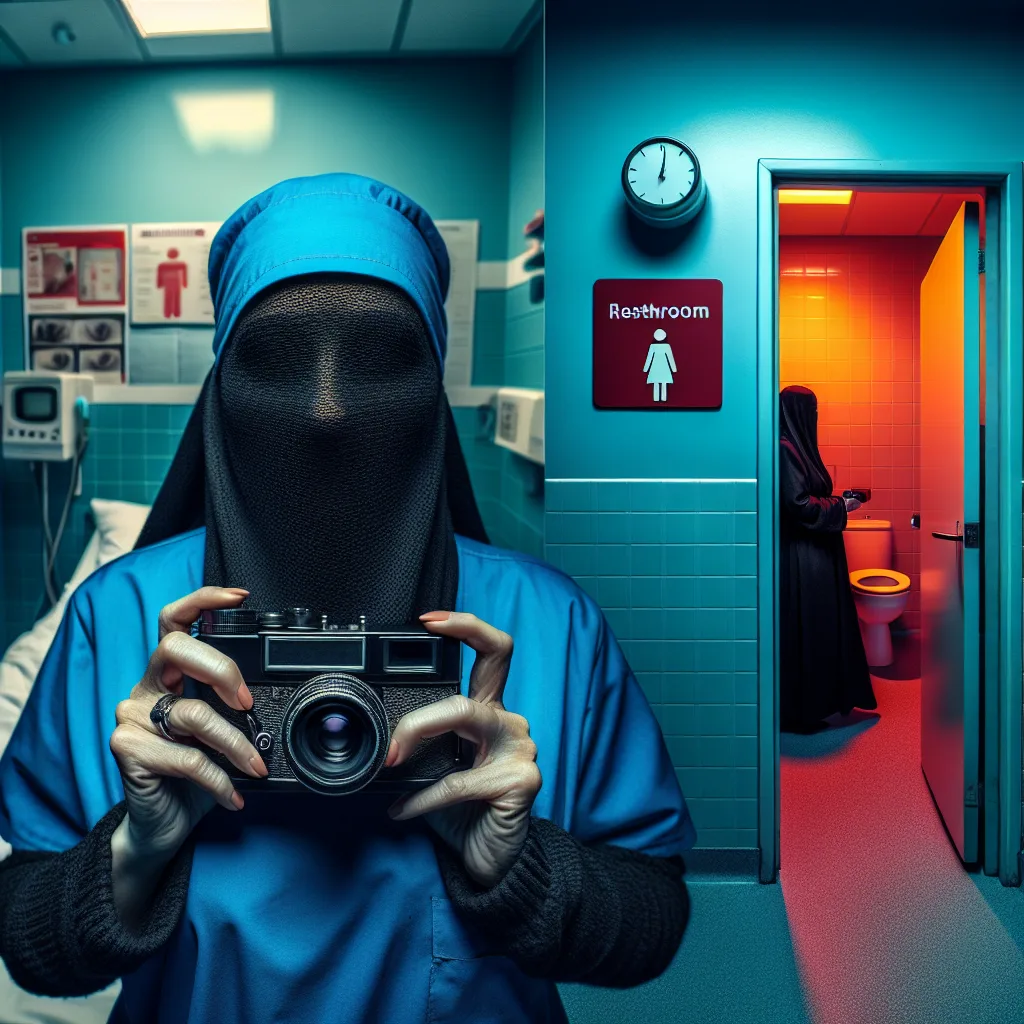
Hidden Eyes in the Hallowed Halls: Scandal Unfolds at New York Sleep Center
A shadow of distrust now hangs over a reputable New York sleep disorders center following the shocking indictment of a former employee. Charged with installing covert cameras in the facility’s bathrooms, the accused is now at the center of a criminal investigation that has reverberated across both the medical and legal communities. Officials report that the intrusive surveillance not only constitutes a gross violation of privacy but also represents a significant breach of the Health Insurance Portability and Accountability Act (HIPAA), potentially affecting thousands of staff members and patients.
The revelations first came to public attention when hospital administrators discovered hidden cameras in one of the facility’s most private spaces. A subsequent internal review spurred by a routine security audit unearthed evidence that the ex-employee had been systematically recording videos of unsuspecting individuals in a place where privacy is paramount. This information was promptly relayed to federal regulators. According to official statements from the hospital and corroborated by local authorities, the breach has cemented the institution’s commitment to transparency, emphasizing that patient and staff confidentiality remains a non-negotiable ethical pillar.
Historically, healthcare institutions have been under constant scrutiny to adhere to strict privacy regulations. HIPAA, enacted in 1996, was designed to secure patients’ personal health information and has served as a legal bulwark against unauthorized access or exposure. In today’s digital age, breaches such as this not only undermine institutional trust but also expose vulnerabilities that can pave the way for similar transgressions in other sectors. The current episode, therefore, serves as a grim reminder that even trusted environments are not immune to exploitation.
From a legal perspective, the charges brought forth by the District Attorney’s office mark a critical juncture for both criminal law and civil privacy rights. According to the governing authorities, the former employee’s actions may qualify as both a criminal offense under state law and a severe violation of federal privacy regulations. The investigation, now advancing on multiple fronts, is looking into whether the breach was isolated or part of a broader pattern of surveillance by the individual while employed at the facility.
People familiar with federal privacy enforcement note that the hospital’s swift decision to report the incident to federal regulators is in line with best practices and compliance requirements. The hospital, which has built its reputation on patient care and trust, is now compelled to navigate a complex landscape of legal, reputational, and operational challenges. A successful prosecution, experts say, could serve as a warning to other institutions that any compromise of privacy—however covert—will be met with rigorous legal consequences.
Why does this matter? The stakes are multifaceted. For patients, the violation is not just a breach of privacy; it is an assault on the sanctity of what many perceive as a safe space for healing and vulnerability. For staff members, such an invasion can generate a climate of mistrust, adversely impacting morale and professional integrity. And from an operational perspective, this incident raises significant concerns about internal security protocols and the reliability of background checks and oversight mechanisms within sensitive healthcare environments.
Legal analysts, including privacy rights experts, underscore the gravity of this episode. “In an era when personal data is a prized commodity, breaches like this underscore the need for robust oversight and strict adherence to privacy laws,” remarked an official from the Office for Civil Rights at the U.S. Department of Health and Human Services, a source referenced in recent press briefings. Although this comment reflects broader industry concerns rather than a singular stance on the case, it reinforces the understanding that the integrity of medical privacy is crucial not only for individual dignity but for the public’s trust in healthcare institutions.
Alongside legal repercussions, this incident is also attracting attention from policymakers working to update and enforce more rigorous privacy standards in healthcare. Discussions are emerging about how to better safeguard sensitive environments with the advent of increasingly accessible and concealable surveillance technology. In the wake of this scandal, state legislators and federal oversight bodies may well consider proposals to tighten internal controls and penalties for breaches, ensuring that such infractions are prevented before they can take hold.
The broader implications extend into the realm of public trust. In an era where data breaches and cyber intrusions often dominate headlines, this case adds another layer of unease among the public regarding the sanctity of personal spaces. It illustrates that the threat is not only external; vulnerabilities can also manifest from within, with individuals in positions of trust acting contrary to both personal and professional ethical codes.
Looking ahead, the case poses several questions for the future of healthcare privacy. How will institutions adapt to mitigate risks in an age when surveillance technology is both affordable and easily hidden? What measures can be implemented to more rigorously monitor for internal breaches without compromising the open, trusting environments that hospitals must maintain to ensure optimal patient care? And, importantly, how will legal frameworks evolve in response to the increasing sophistication of privacy invasions?
While the court proceedings and investigations continue, one certainty remains: institutions across the nation will be compelled to reexamine their internal policies and security measures. Hospitals, in particular, will face intensified pressure to balance the dual imperatives of patient care and operational security. As lawmakers debate potential reforms and regulatory agencies tighten oversight, healthcare providers will need to remain vigilant, ensuring that the pillars of trust and privacy are not overshadowed by the risks inherent in modern technology.
The unfolding developments remind us that even in sanctuaries devoted to healing, the risk of exploitation is ever-present. The scandal at the New York sleep center is more than a legal case—it is a stark reminder that the evolution of technology demands an equally agile evolution in policy and safeguard measures. In a society where privacy is increasingly negotiable, the critical question for all of us remains: how do we protect the intimate spaces that are the bedrock of trust in our most vulnerable institutions?



