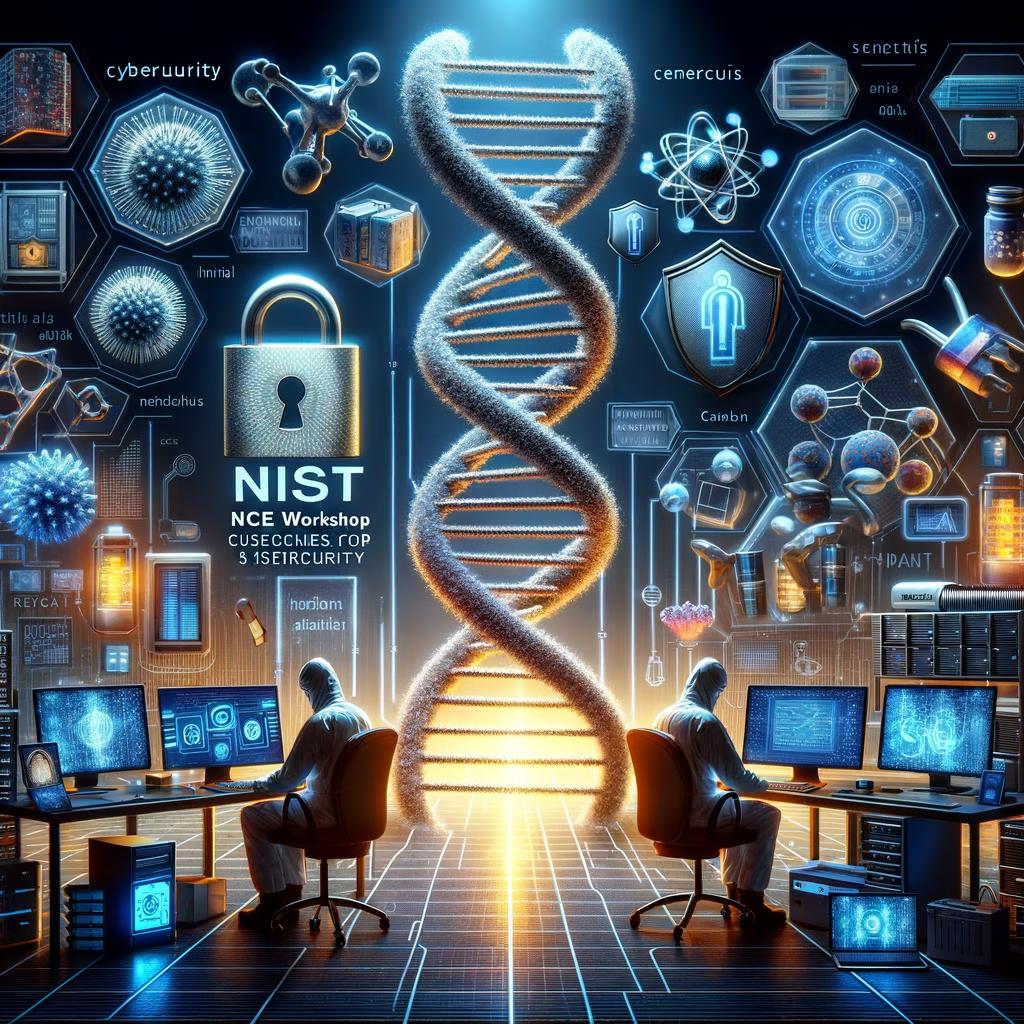
“How do you protect the blueprint of life itself?” This question loomed large on May 20, 2025, at the National Cybersecurity Center of Excellence (NCCoE) in Rockville, Maryland, as experts gathered both in-person and virtually to grapple with the evolving challenges of safeguarding genomic data. The workshop convened by the National Institute of Standards and Technology (NIST) was more than a technical seminar—it was a timely forum addressing the critical intersection of cybersecurity and the sensitive, rapidly expanding domain of genetic information.
Genomic data, often described as the ultimate personal identifier, carries not only health insights but profound privacy implications. As Dr. Lisa Freeman, a cybersecurity specialist at NIST, remarked during the workshop, “The stakes are extraordinarily high. A breach of genomic data isn’t just a matter of credit card fraud; it touches the core of individual identity and familial legacy.”

The backdrop to this workshop is the surge in genomic research, personalized medicine, and direct-to-consumer genetic testing. Estimates suggest that by 2030, over a billion people worldwide will have their genomes sequenced. This tidal wave of data flows through hospitals, research institutions, insurance companies, and tech firms, each presenting unique cybersecurity vulnerabilities. The hybrid format of the NCCoE workshop enabled a diverse assembly, including technologists, policymakers, healthcare providers, and privacy advocates, to examine these vulnerabilities under one roof and through digital channels.
Historically, genomic data has been protected under frameworks like the Health Insurance Portability and Accountability Act (HIPAA), but experts at the event highlighted that traditional security measures fall short against modern threats. Cyber adversaries are increasingly sophisticated, motivated not just by financial gain but by espionage, identity theft, and even genetic discrimination. “Genomic data demands a tailored cybersecurity approach,” emphasized Dr. Rajesh Patel, a bioinformatics expert and workshop participant. “Standard encryption and access controls are necessary but insufficient.”
The NCCoE workshop aimed to chart a path forward by promoting standards-driven, practical solutions that can be implemented across sectors. Among the topics discussed were secure data storage architectures, advanced authentication mechanisms, and the role of artificial intelligence in threat detection. Participants also debated the ethical considerations surrounding genomic data sharing—how to balance scientific advancement with individual rights.
From a policymaker’s perspective, Senator Maria Gonzales, who joined virtually, noted, “We must ensure that legislation keeps pace with technology, fostering innovation without compromising privacy. Workshops like this one are crucial to inform evidence-based policymaking.”
Users of genomic services—patients and research participants—also featured prominently in the conversation. Concerns about consent, data ownership, and transparency were underscored as vital areas requiring attention. The workshop highlighted initiatives to empower individuals through improved user controls and clearer communication about data use.
Yet, the discussion was not without recognition of the adversarial landscape. Cybercriminal groups and state-sponsored actors have demonstrated increasing interest in exploiting genomic databases, which are often centralized and valuable. The risk of genetic data being weaponized—for purposes ranging from targeted bioweapons to discriminatory profiling—cannot be dismissed as science fiction but must be confronted as a tangible threat.
In closing, the NCCoE workshop underscored that cybersecurity for genomic data is a complex challenge demanding collaborative, multidisciplinary solutions. As technologies evolve and data volumes grow, the question remains: can we build systems resilient enough to protect the very essence of our biology, or will genomic information become the new frontier exploited by those who would do harm?
As Andy Rooney might have reflected, safeguarding genomic data is not merely a technical problem—it’s a societal imperative. In a world where our genetic code holds the keys to future health and identity, neglecting cybersecurity is a risk humanity cannot afford to take.



