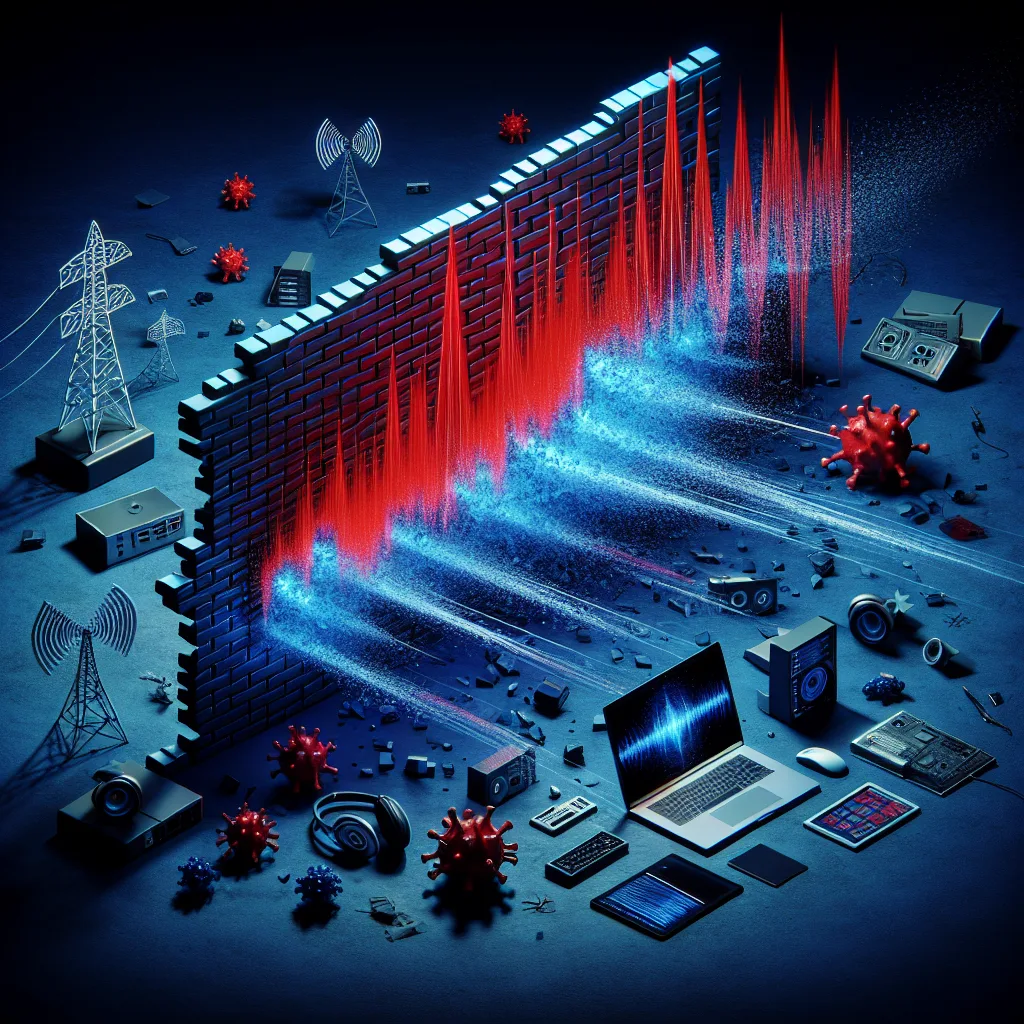
Shield Under Siege: SonicWall Vulnerabilities in the Crosshairs of Cyber Threats
In a development that underscores the persistent tension between robust network defenses and increasingly sophisticated cyber adversaries, the U.S. Cybersecurity and Infrastructure Security Agency (CISA) has officially confirmed that vulnerabilities in SonicWall products are being exploited. In a statement released to the public, CISA added two specific flaws to its catalog of Known Exploited Vulnerabilities, drawing attention to the need for immediate action by organizations that rely on these security appliances.
Cybersecurity officials and system administrators across a range of industries are now alerted to the pressing dangers posed by these vulnerabilities, which could potentially undermine the protective barriers designed to fend off a host of cyber threats. The nation’s digital infrastructure—a tapestry of private, public, and governmental networks—may be at increased risk unless timely mitigations are put in place.
Historically, SonicWall’s network security products have earned a reputation for their reliability and performance in safeguarding enterprise environments. However, even the most trusted systems can harbor latent risks. This episode is not isolated; rather, it echoes several high-profile instances when widely used security products were found to have exploitable defects. In the wake of past incidents, both governmental and private sectors enhanced their vigilance, an evolution that is now reaffirmed by CISA’s prompt action.
The timeline leading to this confirmation has been methodical yet urgent. Researchers and internal security audits identified anomalous network behaviors that eventually pointed to flaws in the SonicWall products, prompting a deeper investigation. Although technical details remain under careful review by cybersecurity professionals, it is clear that the vulnerabilities have already been exploited by adversaries in active campaigns. CISA’s public cataloging of these exploits is a necessary step to empower organizations with the knowledge and impetus to secure vulnerable systems before further breaches occur.
The implications of these findings stretch far beyond the immediate technical terrain. Vulnerabilities in key security infrastructure inevitably ripple outwards, affecting operational continuity, consumer trust, and the strategic balance between offense and defense in the cyber realm. For instance, if left unaddressed, these flaws could serve as conduits for data breaches that may expose sensitive personal information or jeopardize sensitive corporate networks, ultimately undermining the trust that forms the bedrock of the digital economy.
Cybersecurity experts, including representatives from established firms such as Palo Alto Networks and FireEye, have underscored the risks inherent in compromised security products. “Any vulnerability in a critical infrastructure device is a call to arms,” noted a senior official at FireEye in a recent industry briefing. His sentiment reflects a broader consensus in the cybersecurity community: that every exploited vulnerability is an open invitation for further intrusion attempts, particularly by state-sponsored actors and well-resourced criminal enterprises.
Why, then, does this particular episode with SonicWall warrant such heightened concern? First, SonicWall devices are often deployed at the front lines of network security, where even minor lapses in protection can have cascading effects across entire ecosystems. Second, the issues now confirmed by CISA have already moved from theoretical risk to practical exploitation, suggesting that adversaries have successfully navigated the defensive perimeter. As organizations scramble to patch existing devices and reconsider their network segmentation strategies, the urgency is palpable.
In light of these revelations, stakeholders ranging from IT administrators to senior policymakers must scrutinize both technical remedies and broader strategic responses. CISA’s confirmation serves as both a clarion call and a benchmark for vigilance—a reminder that even well-regarded security products must continuously evolve to counter the dynamic methods deployed by would-be attackers.
Looking forward, what outcomes might we expect as the cybersecurity community mobilizes in response to these findings? It is likely that manufacturers such as SonicWall will accelerate their patch cycles, releasing security updates that remain robust against emerging threats. Regulatory bodies may consider reinforcing compliance requirements for critical infrastructure devices, setting new baselines for secure design and rapid vulnerability remediation. Meanwhile, organizations dependent on these products should anticipate rigorous audits and a potential overhaul of internal IT policies to mitigate residual risks.
Cybersecurity is, at its core, a story of human ingenuity facing off against the implacable force of relentless disruption. As experts continue to dissect the technical intricacies of the SonicWall vulnerabilities, the conversation naturally turns to the resilience and adaptability of the global digital ecosystem. How long will it take before another Achilles’ heel is found in the armor of our virtual fortresses? And are our reactive measures keeping pace with the evolving threat landscape?
The confirmation by CISA is neither the beginning nor the end of this chapter; it represents a pivotal moment in the ongoing dialogue between technology providers, cybersecurity experts, and policy enforcers. In an arena where every advantage is measured in milliseconds and every vulnerability is a potential entry point for harm, vigilance is not just an operational necessity—it is a constant, evolving mission. The challenge remains: to safeguard our digital futures while preserving the trust and functionality that modern life demands.