"The PF-98 'Queen Bee' 120mm is, for me, the purest expression of PLA infantry weapons design," wrote the China Defense blog, and its description of the DZG201A round that fits that family reads like a short brief on industrial discipline: simple, effective, and meant to be made in numbers.
The PF-98 family as frontline fire support
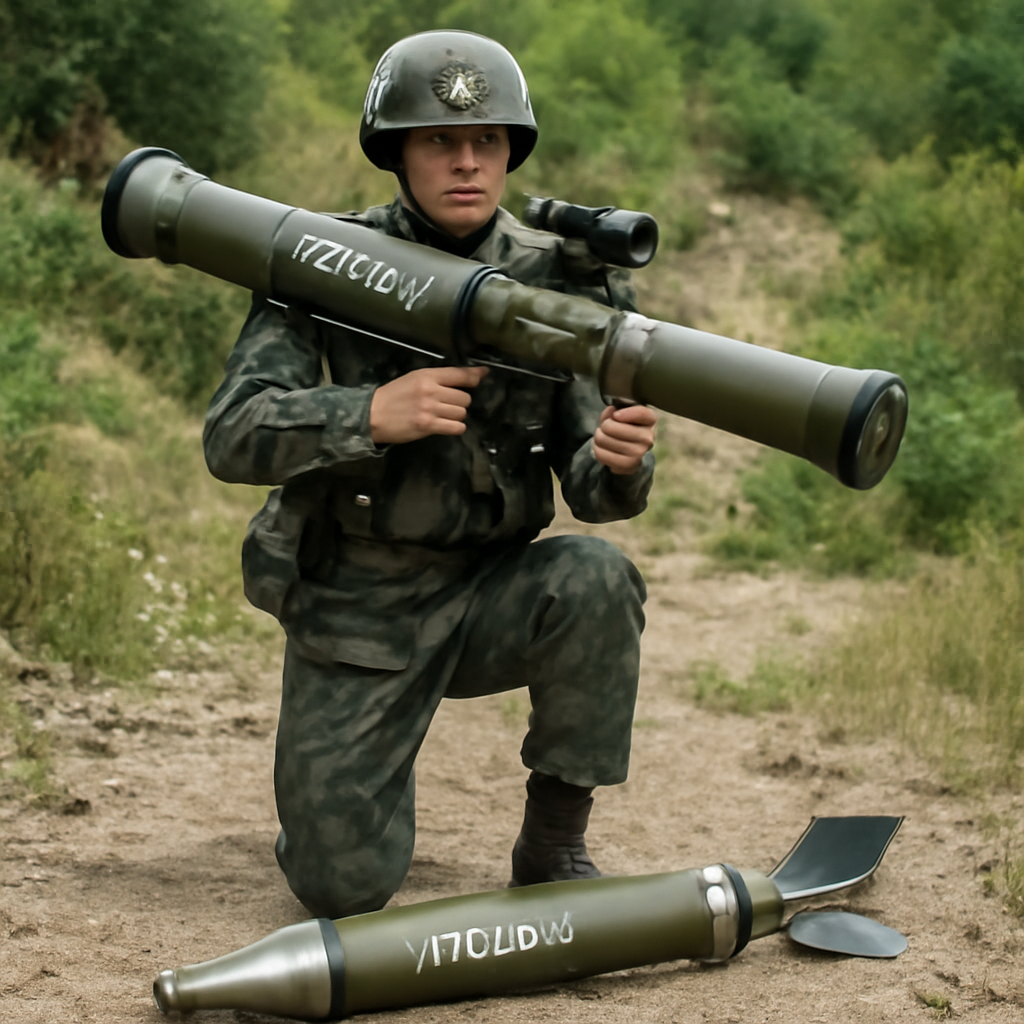
The PF-98 120mm system is presented in the source as a deliberately pragmatic infantry weapon. It is heavier than the classic RPG-7/Type 69 family — about 11 kg versus 7 kg, roughly 3 kg heavier — yet still portable by a single soldier. The blog describes the platform’s growing role pushed down to the squad level, where it is used across roles the author lists as anti‑tank, anti‑bunker, anti‑personnel and general-purpose destructive tasks.
The post also notes incremental modernizations: the PF-98 benefits from upgraded fire‑control optics that improve accuracy over older unguided rocket designs, and the integration of those sights was discussed in a separate entry dated August 29, 2025.
The DZG201A: tandem, two‑stage attack-fortification projectile
The DZG201A is identified in the source as a dedicated bunker‑busting, concrete‑penetrating rocket round — an attack‑fortification projectile (攻坚弹). Its core technical detail is a tandem, two‑stage warhead arrangement: a first charge punches a hole through reinforced concrete, packed earth or brickwork; a following second charge passes through that opening and detonates inside the structure to maximize internal damage.
The blog emphasizes there is no exotic or precision guidance technology in the DZG201A. It is described as a relatively cheap rocket that solves a long‑standing military problem by sequence — make a breach, then exploit it.

Audit-ready is a season. It shouldn't be.
Evidence in spreadsheets, controls drifting between audits, frameworks multiplying on flat headcount. Nubivance runs continuous compliance on Rapid7 Cyber GRC - SOC 2, HIPAA, ISO 27001, PCI, CMMC.
End the scramblePF-98A variant: deliberate tradeoffs for mobility and mass production
The source sketches the PF-98A as a lighter, less expensive variant intentionally optimized for infantry squad operations. Key changes include a reduced tube service life — from 500 rounds down to 200 — attributed to thinner tube material used for weight reduction. The launch tube is modified from a bipod/tripod arrangement to a single "stick" to save weight.
A small fireteam concept is explicit in the blog’s images and captions: a two‑man fireteam carrying a total of four rockets (2x2) and a kit weight for the pair of roughly 15.33 kg. The tube itself is cited as weighing 22 lbs (about 10 kg) without warheads.
What this means for infantry squads, procurement leaders, and adversaries
- Infantry squads: The combined picture in the source is of greater organic firepower and mobility at the squad level — a heavier but still man‑portable system, fielded in lighter PF‑98A form for patrols, with optics that improve likelihood of first‑shot hits.
- Procurement leaders: The blog frames the family as deliberately low‑cost and mass‑producible, trading long tube life for lighter weight and simplifying the launcher to increase numbers in the field rather than invest in costly precision packages.
- Adversaries: From the described capabilities of the DZG201A, defenders who rely on reinforced concrete, packed earth or brickwork for fortification face a weapon specifically designed to defeat those protections by a two‑step penetration and internal detonation sequence.
A design philosophy: function and numbers over flash
The China Defense post repeatedly returns to a central thesis: the PF‑98 family — and the DZG201A round by association — embodies a pragmatic, production‑oriented approach. The blog contrasts this utility‑first engineering with the cultural cachet of older weapons, noting that the RPG‑7 retains decades of "revolutionary street cred" and photographic appeal, while the PF‑98 is described as "efficient, affordable, and completely devoid of charisma."
That contrast is more than aesthetic in the source: the PF‑98’s modern optics and the DZG201A’s straightforward tandem warhead are presented as incremental, workmanlike improvements intended to increase battlefield effectiveness without adding expensive guidance or exotic technology.
In short, the DZG201A looks less like a technological leap and more like a tactical answer to a concrete problem — literally. The round’s design leans on sequence and physics rather than precision electronics, and the PF‑98 family around it is adjusted for cost, weight and mass deployment. Whether that balance will reshape fortification practices or procurement choices is not detailed in the post, but the record in the source is clear: the PLA‑oriented design philosophy here privileges simple, scalable solutions built to be produced in numbers.
https://china-defense.blogspot.com/2026/09/dzg201a-120mm-bunker-buster-concrete.html