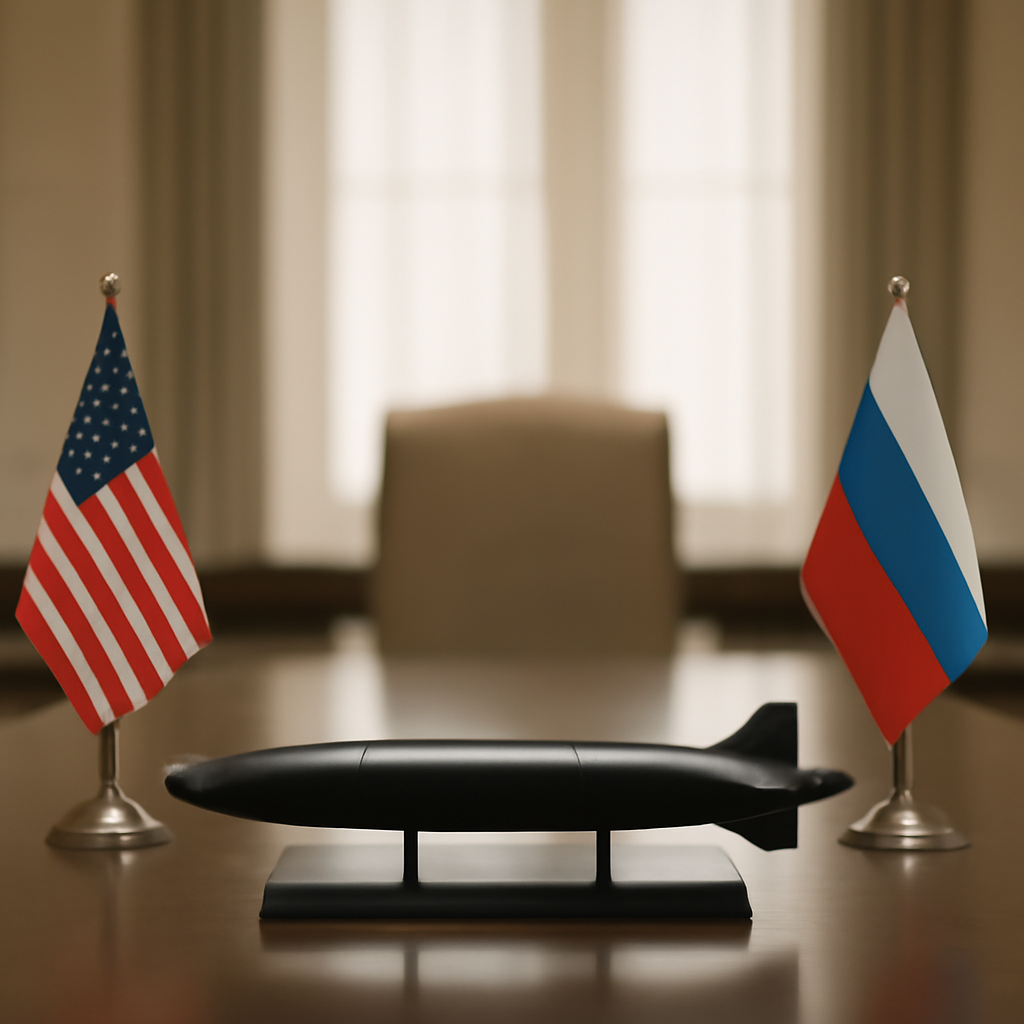
The balance of strategic nuclear forces among the United States, Russia and China — and the risks that balance poses for the United States and its allies — are now squarely at stake.
New START lapse and the US–Russia parity
In late February, the United States and Russia found themselves without an agreement about the disposition of their major strategic nuclear weapons for the first time in more than 20 years. The article records declared totals: Russia holds 5,459 deployed and stored strategic nuclear weapons, and the United States a comparable declared total of 5,177. Those two arsenals remain, by scale, the dominant forces on the strategic map.
China’s rapid expansion: from roughly 600 warheads to 3,000 by 2030 (Pentagon estimate)
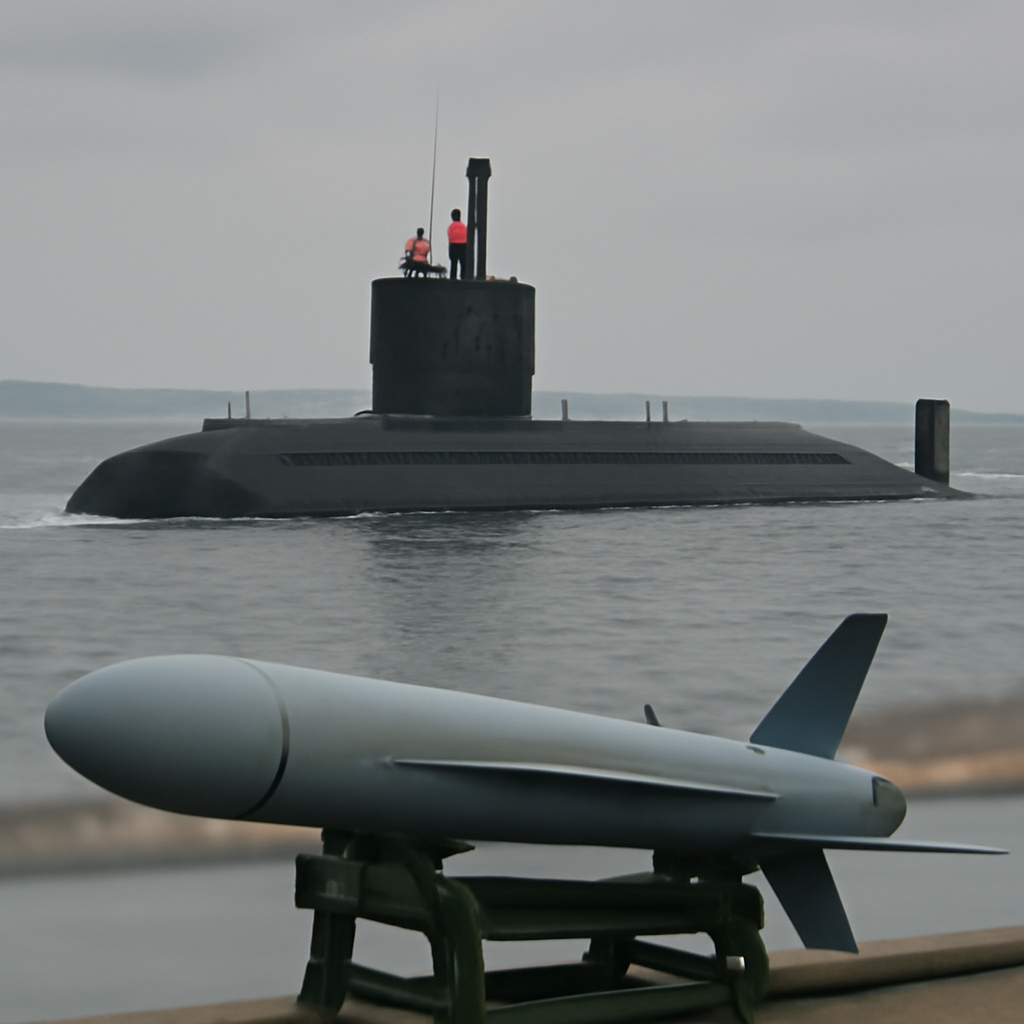
China today "has only 600 warheads" but, according to the Pentagon, "will have 3,000 warheads by 2030" because of a "massive new program for intercontinental ballistic missiles." To reach that predicted level, the article says, China must marshal advanced engineering for new warheads and delivery systems and divert production resources to build land-based ICBMs, submarine-launched ballistic missiles, the large vessels that carry them, and expensive intercontinental bombers.
The author argues that, by the early 2030s, China’s forces will be “approaching US warhead numbers,” and that Russian and Chinese weapons together would greatly outnumber the United States. From Washington’s point of view, the central challenge in any new technical and political negotiations over arms control will be the necessity of including China as a nuclear superpower.

The cyber insurance questionnaire just landed. Now what?
SOC 2, HIPAA, insurance renewals - someone has to own security strategy. Nubivance provides fractional CISO leadership without the full-time salary.
Get a security leadSmaller warheads, “limited” nuclear warfare, and likely escalation scenarios
The piece raises the spectre of technical breakthroughs that could enable "limited nuclear warfare" — warheads of significantly smaller size and power employed to solve specific problems without immediate general nuclear escalation. It warns that such developments change doctrinal calculations and lower the barriers to use.
Among the scenarios the author lists as most likely to lead to nuclear escalation are:
- Iran, having built nuclear weapons, at war with the US and Israel;
- North Korea in a war with South Korea that also involves China, the US and Japan;
- Taiwan in a war involving China, Japan, the US and Australia;
- India in a general war with Pakistan; and
- Russia facing imminent defeat in Ukraine.
The article explicitly invokes a worrying chain: "Consider the possibilities of North Korean leader Kim Jong-un, urged on by Russian President Vladimir Putin with no constraints, engaging in nuclear theatre warfare," and warns that such a path could bring catastrophic urban damage and radioactive contamination.
Arms-control prospects: three-way negotiations and a high-numbers compromise
Historically, New START applied bilaterally to the United States and Russia. The author argues any successor must, from the US perspective, include China — a demand China has resisted because its long-range arsenal has been much smaller. If China grows as projected, that objection will erode. The piece warns the best possible diplomatic outcome might be a three-way agreement under which "each of the three parties would hold dangerously high numbers of missiles."
The author additionally states a belief that China is "aiming to develop nuclear superiority over the US well in excess of 1,000 strategic nuclear warheads," a prospect described as "simply unacceptable to Washington" and one that could force changes in US nuclear policy, including a lower threshold for use.
Australia, Pine Gap, and regional policy prescriptions
The article places specific emphasis on Australia. It quotes a clear policy prescription: Australia "must make it perfectly clear to other nations that we are not interested in ever acquiring nuclear weapons." The piece recalls that in the 1960s Australia came close to making bombs for stationing at Jervis Bay, but that proposal was shelved. It also urges Australia to "encourage its neighbours, especially Indonesia, to refuse to acquire nuclear weapons under any conditions."
On operational posture, the author reports being told "by reliable official US sources that since last year China has been targeting the US-Australian Pine Gap facility with its strategic nuclear rocket forces." That claim is used to underline that China is not only expanding inventories but also thinking through how to fight a nuclear war — a dynamic the article says has direct implications for Australia.
Other nuclear powers remain small by comparison: the piece cites published totals of France 290, Britain 225, India 180, Pakistan 170, Israel 90 and North Korea 50 — underscoring that the strategic conversation will be dominated by the three large arsenals.
Conclusion: negotiators face a narrowing window. The author warns that time and technology are changing the arithmetic, that Chinese expansion will erase old excuses for exclusion from talks, and that the choices made in the next round of diplomacy — whether to negotiate a three-way deal that locks in high numbers or to seek some other arrangement — will shape the strategic balance for decades. One concrete, near-term fact the piece leaves in plain view is operational: Beijing, the author reports, has targeted Pine Gap, a development Australia will have to weigh alongside the broader arms-control and regional-security questions.
https://www.aspistrategist.org.au/the-complications-that-chinas-build-up-brings-to-nuclear-balance/