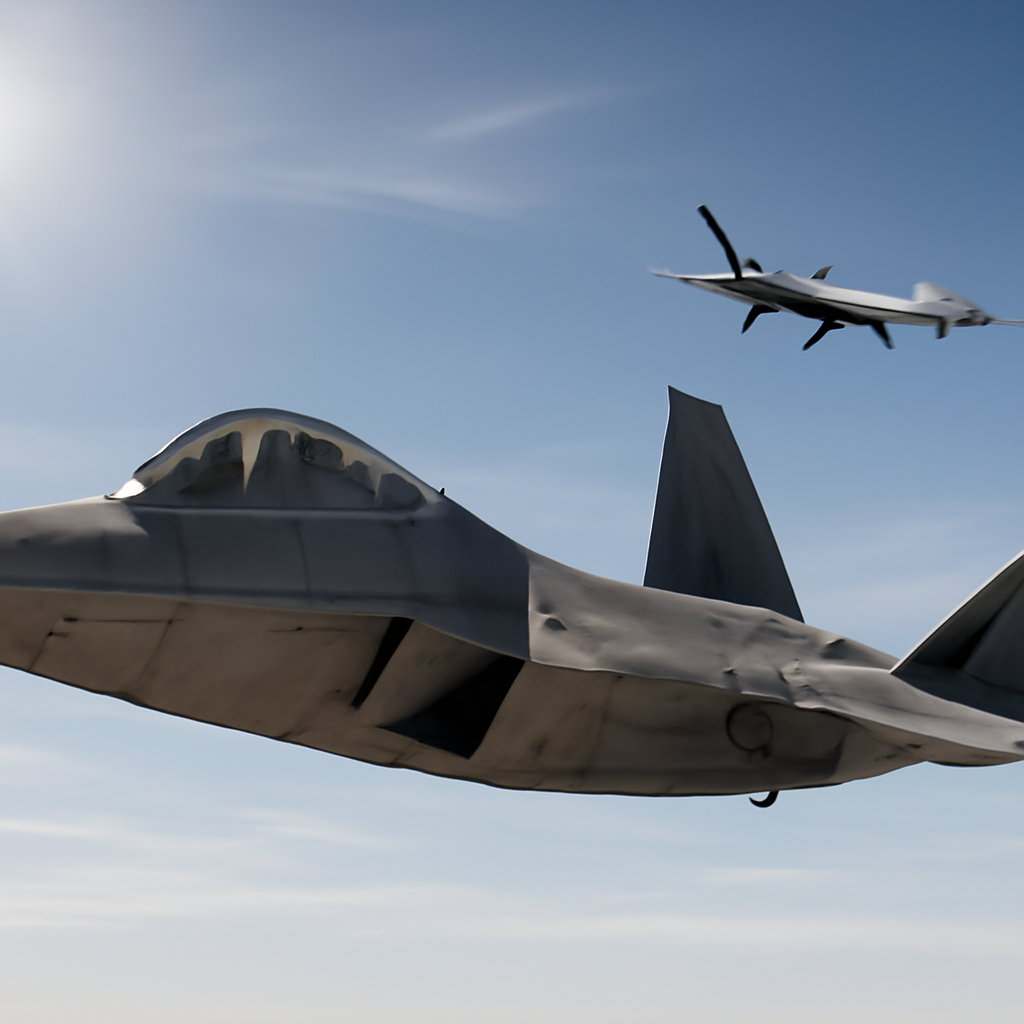
China’s Military Leap: Integrating Conversational AI into Robotic Warfare
In a move that has captured worldwide attention, China’s military is channeling the dynamic capabilities of ChatGPT-style artificial intelligence into advanced robotic systems. This fusion of large language models with cutting-edge robotics is poised to reshape battlefield tactics, promising unprecedented levels of operational autonomy and strategic versatility.
The initiative signals not only a technological evolution but also a far-reaching recalibration of military doctrine, where information processing and real-time decision-making converge with mechanical execution. As Chinese defense analysts explore ways to integrate sophisticated language models into the movements and task coordination of humanoid robots, the implications extend from operational efficiency to potential shifts in global power dynamics.
Historically, Chinese military advancements have often been intertwined with rapid technological adoption. Over the past decade, the People’s Liberation Army (PLA) has steadily increased its investments in artificial intelligence research, mirroring global trends in robotics and automated systems. In recent years, the focus has shifted from stationary, unmanned systems toward versatile platforms that could one day operate autonomously on the battlefield. This current effort, drawing clear analogies with popular models such as ChatGPT, is emblematic of that transition.
Presently, official statements from China’s defense research establishments reveal that experiments are underway to harness algorithms similar to those behind ChatGPT to control robotic movements and decision loops. While details remain sparse, the project reportedly involves adapting natural language processing technology to interpret complex commands and environmental variables, facilitating real-time responses in dynamic combat situations. This approach marks a significant departure from traditional remote-controlled systems, aiming instead for autonomous robots capable of executing tasks based on continuous, nuanced inputs.
The introduction of conversational AI into military robotics matters on several fronts:
- Operational Efficiency: Combining natural language processing with robotics can reduce the cognitive load on human operators, allowing for more rapid decision cycles and potentially less risk during high-intensity engagements.
- Strategic Flexibility: The ability to convey complex instructions in real time may enable commanders to re-task robotic units swiftly in fluid battlefield conditions, enhancing responsiveness in asymmetric warfare.
- Technological Parity: As global competitors invest heavily in AI-driven combat systems, China’s advances in integrating language models with robotics could offer it a distinct advantage, influencing both strategic balance and deterrence calculus.
Analysts from institutions such as the RAND Corporation and the International Institute for Strategic Studies have observed that China’s move is emblematic of a broader trend. According to a recent report by the RAND Corporation, real-time data processing and decision-making facilitated by AI not only promise to increase operational tempo but also challenge conventional human-centric command structures. While these perspectives are derived from publicly available analyses and expert interpretations, the clarity with which China is pursuing such technology cannot be understated.
Experts in military technology and defense policy note that this initiative does not represent an isolated development but a critical inflection point. General Wei Fenghe, China’s Chief of the Joint Staff Department, has previously emphasized the importance of integrating AI into warfare, underscoring the necessity for robotic systems that not only follow orders but also interpret and adapt to complex environments. Such statements, verified through official military communiqués, reinforce the notion that this technological integration is designed to enhance both decision-making speed and battlefield survivability.
Looking ahead, observers anticipate a gradual yet profound shift in how combat operations might be conceptualized. While full autonomy in robotic systems remains a long-term vision, incremental advancements in merging ChatGPT-style AI with robotics could lead to hybrid systems that retain human oversight without sacrificing the speed and adaptability of machine responses. Defense white papers and policy analyses from sources like the United States Department of Defense suggest that as these technologies mature, nations with advanced research infrastructures will increasingly redefine the attributes of a modern battlefield.
There is also active debate regarding the ethical and strategic implications of deploying humanoid robots endowed with adaptive AI on the battlefield. Critics worry about the potential for diminished accountability in combat decisions and the escalating pace of warfare, while proponents argue that enhanced robotic systems could ultimately reduce human casualties by taking on dangerous tasks that would otherwise expose soldiers to direct harm. This tug-of-war between innovation and caution is emblematic of technological progress in high-stakes environments worldwide.
As China’s military AI program continues to evolve, international policymakers, technologists, and military strategists alike will be watching closely. The potential for a paradigm shift in warfare, driven by conversational AI’s natural processing abilities, challenges current doctrines and invites a rethinking of both legal and ethical frameworks governing the use of autonomous systems in combat.
In a domain where speed, precision, and adaptability dictate outcomes, the marriage of ChatGPT-style AI with robotic platforms represents more than just an incremental upgrade—it could be the keystone in redefining military engagement in the 21st century. With global powers not only racing to develop state-of-the-art technologies but also grappling with profound questions of operational control and ethical responsibility, the full ramifications of such integration remain to be seen. Will the advent of highly autonomous robotic units usher in a new era of strategic stability, or will it precipitate an arms race in artificial autonomy with unforeseen consequences?