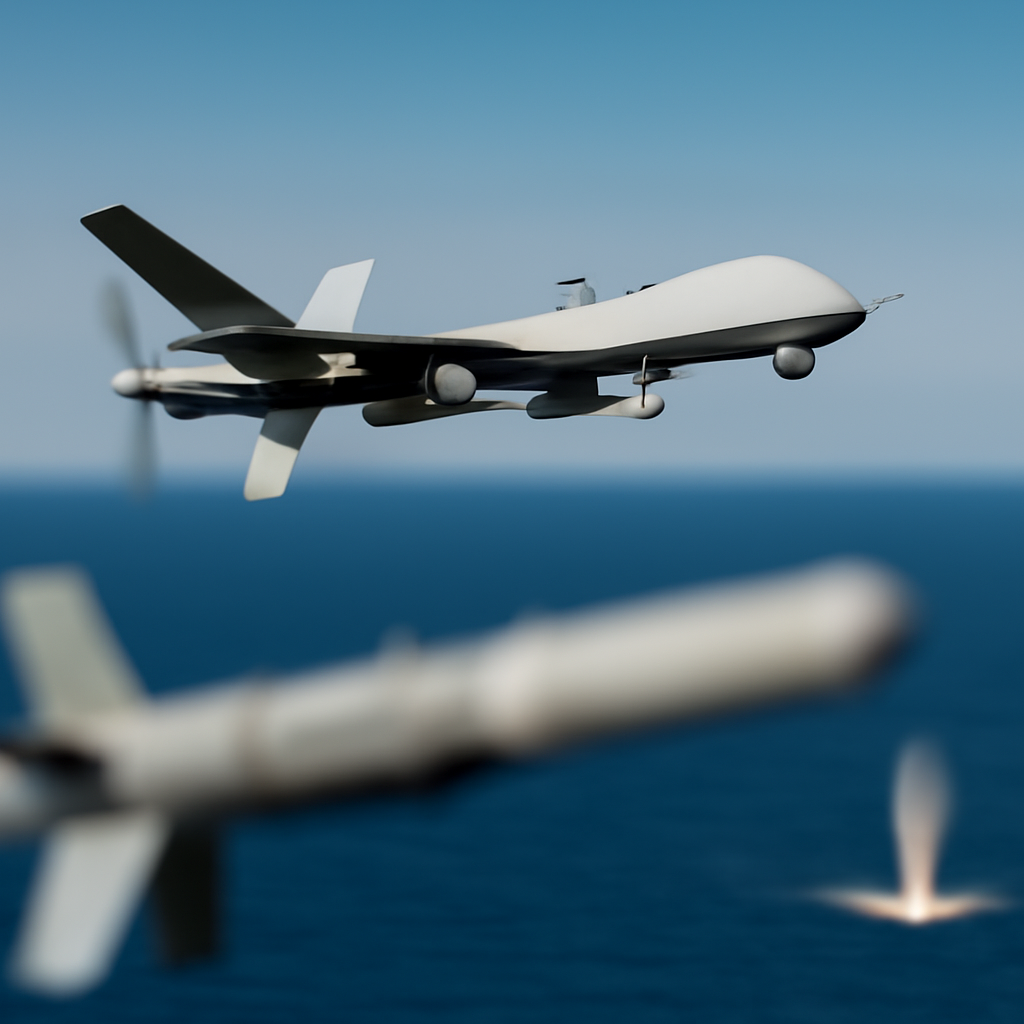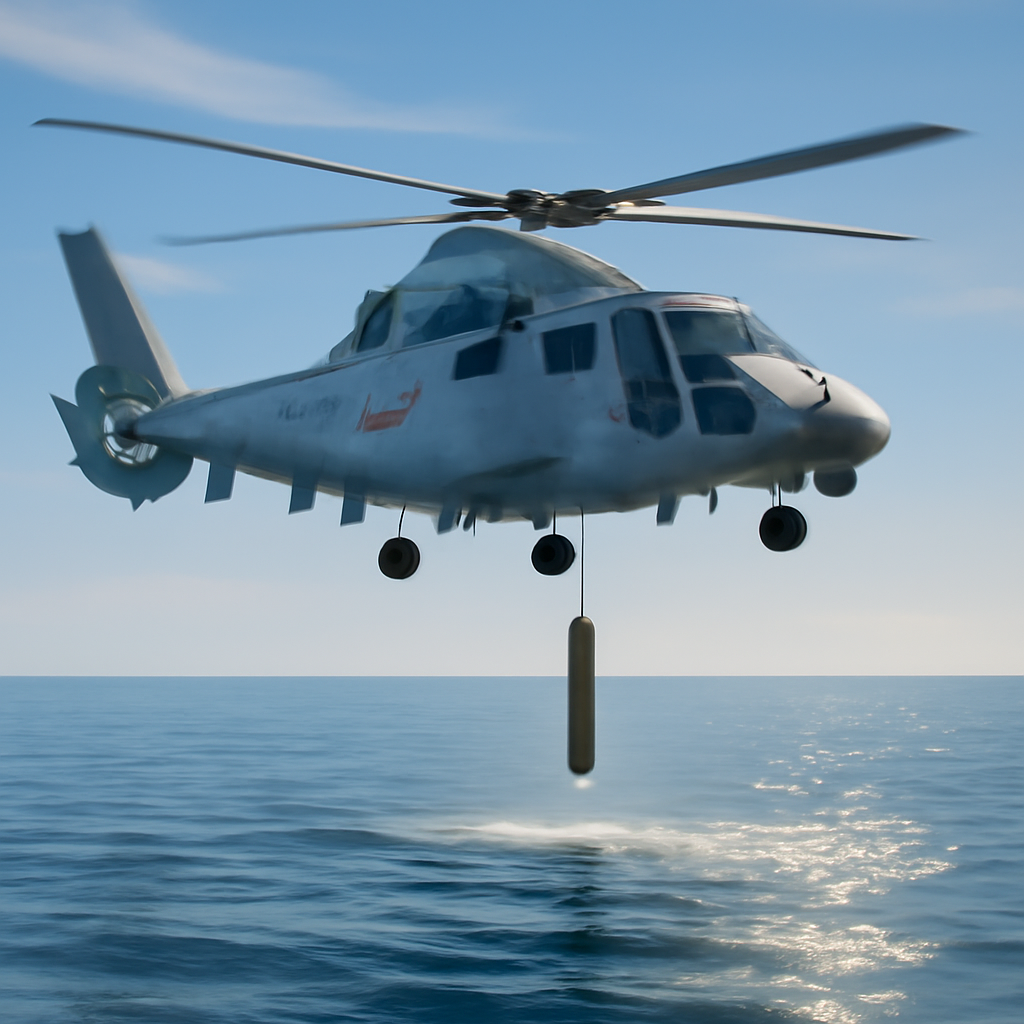
When CCTV first mentioned China’s “new‑type guided depth charge” in 2020, the phrase provoked online ridicule — a flashback to World War II imagery. Six years on, that early reference has acquired visual confirmation: a clear photo of a Z‑9D naval helicopter releasing a Type 11 guided depth charge surfaced on the Chinese internet.
The Z‑9D and the Type 11 guided depth charge
The image marks the first publicly clear photograph showing a Z‑9D naval helicopter kicking loose what the reporting identifies as a Type 11 guided depth charge. The weapon described in the report is a modern, air‑deployable, gravity‑powered munition equipped with fins and sensors that allow it to steer during its descent and to deliver a shaped charge against a submarine hull. That combination — a simple delivery method with onboard guidance — is the central technical point highlighted by the source material.
Guided depth charges vs lightweight torpedoes
The source draws a deliberate contrast between guided depth charges and lightweight torpedoes. Guided depth charges are gravity‑powered, rely on hydrodynamic control surfaces and sensors to steer as they fall, and are presented as a lower‑cost, simpler solution optimized for shallow, coastal waters. Lightweight torpedoes are characterized as fully self‑propelled underwater vehicles with propulsion, range, speed and acoustic homing, designed to engage targets horizontally over longer ranges.
The report names the lightweight torpedoes Yu‑7 and Yu‑11 and lists the platforms that deploy them: Y‑8Q/KQ‑200 patrol aircraft, Z‑20F helicopters, and surface combatants. It also notes that almost all PLAN anti‑submarine warfare (ASW) platforms are now capable of carrying both lightweight torpedoes and guided depth charges, allowing the navy to mix and match payloads by mission and environment.

Audit-ready is a season. It shouldn't be.
Evidence in spreadsheets, controls drifting between audits, frameworks multiplying on flat headcount. Nubivance runs continuous compliance on Rapid7 Cyber GRC - SOC 2, HIPAA, ISO 27001, PCI, CMMC.
End the scrambleTactical roles: the Strait of Fujian and coastal ASW
The source emphasizes geography as the deciding factor for weapon choice. Right off the coast of Fujian, waters are described as shallow, noisy and cluttered — conditions that blunt the advantages of torpedoes but suit gravity‑drop guided depth charges. East of Fujian, where the seabed drops into deeper water, torpedoes are presented as the more appropriate option. In particular, guided depth charges are framed as tools for rapid follow‑up attacks after a sonar contact, for saturating suspected submarine positions, and for creating localized “no‑go” zones around amphibious staging areas or mine‑clearing corridors.
Integration with PLAN platforms and doctrine
The reporting suggests the Type 11 guided depth charge is intended to complement existing air‑drop torpedoes rather than replace them. The Global Times is quoted directly: “Compared with a torpedo, a depth charge is less powerful, but is much smaller and cheaper, the magazine said, noting that the use of this new type of depth charge, together with air‑droppable torpedoes, will greatly increase the Y‑8 anti‑submarine warfare aircraft's combat efficiency and flexibility, and be highly effective in potential future battles against the military on the island of Taiwan.”
That passage encapsulates the operational logic described in the source: lower cost and smaller size expand magazine depth on aircraft, allowing more rapid or layered responses in coastal ASW scenarios while preserving heavyweight torpedoes for deep‑water engagements.
What this means for Y‑8 anti‑submarine aircraft, Z‑20F helicopters, and surface combatants
- Y‑8 anti‑submarine warfare aircraft: According to the Global Times quotation in the source, pairing the guided depth charge with air‑droppable torpedoes should increase the Y‑8's combat efficiency and flexibility by allowing a mix of weapons suited to different depths and tactical scenarios.
- Z‑20F helicopters: As one of the named torpedo platforms, the Z‑20F — and by implication other helicopter platforms such as the Z‑9D shown in the photo — can offer rapid, localized ASW prosecution using both guided depth charges for shallow contacts and torpedoes for deeper engagements.
- Surface combatants: The source notes that surface ships capable of carrying lightweight torpedoes also now are mostly capable of carrying guided depth charges, enabling the PLAN to field layered ASW defenses from sea and air in constrained littoral waters.
The clear photograph of a Z‑9D releasing a Type 11 guided depth charge is more than a single image; in the framing offered by the source, it signals a deliberate modernization of a niche ASW tool. The Type 11’s combination of low cost, small size and steerable descent is presented as intentionally optimized for shallow, cluttered coastal waters — a complement to, not a substitute for, the Yu‑7 and Yu‑11 lightweight torpedoes that handle the deep‑water fight. The central operational question the reporting leaves exposed is whether the Type 11 will be fielded broadly across PLAN rotorcraft, fixed‑wing ASW aircraft and surface warships to make the two‑layer ASW concept routine in coastal operations.
https://china-defense.blogspot.com/2026/06/first-photo-of-z9d-naval-helicopter.html