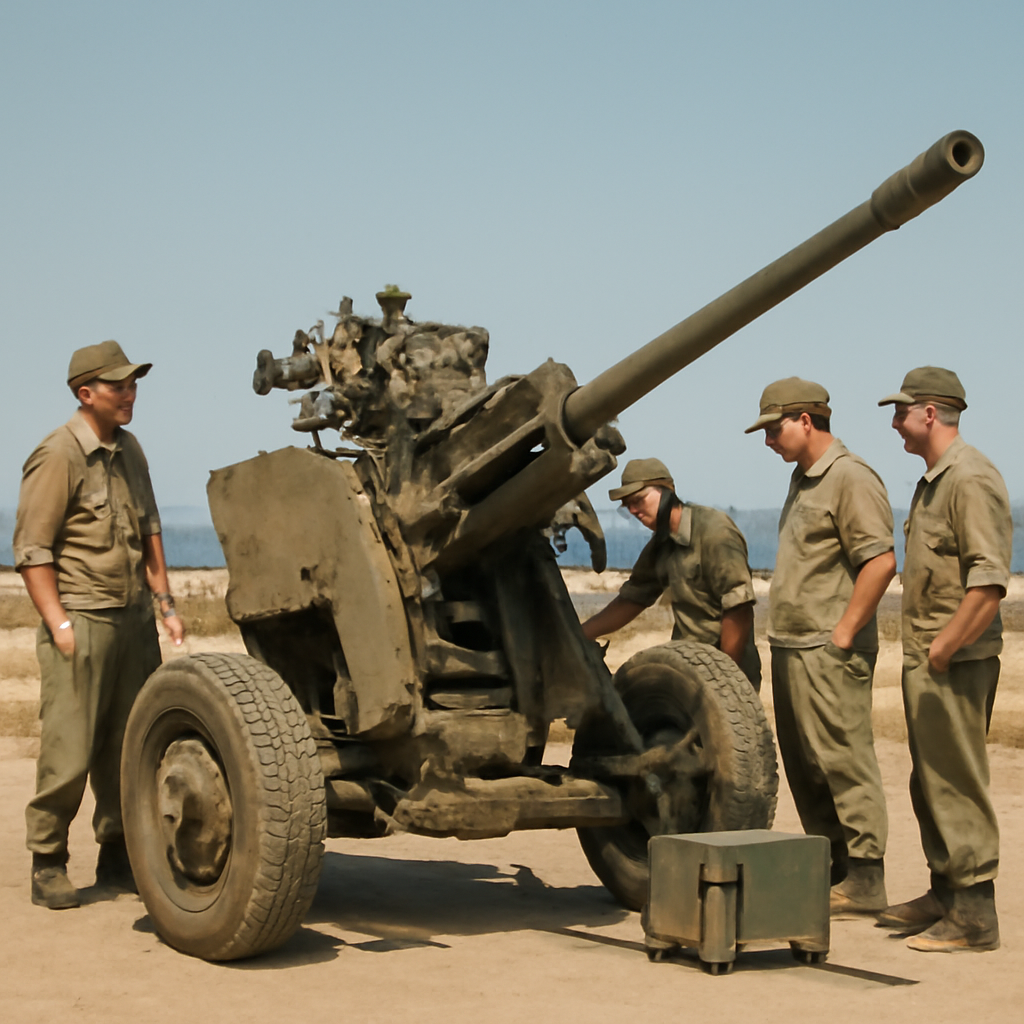
That line — lifted from a string of recent posts on Chinese milblogs — captures both the amusement and the seriousness of a small but vocal debate: whether a Soviet‑era, manpower‑heavy 57mm anti‑aircraft gun should be dusted off, modernized, and reassigned to defend logistics nodes against drones. The proposal is blunt and thrift‑minded: bolt a modern fire‑control system on an existing PG59, and you get a low‑cost point‑defense weapon against long‑range unmanned attacks.
The PG59's second life: nostalgia meets cost‑effectiveness
The argument in favor of recommissioning the PG59 is straightforward. Advocates on milblogs point to a perceived shift in Taiwan’s defense posture toward drones, and to the theoretical vulnerability of China’s "soft logistics hubs, depots, and supply nodes" to long‑range drone strikes. Their pitch: "if you can’t beat drones with lasers and railguns, beat them with something affordable already found in the warehouse." The PG59 is presented as an off‑the‑shelf, low‑technology complement to more expensive, experimental counter‑drone concepts.
Training and manpower: the core practical objection
The counterargument raised repeatedly is equally simple and practical: who will operate these guns, and how will they be trained? Critics note that "China’s military modernization has spent decades moving away from manpower‑heavy systems, not toward them." Reintroducing a system that requires a full crew, constant drills, and disciplined gunnery routines is described by skeptics as a romantic notion that collides with current force design choices. In short: the hardware may be cheap; the human capital is not.

This site is the portfolio.
OSINTSights runs on Cloudflare Workers, D1, R2, and Vectorize, with an AI pipeline on Hetzner ARM. Nubivance designed, built, and operates it. We do the same for clients.
See what we buildModernization proposals: what the advocates actually ask for
Proponents are not suggesting a literal museum‑piece returned to frontline service. The common technical prescription is modest: retain the PG59’s gun platform but fit it with contemporary fire‑control electronics to improve detection, tracking, and engagement of small, slow, or low‑signature aerial threats. That proposal relies on two premises drawn from the milblogs: a) that warehouses still hold usable PG59s and b) that integrating modern sensors and guidance into an older mount is technically and financially feasible. The discussion treats the PG59 as a pragmatic, incremental option rather than a strategic shift to antiquated doctrine.
What this means for Taiwan’s planners, depot managers, and Chinese milbloggers
- Taiwan’s planners: The milblog argument foregrounds Taiwan’s evolving drone emphasis. If adversaries conceive of logistics hubs as vulnerable, Taiwan’s continued reliance on unmanned systems will remain a central variable in any countermeasure calculus.
- Managers of Chinese logistics hubs and depots: The debate itself signals awareness of a class of vulnerabilities — "soft logistics hubs, depots, and supply nodes" — that warrant attention. Even if the PG59 revival does not proceed, the underlying risk that raised the idea is now more publicly aired.
- Chinese milbloggers and enthusiasts: The episode demonstrates the breadth of military fascination online. As the source puts it, "They’re there, and every now and then, they latch onto something like a 1950s AAA gun and remind you that military enthusiasm in China spans everything from hypersonics to hardware that smells faintly of cosmoline." Nostalgia — evidenced by aside references such as "old Type56 SKS" — is part of the conversation as much as technical analysis.
A closing observation
The PG59 discussion is, at once, a technical suggestion and a social signal. Technically, it is a low‑ambition, retrofit‑style proposal: keep the tube, add modern sensors, use numbers and cost advantages to blunt drone threats. Socially, it reveals an active subset of commentators who track military modernization and who are willing to mix historical affection with contemporary problem‑solving. Whether that voice influences procurement or doctrine is "harder to measure"; what is clear from the record is that the conversation exists, is public, and ranges from laser and railgun fantasy to the practicalities of cleaning cosmoline off a 57mm barrel.
Original story: https://china-defense.blogspot.com/2026/07/title-return-of-pg59-chinas.html