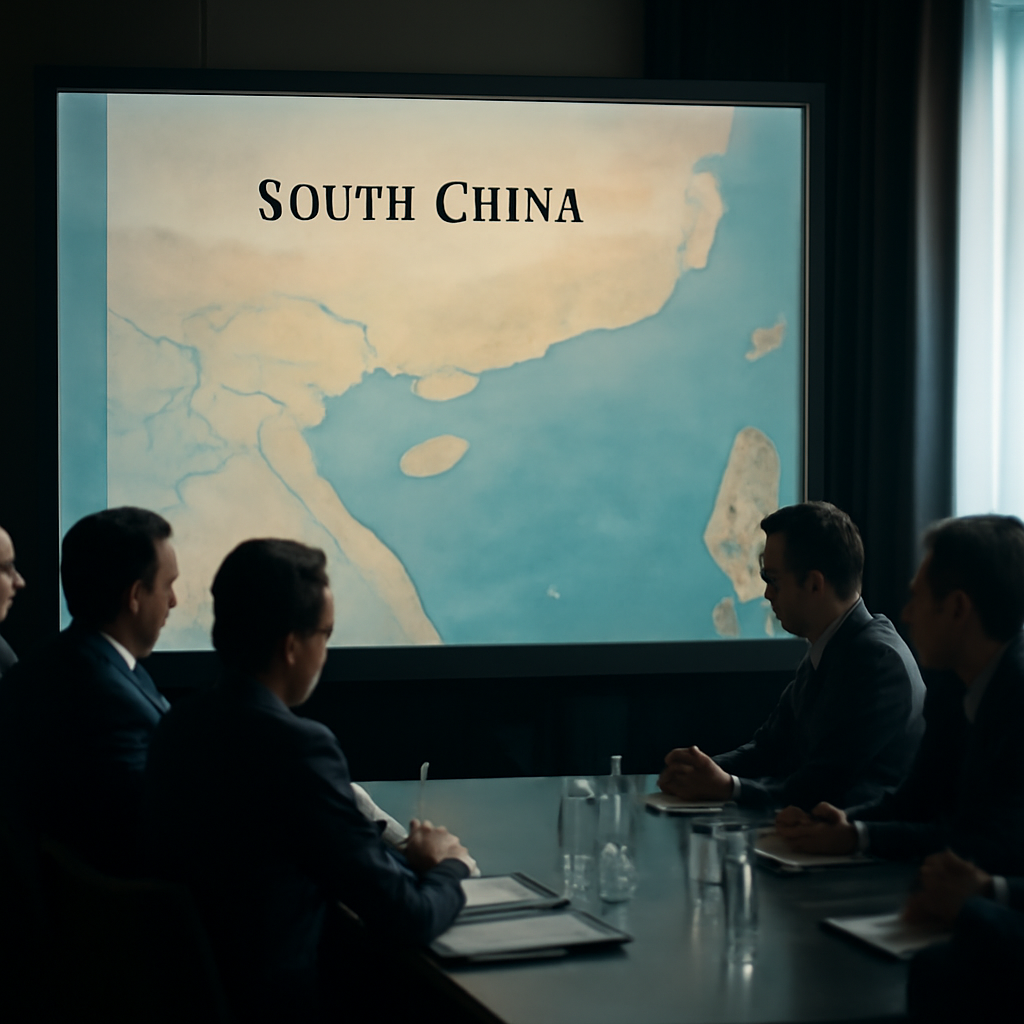
"Salami-slicing in the information domain." — the Armed Forces of the Philippines.
How the claim emerged: from symposium to social feeds
On 30 June, an academic symposium at Jinan University in Guangzhou produced an argument that shifted quickly from scholarly conjecture into a coordinated information campaign: scholars from state-affiliated institutions asserted that the Batanes are a natural geographical extension of Taiwan, and therefore — by the logic that Taiwan is an inalienable part of China — that sovereignty over the Batanes belongs to Beijing. The line moved fast. The Global Times amplified the argument with aggressive language and it circulated widely across Chinese social media, turning an academic pronouncement into a public narrative within days.
What Beijing’s playbook appears to be trying to achieve
The piece describes the assertion not as a single, standalone act but as a familiar opening move in what it calls a "territorial narrative-building playbook." The immediate objectives it identifies are twofold: to disrupt ongoing Japan–Philippines maritime boundary talks and to escalate cognitive warfare against Taiwan. By manufacturing doubt about who owns the land that defines maritime entitlement, the claim can complicate boundary negotiations in ways a straight sea-line dispute cannot.

Audit-ready is a season. It shouldn't be.
Evidence in spreadsheets, controls drifting between audits, frameworks multiplying on flat headcount. Nubivance runs continuous compliance on Rapid7 Cyber GRC - SOC 2, HIPAA, ISO 27001, PCI, CMMC.
End the scrambleGeography, law and the leverage created
Geographically, the claim matters because of how maritime entitlements are measured. The analysis notes that had Beijing limited assertions to Taiwan’s Orchid Island, Chinese-claimed rights would reach only part-way across the Luzon Strait and Philippine and Japanese exclusive economic zones would still have a clear line to draw. Framing the Batanes as an extension of Taiwan pushes claimed Chinese territory across the full width of the strait — from Orchid Island south through the Batanes almost to the Babuyan Islands — placing Chinese-claimed water directly between Japan and the Philippines. That shifts the dispute from a maritime-delimitation problem, which tribunals can address, to a question of land sovereignty, which maritime tribunals do not settle.
Military geography and Manila–Washington responses
The account underlines the Batanes’ strategic value: the islands form the northernmost element of the Philippines’ role in securing what the source labels the First Island Chain. The Bashi Channel, between Taiwan and Batanes, is described as a critical deep-water passage for Chinese navy submarines accessing the broader western Pacific. Manila has been fortifying the Batanes, and joint military exercises with the United States have begun focusing heavily on defending the islands and the approaches to that channel. In this context, the manufactured claim could serve as a legal and political pretext for normalising the presence of Chinese coast guard and naval vessels in the Luzon Strait or as a narrative counter to U.S. deployments.
Culture, domestic politics, and information pressure
The narrative also draws on genuine cultural links: the Tao people of Orchid Island and the Ivatan people of the Batanes share linguistic and ethnic roots, and communities have revived traditional cross-strait voyages as cultural exchanges. The source says Beijing’s narrative "hijacks" these grassroots connections as evidence of sovereignty, converting community ties into a tool for grey‑zone coercion. Taiwan’s Ministry of Foreign Affairs dismissed the claim as an "unrealistic fantasy," but the piece notes that pro‑Beijing media outlets on Taiwan weaponised the idea to portray the government as weak on border defence; the China Times published a column labelling national security officials "traitors" and accusing them of "ugly, Taiwan‑selling behaviour." By asserting sovereignty on Taipei’s behalf, the manoeuvre is presented as intended to exploit domestic political fault lines in Taiwan.
What this means for the Armed Forces of the Philippines, Manila–Tokyo negotiators, and Taiwan’s Ministry of Foreign Affairs
- Armed Forces of the Philippines: The AFP has already characterised the episode as "salami‑slicing in the information domain." Expect continued vigilance around narrative operations and further emphasis on normalising Manila’s defensive measures and public messaging about sovereignty.
- Manila–Tokyo negotiators: Those negotiating overlapping exclusive economic zones will face a new complicating factor if the land base from which maritime claims are measured is reframed as disputed; the claim pressures the boundary talks by reframing the essential geographic facts.
- Taiwan’s Ministry of Foreign Affairs and the Taiwanese public: Taipei publicly rejected the assertion as unrealistic, but the episode has been used within Taiwan to challenge confidence in national security officials and to reopen domestic debates about border defence and identity, particularly among communities with historic cross‑strait ties.
The claim on the Batanes, the source concludes, is less a one-off demand than an elastic instrument: it can be amplified to increase pressure on Manila, invoked to contest U.S. presence in the strait, or quietly set aside without formal withdrawal. That flexibility — combining historical revisionism, academic proxies, media amplification and legal ambiguity — is why the piece argues the episode deserves close attention.
https://www.aspistrategist.org.au/a-new-claim-on-the-batanes-from-an-old-chinese-playbook/