[SPONSOREDNUBIVANCE]
Know a small business winging it on security?
No IT department, no security budget, real exposure. Nubivance builds right-sized security foundations for small companies. Send them this.
Send it along
A Pakistan-linked group called TransparentTribe quietly deployed the DeskRAT trojan to infiltrate Indian government networks, harvesting credentials and sensitive documents over months. The patient, espionage-focused campaign raises urgent questions about when cyber intrusions become acts of war.

Europe’s drone industry is being stalked by North Korea’s Lazarus Group, which used fake recruitment DreamJob lures to slip malware into engineers’ inboxes and siphon designs, test data and R&D secrets. The campaign shows how porous modern research networks are—and how cyber espionage can become a direct, strategic threat to EU defence and supply‑chain security.

Who watches the watchers? Researchers say North Korea’s Lazarus Group—behind Operation “DreamJob”—has quietly infiltrated European drone and counter‑UAS R&D to steal designs, credentials and test data, putting the continent’s push for a layered “drone wall” at real risk of espionage, sabotage and costly setbacks.

“If you build it, they will steal it” — North Korea’s Lazarus Group is quietly targeting EU drone engineers, lifting schematics, firmware, and supplier data to speed or sabotage adversaries’ emulation of Western platforms. The result: stolen designs and corrupted files that can derail production and readiness without a single shot fired.

The Lumma Stealer leak has supercharged Vidar 2.0, recycling stolen credentials and exposed code into a stealthier, cheaper toolkit for criminals. Trend Micro warns defenders to brace for rising Vidar 2.0 activity through Q4 2025.

A marketplace leak proves Vidar 2.0 (Vidar 20) is evolving into a commercially sold, regularly updated threat—Trend Micro warns it will surge through Q4 2025, so defenders must choose urgent action over complacency.

From the public doxxing of Lumma Stealer to the resurfacing of Vidar 2.0, the cybercrime scene is behaving more like a ruthless software market — and that escalation puts millions of credentials and finances at risk. Security teams take note: analysts expect a rise in sophisticated stealer activity through Q4 2025.

What happens when the gang you expected to fight splinters into thousands of anonymous, paid hands? Researchers warn that Scattered Lapsus$ Hunters are weaponizing tiny bitcoin bounties to crowdsource harassment, creating plausible deniability and a whole new kind of security nightmare.
No IT department, no security budget, real exposure. Nubivance builds right-sized security foundations for small companies. Send them this.
Send it along
Scattered Lapsus$ Hunters are reportedly swapping big-data breaches for micropaid crowdsourcing: tiny Bitcoin bounties to many contributors to flood executives with calls, DMs and mentions. Its a cheap, scalable harassment‑for‑hire tactic that blurs into extortion and could leave platforms and regulators flat-footed.

A stunning Singapore officials scam has exposed shocking vulnerabilities—discover how the damaging scheme unfolded and what it means for public trust.

Imagine lights going out at your hospital or your commute being held hostage — and the alleged architects are teenagers. The newly unsealed indictment accuses Scattered Spider of using social engineering and telecom hacks to extract at least $115M in ransoms, turning account takeovers into real‑world chaos.

The ShinyHunters campaign has escalated from quiet database dumps to brazen public extortion—naming victims, posting timetables, and using voice‑phishing plus massive file thefts that could turn single breaches into a supply‑chain crisis. Corporations now face a stark choice: pay ransoms or risk a public dump of sensitive customer and corporate data.
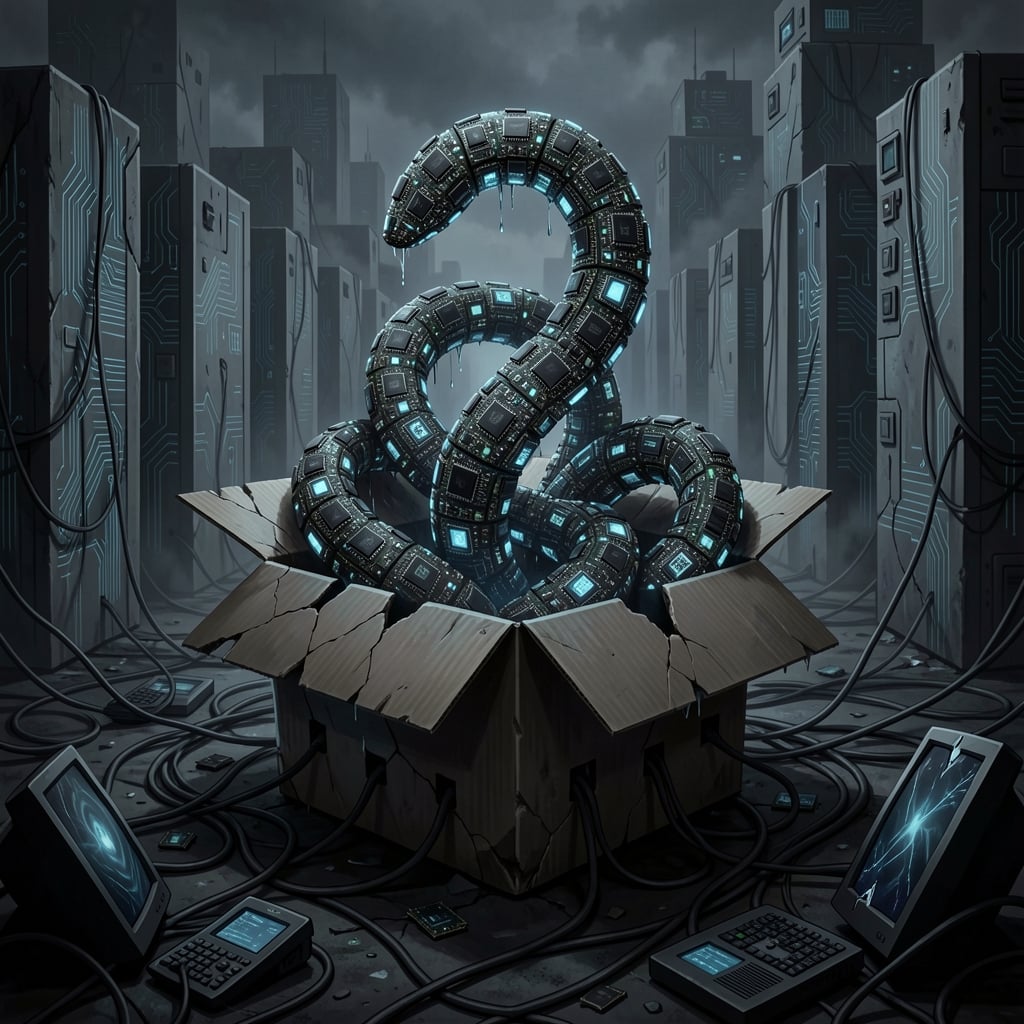
A stark wake-up call: a self-replicating worm has infected 187+ NPM packages, stealing and publicly exposing developer tokens during installs. By weaponizing automated installs and transitive dependencies, it turns every npm install into a potential propagation engine.

When the EU froze Stark Industries Solutions — a notorious bulletproof hosting provider tied to Kremlin-linked cyberattacks — the aim was to choke off dangerous infrastructure, but months later the same IPs and services resurfaced under new shells. That rapid reconstitution shows how sanctions on paper can fail when operators lean on bulletproof hosting to keep malware, botnets, and disinformation campaigns alive.

Heres the scoop: a targeted spear-phishing campaign installed DeskRAT—a compact, Golang-based remote access tool linked to APT36—into Indian government systems, letting attackers read emails, capture keystrokes and siphon sensitive files. Lightweight and cross-platform, DeskRAT underscores how APT36’s patient social-engineering playbook keeps compromising high-value targets.

This autumn, a seemingly innocent spear-phish opened the door to DeskRAT, a Golang-based remote-access trojan tied to APT36 (Transparent Tribe) that slipped into Indian government networks to harvest credentials and siphon documents. Analysts warn the groups move to Go makes these cross-platform implants smaller, stealthier, and tougher to pin down—an unnerving evolution in a decade-long espionage playbook.
Full-platform Rapid7 rollouts - InsightVM, InsightIDR, event sources, agents, tuning - by a Registered Partner who has done it at state-agency scale, including OT/SCADA.
Talk deployment
Think a phishing email cant threaten national security? In summer 2025, tailored spear-phishing delivered Golang DeskRAT into Indian government networks — a stealthy APT36 tool that turns a single click into a strategic risk.

Imagine the how‑to video you trust quietly installing a trojan — researchers have uncovered a malicious network behind 3,000+ YouTube uploads that lure viewers to downloads which deploy credential stealers, cryptominers and remote‑access trojans. By posing as tutorials and fixes and using lightweight loaders, this scalable scheme turns platform trust into a repeatable infection machine.
Think twice before clicking — researchers have uncovered a coordinated network that’s published over 3,000 malicious videos, baiting viewers with fake tools and links that install credential stealers, cryptominers, and remote-access trojans.

Meet GlassWorm: a self‑propagating supply‑chain worm hiding in VS Code extensions (Open VSX and the Microsoft Marketplace) that uses install‑time scripts and stolen CI tokens to publish more malicious packages, turning developer convenience into a fast‑moving attack vector.

ThreatsDay peels back how criminals are weaponizing trust — not by inventing new tech but by exploiting convenience, stale components and lax controls, from a billion‑dollar crypto collapse to AI‑assisted hijacks and targeted smishing. Find out why ordinary systems and trusted channels are the new attack surface, and who should be closing the door.

Heads-up: a critical vulnerability in Adobe Commerce and Magento Open Source is being actively exploited — Sansec logged 250+ attack attempts in 24 hours. Merchants should patch immediately, rotate sessions, and hunt for suspicious activity to prevent account takeovers, fraud, and data leaks.

Imagine one hijacked mailbox becoming the battering ram: Iran‑linked MuddyWater used a trusted account, attacker‑controlled VPNs and the Phoenix backdoor to quietly worm into 100+ MENA government networks and siphon sensitive policy and personnel intelligence over months.

Iran-Linked MuddyWater is executing a dangerous, far-reaching espionage campaign — find out how this covert groups tactics put organizations worldwide at risk and what steps you can take to defend against them.