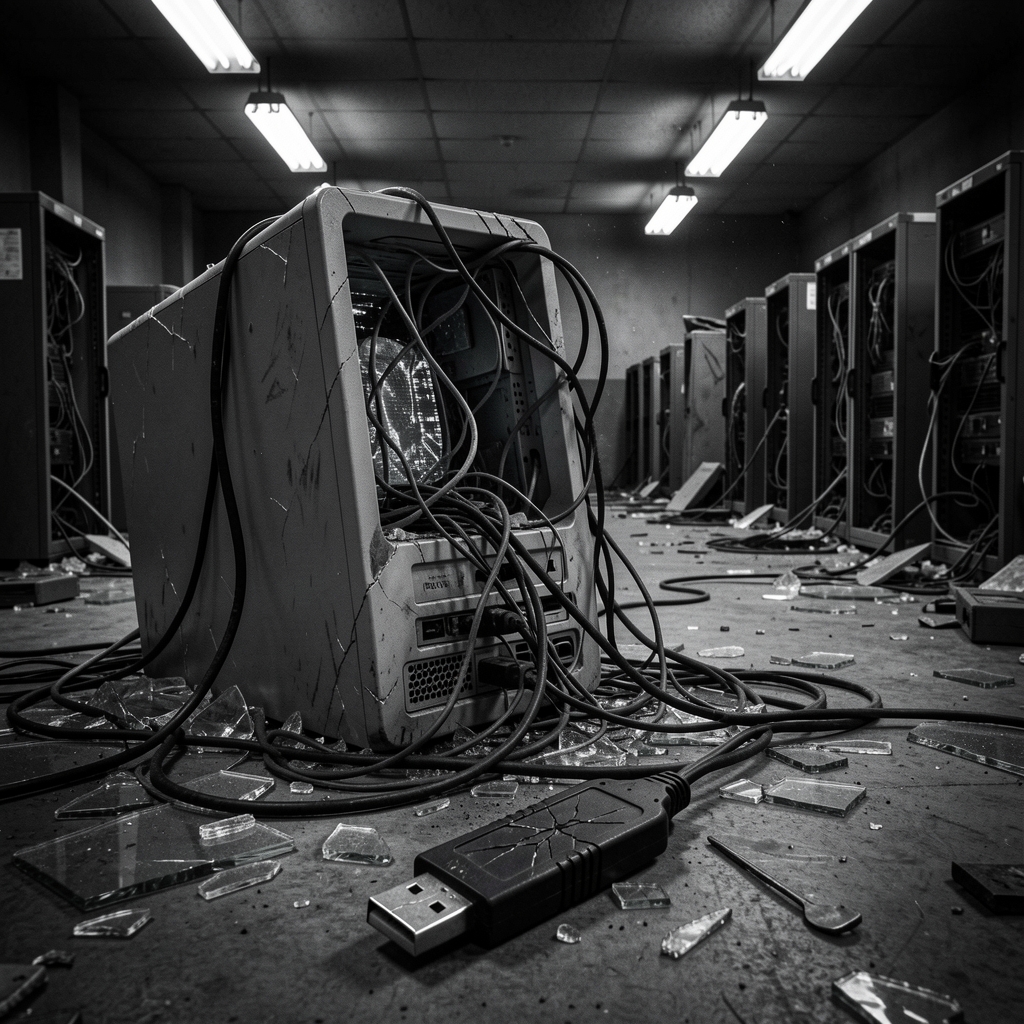
When profit-seeking criminals decide to plant themselves in the theatre of war, what do we call it: opportunism, cynicism, or a new kind of hybrid warfare? “CanisterWorm,” a newly observed worm that spreads through poorly secured cloud services and deliberately wipes the files of computers set to Iran’s time zone or Farsi language, forces that uncomfortable question on everyone who uses the internet as a workspace, a vault, or a battlefield.
Researchers who first dissected the samples describe a worm engineered to propagate across exposed cloud storage and management interfaces, then execute destructive payloads on systems flagged by locale settings. Analysis shows the malware not only seeks to exfiltrate data but also to wipe it clean, effectively converting a theft-and-extortion playbook into outright sabotage for select targets.
Technically, the codebase is sophisticated enough to scan local file systems by name and type to locate documents, photos and videos for exfiltration while also incorporating resilient persistence and obfuscation techniques. Some analysts report clear lineage to earlier families such as DCHSpy-like toolsets, but with rapid development cycles and new destructive routines that mark an evolution rather than a reprise .
The immediate picture: compromised cloud credentials or misconfigured interfaces let the worm leap from one tenant to another. Once on a host, the malware checks system settings—time zone and default language—and if those match Iranian locales it will trigger wiping routines. For organizations that rely on shared cloud storage or remote management, that logic makes a widespread collateral casualty event more likely because the worm’s propagation mechanisms don’t discriminate by intent, only by configuration.
Why does this matter beyond sensational headlines? Because it collapses three dangerous trends into one attack vector: the commodification of data theft and extortion, the fragility caused by lax cloud security, and the increasing willingness of criminal groups to weaponize their operations in geopolitical contests. As one advisory put it in a different context, “It’s not just about building higher walls; it’s about understanding the attacker’s tactics and mindset,” a warning echoed by John Hultquist of Mandiant, which underscores the need for strategy as much as technology in defense planning .
From the perspective of technologists, the worm is a wake-up call: the attack leverages classic, preventable failures—exposed admin endpoints, weak or reused credentials, and insufficient segmentation—then compounds them with locale-based targeting that can turn a single compromised account into a targeted purge. Practical defenses are familiar but underused: enforce least-privilege access, rotate and protect credentials with hardware-backed MFA, log and monitor cloud admin activity, and apply rapid patching and incident response playbooks.
Policy makers confront a thornier dilemma. This is not a neat case of state-on-state cyber conflict; the group behind the worm appears financially motivated and opportunistic, yet its targeting choice drags it into a regional conflict. That complicates response: attribution is harder, legal options against criminal operators are limited, and measures like sanctions or public attribution may not deter a gang that profits from chaos. National security advisor Jake Sullivan has framed cyber threats as multifaceted challenges that require coordination across government and industry—sound advice that looks easier on a briefing slide than in a crisis zone where private-sector infrastructure and consumer devices are the first line of defense .
Users, meanwhile, face practical and painful trade-offs. Ordinary citizens, journalists, activists, and diaspora communities using cloud tools for backups and collaboration may find themselves in the crosshairs because of simple system settings. The average user’s defenses—regular backups, verifying shared links, and avoiding default or weak time-and-language settings when practical—matter more than ever. For high-risk users, compartmentalizing sensitive data to devices or services with stronger security controls is wise.
Adversaries and opportunists watch these dynamics and learn. A financially motivated extortion group that discovers how to weaponize its toolkit for geopolitical effect gains leverage: they can increase pressure on a target population, extract ransoms under threat of mass deletion, or simply sow panic. The result is a blurred line between crime and coercion, and a new leverage point in asymmetric influence campaigns.
Immediate mitigations for organizations and administrators are straightforward and urgent:
- Audit cloud admin interfaces and close or rotate exposed credentials; require hardware MFA for privileged accounts.
- Segment backups and ensure off-site, immutable copies that an attacker cannot reach through the same credentials.
- Harden detection: monitor for unusual cross-tenant provisioning and rapid file deletions tied to cloud orchestration APIs.
- Communicate clearly with users about locale-based risks and encourage—or mandate—safer configuration practices for sensitive accounts.
In the long run, the CanisterWorm episode illuminates a structural vulnerability in how we manage cloud-native infrastructure and a moral hazard in the monetization of cyber aggression. Criminal groups profit when attribution is murky and remediation is expensive. The international community has remedies—norm-setting, sanctions, and cooperative law enforcement—but they move slower than the malware development cycle.
There are also difficult ethical choices: should platforms enforce regional defaults differently to blunt locale-targeted attacks? Would that reduce usability or create new privacy frictions? These are policy debates as much as technical ones, and they deserve candid, cross-sector discussion.
So where does responsibility lie? With platform operators who must harden services, with enterprises that must insist on stronger operational hygiene, with governments that must craft proportionate policies, and with users who must accept some inconvenience for safety. The CanisterWorm outbreak is a reminder that in cyberspace, the consequences of neglect are not hypothetical; they can be immediate, targeted, and irreversible.
As we watch the investigators trace origins, track variants and patch exposures, one question hangs in the air: if a criminal group can so readily graft itself onto a regional conflict, what other lines will it cross next—and how many backups will be left untouched when it does?
Source: https://krebsonsecurity.com/2026/03/canisterworm-springs-wiper-attack-targeting-iran/