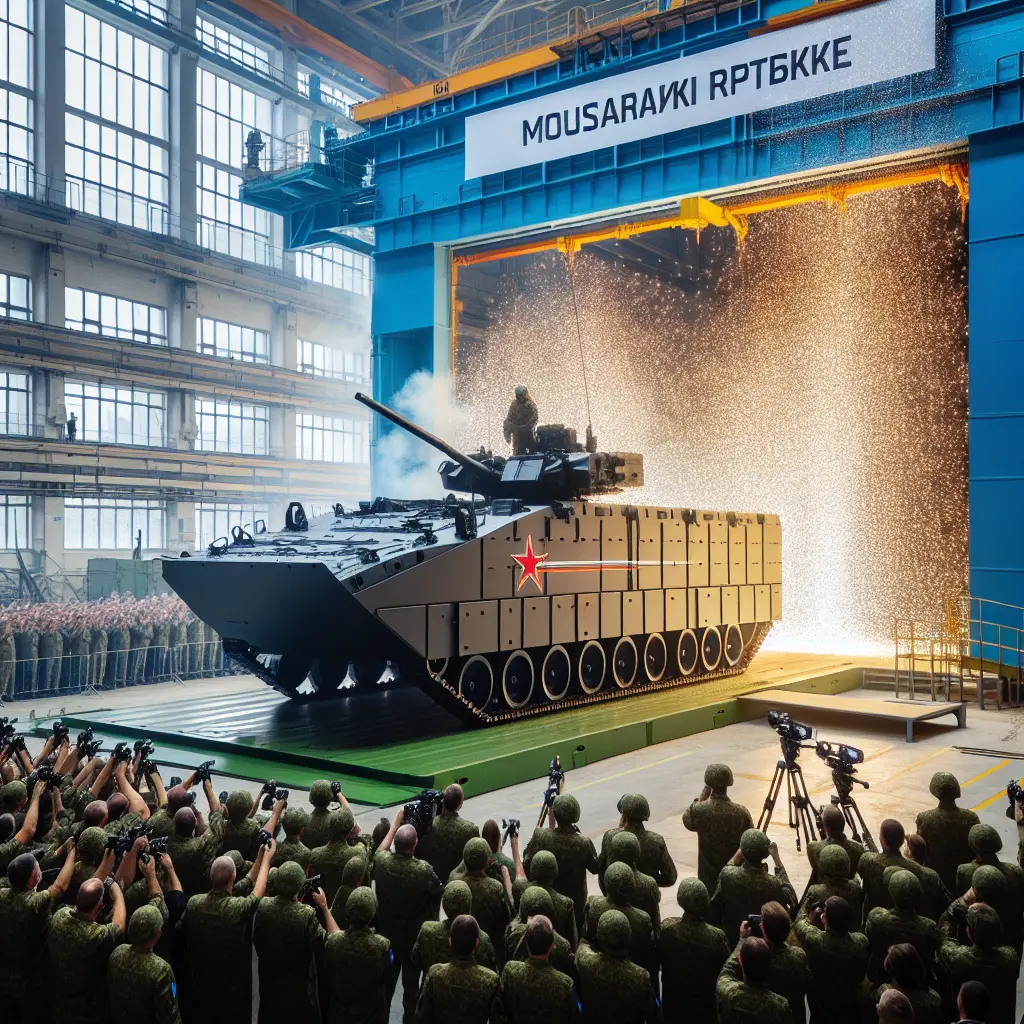
Belarus Takes a Bold Step in Defense: The Launch of Volat V2 Armored Personnel Carrier
As the geopolitical landscape remains fraught with tension, Belarus has revealed a significant initiative to bolster its military capabilities: the commencement of production for the Volat V2 armored personnel carrier. This development follows successful state trials, signaling a critical moment not just for Belarus but also for regional security dynamics. Will this new phase in defense production ignite further escalation in Eastern Europe, or is it merely a step toward self-reliance?
The Belarusian defense industry is no stranger to challenges. Historically, the country has relied heavily on Russian military imports and technology transfer, reflecting its close ties with Moscow. However, under President Alexander Lukashenko’s administration, there has been a concerted push towards enhancing domestic military production capabilities. This shift comes amid broader geopolitical pressures and increased scrutiny from Western nations.
Current reports indicate that the first phase of production will yield two Volat V2 units, with intentions to ramp up output to ten vehicles shortly thereafter. These initial units are slated for deployment within the Belarusian military, demonstrating a clear commitment to not only modernize but also diversify its armed forces. The Volat V2 represents an evolution in design and capability compared to its predecessors, incorporating advanced technologies suitable for modern warfare scenarios.
This initiative carries considerable implications. For one, it underscores Belarus’s intent to assert greater autonomy in defense matters at a time when reliance on external suppliers could be perceived as a liability. Furthermore, the decision to produce domestically could enhance public confidence in national defense while simultaneously signaling to external adversaries that Belarus is prepared to fortify its borders.
From an operational perspective, experts suggest that the introduction of indigenous combat vehicles may improve combat readiness and logistical support within the armed forces. It is also vital in terms of fostering local industry—an element crucial for economic resilience amid sanctions and international isolation.
However, this step forward must be viewed within a broader context. Increased militarization could provoke neighboring states—particularly NATO member countries—to reassess their security postures along the eastern flank of Europe. The movement of armored vehicles into service might raise concerns about potential aggressive posturing or miscalculations in an already tense environment.
Military analyst Dr. Viktor Petrov notes that “the development of local military capabilities could lead to an arms race in the region.” He emphasizes that while strengthening one’s own defense is crucial, it must be balanced with open lines of communication with neighboring countries to prevent misunderstandings.
Looking ahead, several trajectories appear plausible. A successful rollout of the Volat V2 may encourage further investments in Belarus’s defense sector, which could lead to more advanced systems being developed locally. Conversely, if tensions escalate due to misinterpretations or provocations spurred by this new capability, we may witness an uptick in military exercises or readiness among Belarus’s neighbors.
In concluding this analysis, it is worth pondering: as Belarus strides towards greater self-sufficiency in defense production, what price will it pay on the diplomatic front? The balance between enhancing national security and maintaining regional stability remains fragile—a delicate dance every nation must navigate carefully.