In 2024 Defence announced two contracts with QuantX worth a total of A$2.7 million.
From laboratory success to military qualification
Quantum clocks and sensors move from science into defence only when they meet platform safety, reliability and performance requirements. The source notes that "a laboratory result translates to military capability only when the device works reliably within a ship, aircraft or vehicle and can be maintained affordably." That requires more than a demonstration: repeatable manufacturing, vibration and temperature protection, and clear maintenance pathways so devices can be repaired and upgraded during conflict.
Atomic clocks already underpin GPS, the piece states; newer quantum clocks could keep communications and radar networks synchronised for longer when satellite timing is lost. Quantum sensors can measure motion or variations in Earth's magnetic and gravitational fields, helping vehicles estimate position without GPS, including underwater. But maturity varies — many systems still need smaller components, packaging and repeatable manufacturing before they can pass qualification tests and enter service.
A procurement-to-export program: what Defence would fund
The proposed program would connect successful trials to military qualification, Australian production and allied orders. Each selected project should have an Australian Defence Force (ADF) customer, a platform manufacturer and "a funded route to an acquisition decision." Operational requirements and acceptance tests would be agreed before development, with operators involved throughout.
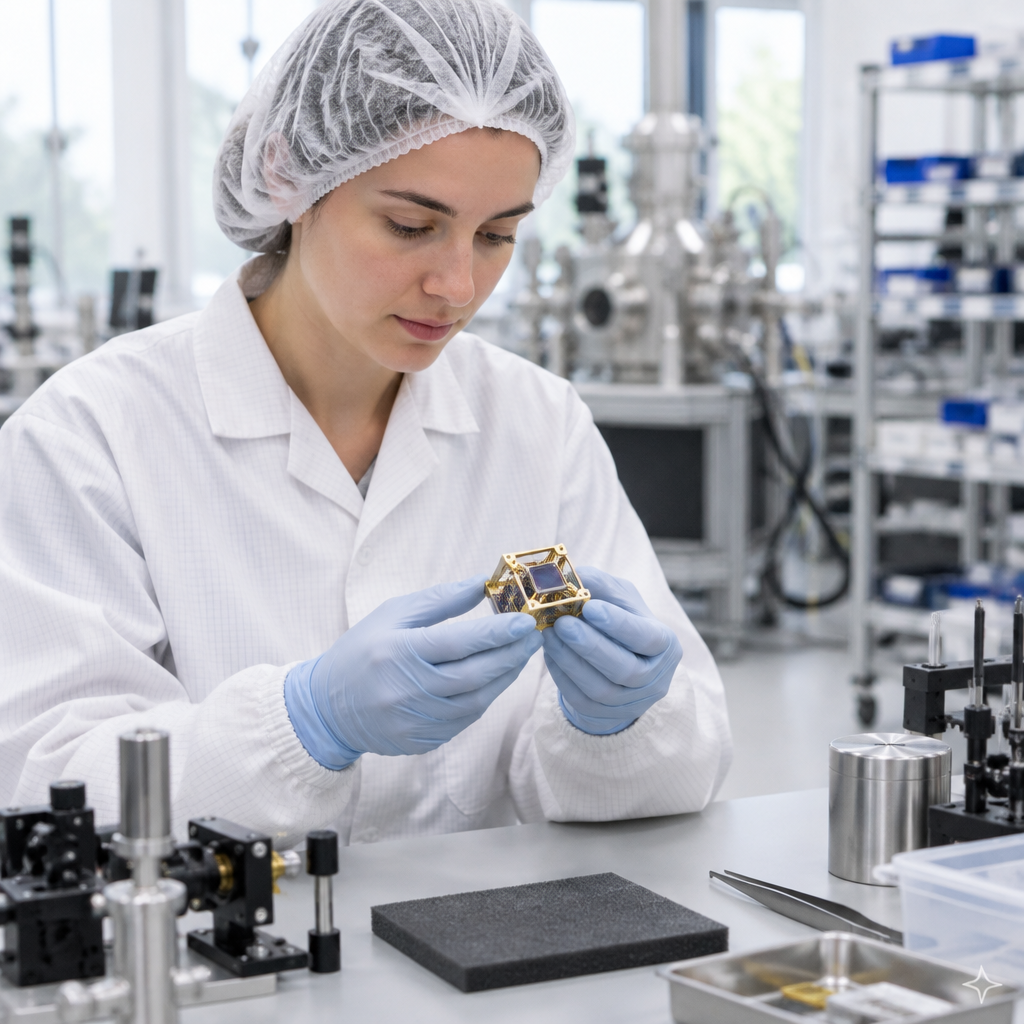
Defence funding should prioritise the engineering steps that make prototypes reproducible: component production, packaging, calibration and shared testing facilities. The source points to QuantX’s Australian Space Agency-backed photonics facility as an existing example of local assembly and testing that Defence could build on. Defence could competitively fund tooling and qualification work so firms can produce repeatable batches of military clocks, and structure purchases so initial operational evaluations lead to options for multi-year orders conditional on performance and military need.

This site is the portfolio.
OSINTSights runs on Cloudflare Workers, D1, R2, and Vectorize, with an AI pipeline on Hetzner ARM. Nubivance designed, built, and operates it. We do the same for clients.
See what we buildWhat Australia is already doing — and what still matters
Australia has established policy and funding instruments aimed at moving quantum technologies toward commercial and operational use. The 2023 National Quantum Strategy addresses commercialisation, infrastructure, skills and standards, while the Critical Technologies Challenge Program connects researchers, companies and end-users through feasibility and demonstrator grants. The 2026 Defence Industry Development Strategy, the source notes, "already supports faster procurement."
Defence programmes have engaged local firms: QuantX’s optical clocks emerged after more than seven years of research at the University of Adelaide in partnership with Defence; QuantX and the University of Adelaide each contributed two clocks to AUKUS trials in 2025. In May, Defence’s Advanced Strategic Capabilities Accelerator awarded A$7.2 million across magnetic-navigation developer Phasor Innovation, Nomad Atomics and Q-CTRL for undersea navigation development. Q-CTRL develops quantum navigation through its Ironstone Opal system, and Nomad Atomics draws on gravity and acceleration research at the Australian National University and Humboldt University of Berlin.
Those engagements demonstrate capability development, but the argument in the source is clear: contracts and grants alone do not guarantee sustained production. Without a program that ties trial success to funded acquisition and repeat production, "it risks financing discoveries while manufacturing and integration capabilities accumulate elsewhere."
Allied moves and an industrial precedent
The piece notes allied activity that parallels Australia's efforts. In August, the US Defense Advanced Research Projects Agency launched a program for pilot manufacturing of tactical optical clocks. The British Royal Navy trialled clocks from British startup Aquark with radars from Swedish defence company Saab. India demonstrated quantum key distribution through a kilometre of open air rather than fibre-optic cable, and Japan supports quantum sensing research through its Q-LEAP program. The source also states that AUKUS trade reforms ease eligible transfers but "they don’t qualify products or guarantee sales."
The Nulka Active Missile Decoy is cited as an industrial precedent: built in collaboration with the United States, it sustained Australian production and led to an A$150 million contract announced in 2021. The article proposes a "similar program" for quantum policy that supports continuity through development, military use and export demand.
What this means for the Australian Defence Force, QuantX and other companies, and AUKUS partners
- The Australian Defence Force: embedding operators throughout development and agreeing acceptance tests up front would help ensure prototypes meet platform requirements and can be qualified for ships, aircraft and vehicles.
- QuantX and other Australian companies: predictable multi-year purchasing options tied to performance would help firms "retain engineers and justify production investment," while competitive funding for tooling and qualification would support repeatable batch production.
- AUKUS partners: early coordination on compatible interfaces and testing could allow Australian suppliers to design for several militaries and seek recognition of shared test results where partner requirements permit, though trade reforms alone "don’t qualify products or guarantee sales."
The prescription is specific: fund the engineering that turns prototypes into reproducible products; bind projects to an ADF customer and a platform manufacturer; and couple initial purchases to conditional multi-year orders so domestic capacity persists as companies enter allied supply chains. If Defence implements a procurement-to-export program within the frameworks already named — the 2026 Defence Industry Development Strategy and existing grant mechanisms — Australian quantum devices could move from university labs into equipment that Australian firms reliably produce and that militaries repeatedly buy.