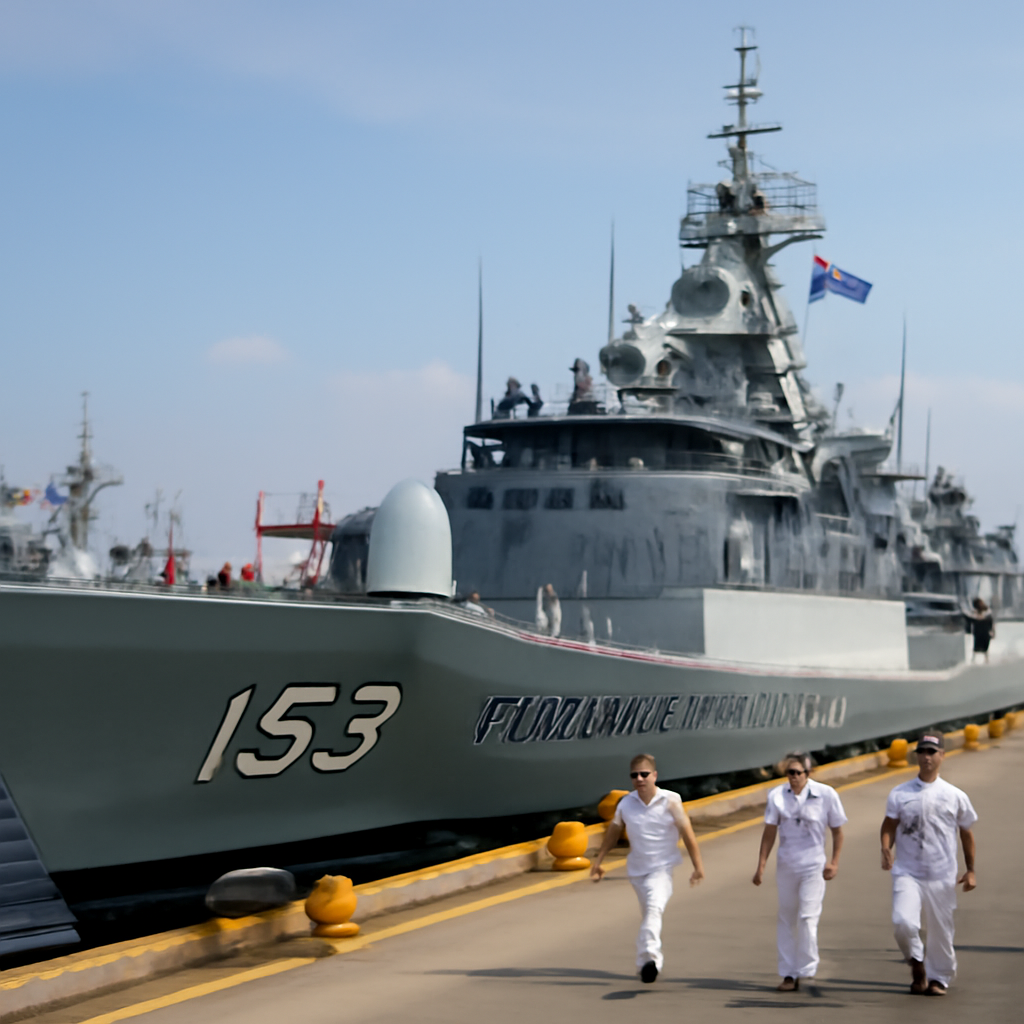
A bill introduced in Canada’s House of Commons on 6 October proposes transforming the Defence Investment Agency into a Canadian Corporation for Defence Investment with powers to make loans, guarantee obligations and take equity — and authorises payments from the Consolidated Revenue Fund up to an aggregate limit of C$1 billion (A$1 billion).
Canada’s proposed Crown corporation: integrated acquisition and financing
The bill would convert the Defence Investment Agency, created a year earlier, into a Crown corporation with the legal powers of a natural person. Under the proposed design, Canada’s military would continue to define capability requirements while the corporation would procure equipment and services and coordinate acquisition with defence production and investment. In practice, the corporation would seek to reduce bureaucratic steps between identifying and delivering capabilities by exercising commercial powers — entering contracts, making loans and advance payments, guaranteeing financial obligations and acquiring shares or other financial instruments — subject to ministerial oversight and, for some transactions, ministerial approval.
Australia’s Defence Delivery Agency: acquisition authority without corporate finance powers
Australia’s forthcoming Defence Delivery Agency (DDA) will be established as an executive agency within government, not as a separate Crown corporation. The DDA will control approved major-acquisition funding, deliver acquisition and sustainment, advise ministers independently and act as the defence industry steward. Its accountable authority will be the national armaments director, and the DDA will operate a dedicated special account. The DDA’s establishing instruments, however, do not expressly provide the lending, guarantee and equity-investment powers proposed in Canada’s bill.

The cyber insurance questionnaire just landed. Now what?
SOC 2, HIPAA, insurance renewals - someone has to own security strategy. Nubivance provides fractional CISO leadership without the full-time salary.
Get a security leadFinancial tools and the industrial problem they are meant to solve
The Canadian model explicitly ties procurement to commercial financing tools that can be used up-front to raise production capacity. Those powers could let the corporation provide loans, guarantees or equity investments to manufacturers that need to expand facilities, buy equipment or clear production bottlenecks in anticipation of defence contracts. In Australia, comparable tools exist but are distributed across separate institutions: the Defence Industry Development Grants Program (DIDG Program), the National Reconstruction Fund Corporation (NRFC) and the Advanced Strategic Capabilities Accelerator (ASCA). The NRFC has already committed A$150 million in debt financing to defence company Asdam, and the DIDG Program offers grants of up to A$1 million to help small and medium enterprises acquire equipment aligned to domestic defence-industrial priorities.
Coordination is the operational challenge before July 2027
The central policy question for Canberra is whether the DDA will be able to move as quickly and cohesively as a corporation that holds both procurement and commercial-financing authorities. Even where Australia has relevant funding mechanisms, those mechanisms sit outside the DDA. That separation could complicate efforts to align industrial investment with acquisition schedules: manufacturers may win contracts yet still lack the upfront financing needed to expand capacity, risking delays in capability delivery. The source recommends that, before July 2027, Canberra formalise coordination arrangements between the DDA, ASCA, the NRFC and the DIDG Program to identify who will transition prototypes into acquisition programs, finance production expansion and address bottlenecks when procurement schedules exceed industrial capacity.
What this means for manufacturers, procurement leaders, and innovation programs
- Manufacturers: They will watch whether financing can be approved quickly and tied to specific procurement schedules; access to loans, guarantees or equity could be the difference between meeting a contract on time and falling behind.
- Procurement leaders (the DDA and the vice chief of the defence force): The vice chief will continue to oversee strategic capability requirements while the DDA manages acquisition and sustainment; both will need clear, pre-agreed pathways to coordinate industrial financing and production timelines.
- Innovation and accelerator programs (ASCA, the Bureau of Research, Engineering and Advanced Leadership in Innovation and Science, and Innovation for Defence Excellence and Security): These initiatives will require formal routes to move successful prototypes into procurement, and coordination mechanisms with financing institutions so promising technologies reach scale without bureaucratic delay.
Australia need not replicate Canada’s corporate form. The practical question raised by Canada’s bill is operational: can separate institutions coordinate tightly enough, fast enough, to prevent financing gaps from delaying capability delivery? The coming months — and the formal arrangements Canberra adopts before the DDA begins operations in July 2027 — will determine whether Australia’s distributed model can match the speed and industrial alignment that integrated commercial powers aim to provide.