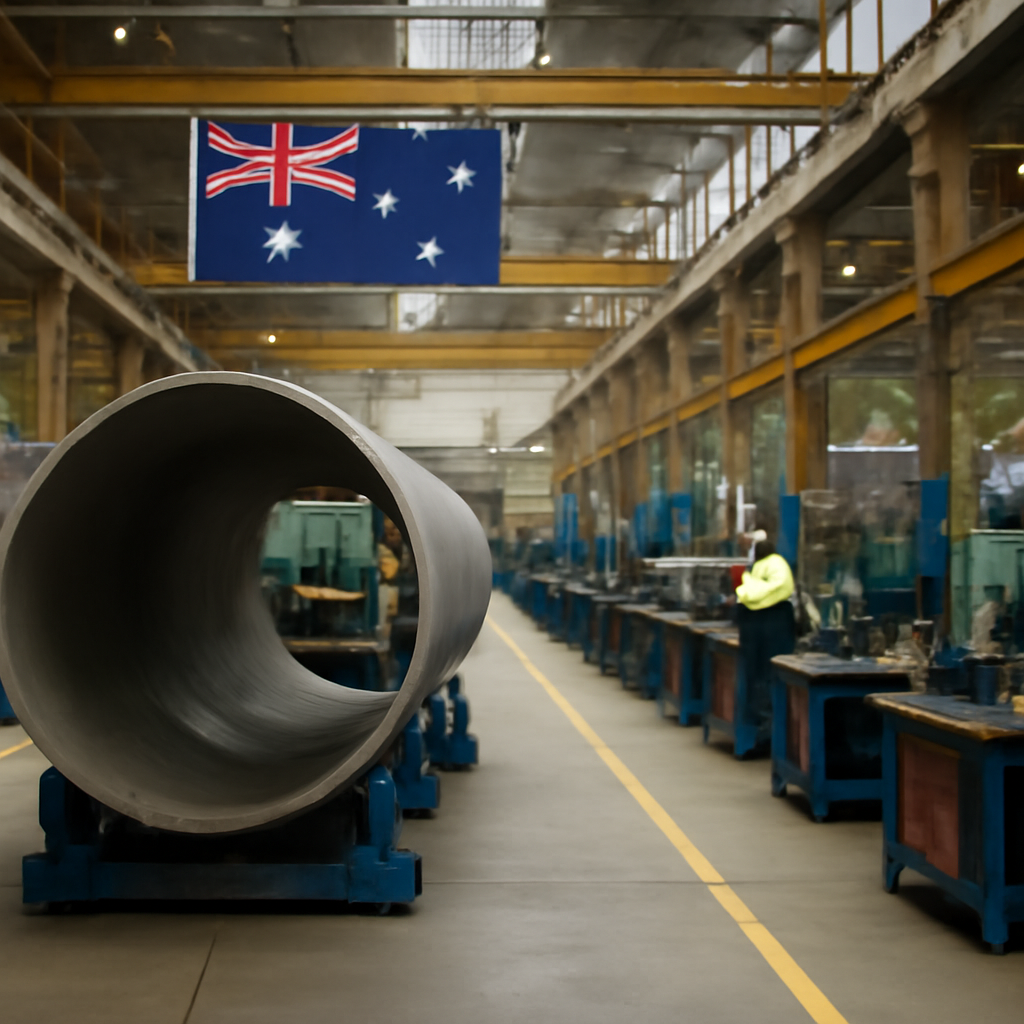
"The DSR was blunt, saying that Australia needed to ‘build a more robust, resilient and sovereign defence industrial base.’" — 2023 Defence Strategic Review (DSR)
2016, 2020 and 2023: a decade of the same diagnosis
For nearly ten years Australia’s defence community has warned of a structural shortfall in industrial depth. The 2016 Defence White Paper raised the concern; the 2020 Force Structure Plan reinforced it; and the 2023 Defence Strategic Review—explicitly—said the nation must build a resilient, self‑reliant industrial base able to support advanced capabilities and absorb shocks in a deteriorating strategic environment. Despite that consistent diagnosis, the structural weakness remains.
Why Defence procurement alone cannot build industrial depth
The source draws a clear institutional distinction: Defence procurement is designed to buy capability, not to create upstream industries. Procurement cycles, short horizons and the remit of Defence do not extend to financing upstream supply chains, domestic energy systems, critical‑minerals processing, long‑term tooling, or workforce development—elements the DSR and earlier documents identify as prerequisites for sustainment and mobilisation. In short, the programmes that purchase ships, aircraft and systems are not structured to underwrite the industrial ecosystem those systems require.

Audit-ready is a season. It shouldn't be.
Evidence in spreadsheets, controls drifting between audits, frameworks multiplying on flat headcount. Nubivance runs continuous compliance on Rapid7 Cyber GRC - SOC 2, HIPAA, ISO 27001, PCI, CMMC.
End the scrambleWhat private capital will not provide
The analysis in the source stresses that the gap is not a failure of strategy but of institutional architecture: private markets operate on short cycles focused on rapid returns, while sovereign industrial depth requires patient capital and tolerance for strategic risk. The piece argues no private investor will build a domestically self‑reliant missile‑component factory on a 25‑year horizon without a mechanism that shares risk and guarantees continuity; no bank will finance strategically essential but commercially marginal critical‑minerals processing; and private equity will not underwrite sovereign energy resilience where the payoff is national security rather than yield. The conclusion is that Australia lacks any institutional form that provides long‑duration, independent capital aligned to national strategic needs.
How a Sovereign Development Fund (SDF) would operate
The proposed solution is a government‑backed Sovereign Development Fund (SDF). The source is explicit that an SDF is not primarily a financial tool for maximising short‑term returns but a national‑power instrument: a capital engine to build industrial depth. It would provide patient, long‑horizon capital designed to build capability—de‑risking, co‑investing and catalysing private capital where strategic value exceeds commercial value. Practical targets named in the source include Australian manufacturing for defence‑relevant industries, long‑term capital for critical minerals processing and energy security, and investment in dual‑use technologies aligned with AUKUS Pillar Two.
AUKUS Pillar Two technologies and industrial ecosystems
The piece calls out AUKUS Pillar Two technologies—autonomous systems, quantum, AI and undersea capabilities—as examples that require in‑country manufacturing ecosystems that do not yet exist. It argues materials and parts for munitions should be made in Australia rather than imported, and sustainment of major equipment requires domestic component manufacturing that private markets will not build without long‑term certainty. The SDF, the source says, would be the connective tissue aligning capital with strategy to create the scale, redundancy and domestic tooling that these technologies and sustainment chains require.
What this means for Defence planners, private investors, and manufacturers
- Defence planners: would gain a domestic industrial base capable of supporting deterrence, sustainment and prolonged operations—an industrial foundation Defence has requested since 2016.
- Private investors and banks: would see the SDF positioned to de‑risk strategic investments, acting as an anchor investor for projects that are strategically necessary but commercially marginal.
- Manufacturers and the skilled workforce: would receive long‑term certainty for in‑country manufacturing, tooling and workforce development, enabling scale‑up for mobilisation and sustainment when required.
The argument is straightforward and institutionally focused: Australia has diagnosed the problem for a decade, and the missing ingredient is patient, sovereign capital organised for national power rather than quarterly returns. If industrial depth is foundational to deterrence and resilience, the policy choice before the nation is whether to create an SDF as the capital engine to turn aspiration into a whole‑of‑nation industrial project.