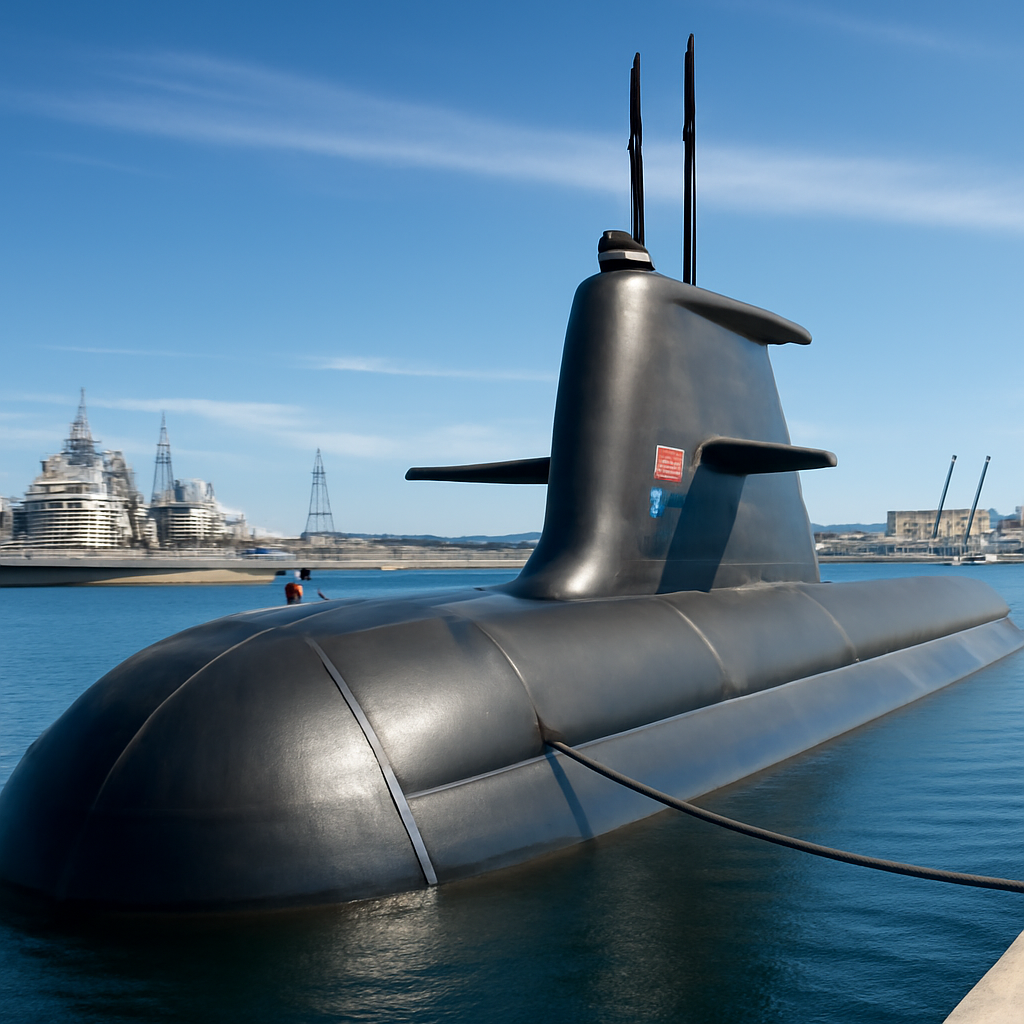
"The first question to consider when thinking about a major defence program such as AUKUS is this: defence against whom?," the author asked in an opening statement to the AUKUS Public Inquiry on 2 September 2026.
The strategic problem: two historical answers
The article traces Australia's submarine planning through two explicit policy frames recorded in public statements. Prime minister Bob Hawke’s 1987 government adopted a ten‑year warning window to prepare against an emerging regional threat — specifically the remote prospect of an aggressive Indonesia. By contrast, the government of Kevin Rudd in 2009 argued Australia would need a significant military build-up by 2030 as a hedge against the prospect of major war in which Australia might have to hold out with minimal combat assistance from the United States.
Those two frames lead to different operational postures: against a regional military power, Australia would favour an offensive campaign to destroy the enemy’s fighting power rapidly; in a wider great‑power war the country would fight a defensive campaign until allied help could arrive and stabilise the fighting.
The Rudd plan, the lost decade, and what might have been
The author argues that had the 2009 submarine plan been completed, by the mid‑2020s Australia would have operated six refurbished Collins‑class submarines, six new Super Collins‑class submarines (with six more on order) and an emerging fleet of uncrewed underwater vessels (UUVs). The 2014–19 Defence planning cycle might then have considered acquiring nuclear‑powered submarines (SSNs).
Instead, the article says, later governments took a different path and "a decade was lost" — a critique that frames the AUKUS effort as corrective rather than entirely new.

The cyber insurance questionnaire just landed. Now what?
SOC 2, HIPAA, insurance renewals - someone has to own security strategy. Nubivance provides fractional CISO leadership without the full-time salary.
Get a security leadAUKUS as the corrective: Virginia class Block IV and beyond
Under the AUKUS path outlined in the piece, Australia will acquire US Virginia‑class submarines and then the Anglo‑Australian SSN‑AUKUS class — or, if that class fails, join the USN SSN‑X program. The initial acquisition of three Virginia class Block IV submarines from 2032 to 2038 is described as "our entry ticket" to a longer journey toward undersea capability.
The piece places special emphasis on the operational effect of SSNs: large, fast nuclear‑powered submarines that can deploy UUVs and other autonomous systems, stay on station far longer than conventional boats, and conduct a widening range of missions.
Industrial integration with the United States and Britain
A central pillar of the argument is industrial and technological integration. By integrating Australia's submarine industrial and technology base with those of the United States and Britain, the article says, Canberra will "forge an exclusive club of undersea dominance." That integration is presented as both capability‑enabling and an industrial strategy: pathway access to SSNs, deeper technology transfer, and sustained maintenance, upgrades, and autonomous systems development.
What this means for the Australian Defence Force, Defence leaders, and allied partners
- Australian Defence Force: The piece stresses that submarine capability must sit alongside a capable surface navy, army and air force — all services are necessary whether Australia fights alone or holds out until allied reinforcements arrive.
- Defence leaders and industry: The author warns that program and industrial challenges are "enormous," and explicitly notes governments pay Defence leaders "million‑dollar salaries" — framing an expectation of rigorous accountability for delivery.
- United States and Britain (allied industrial partners): Integration with US and British submarine industrial and technology bases is presented as the mechanism by which Australia gains access to SSNs and a broader undersea toolkit of UUVs and autonomous systems.
Ambition, risk and the demand for accountability
The article mixes hammer‑hard ambition — the phrase "become an undersea superpower" is used — with a pointed managerial critique: "Enough time has been lost. It is now time to ruthlessly hold people to account so that we can become an undersea superpower." It acknowledges the technical prospects of a future undersea force that even Jules Verne's imagination would have struggled to imagine, while also reminding readers that the program's industrial and programmatic challenges are vast.
The author offered these views as the opening statement to the AUKUS Public Inquiry on 2 September 2026; the piece was first published by News24 and has been lightly edited for The Strategist.