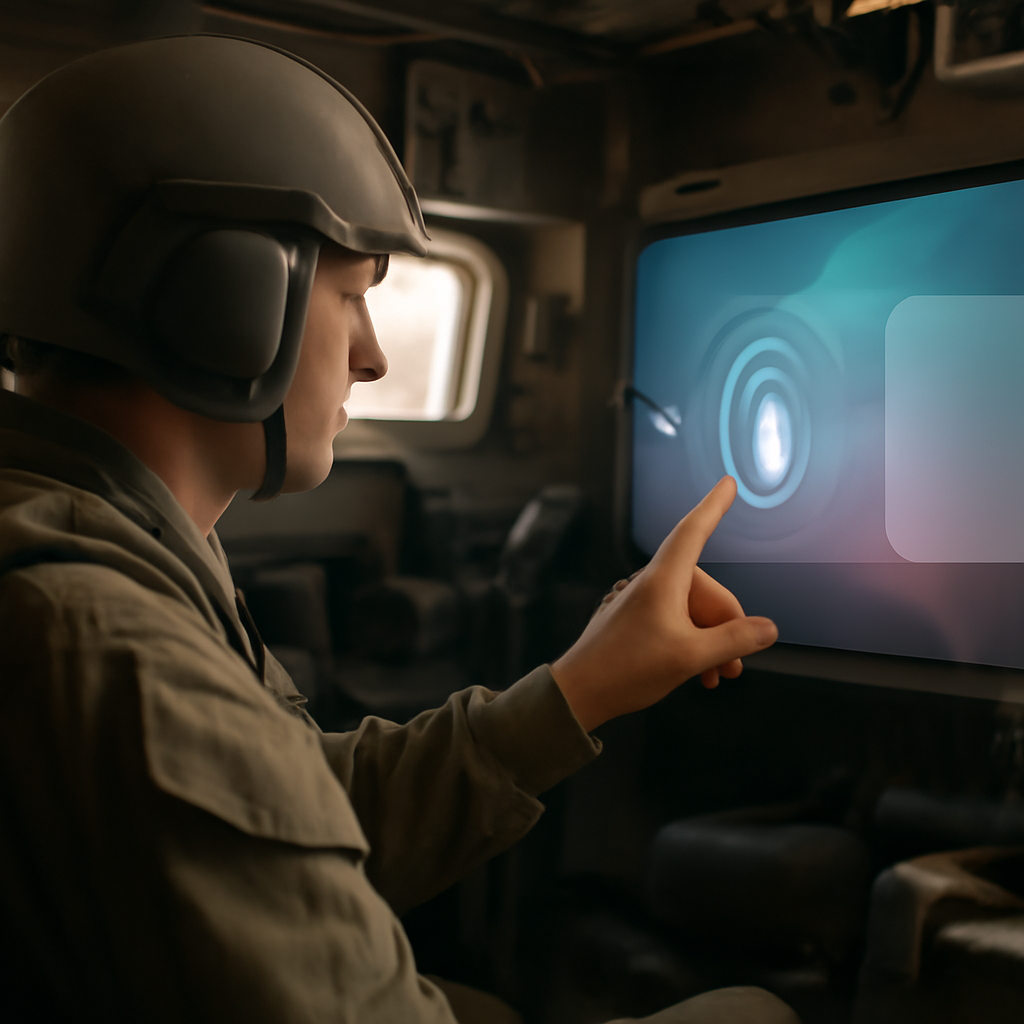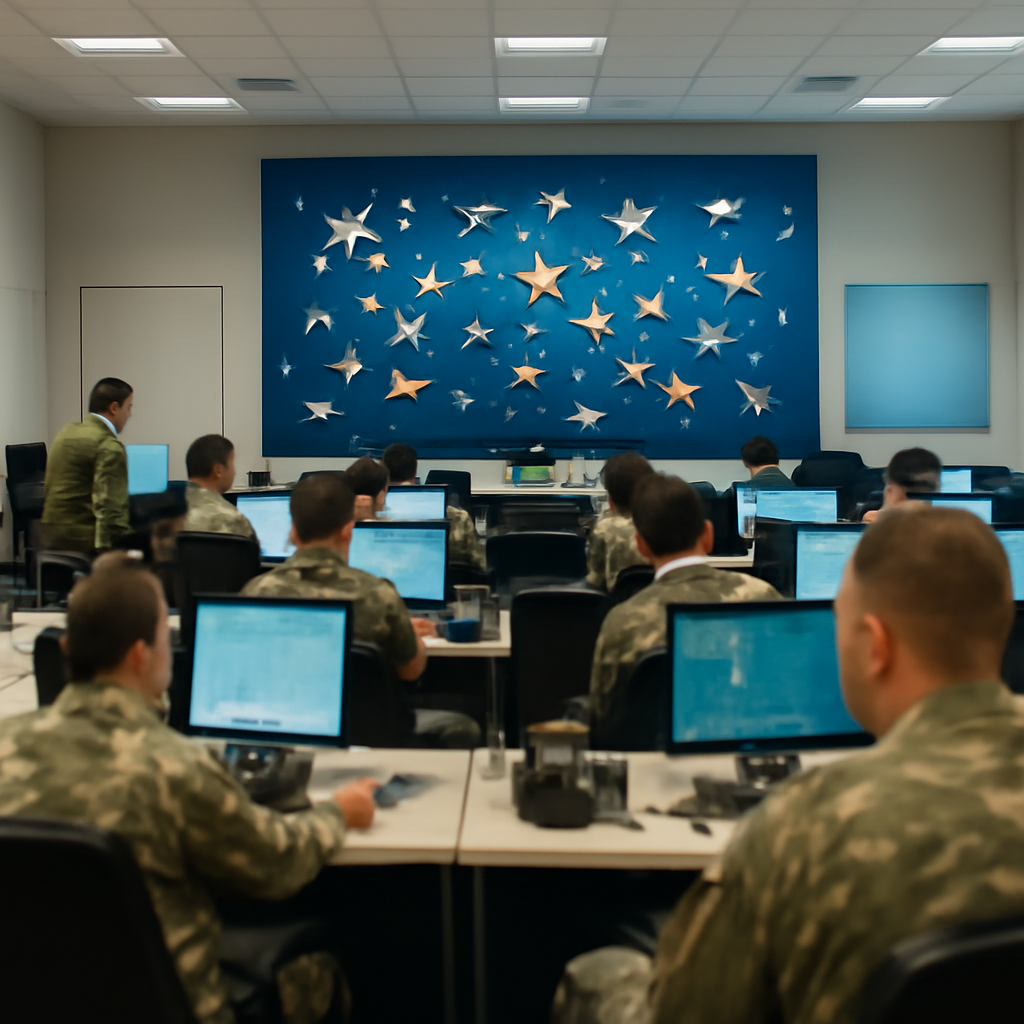
“There’s going to be a lot of software data, the volume of all of that being processed at the corps level is going to be greater,” Joseph Welch, portfolio acquisition executive for command and control and counter-command and control, said.
Striveworks to build the baseline AI layer for NGC2
The Army has tapped Striveworks, an AI operations company based in Austin, Texas, to build the baseline AI layer for the Next Generation Command and Control (NGC2) architecture, Army officials told Breaking Defense. That AI layer is intended to turn the “enormous amount of battlefield data” NGC2 consumes into actionable information; Striveworks’ models, the company says, will be able to compress “hours of staff work into seconds,” according to CEO Jim Rebesco.
Anduril already set the NGC2 data layer baseline
In June the Army announced that Anduril would establish a data layer baseline for NGC2. Service officials have described that data layer as the foundation of NGC2 — the common baseline that allows software and services to be built on top of and integrated within the architecture. Striveworks’ AI layer is being positioned to operate on top of that Anduril-built data foundation.

This site is the portfolio.
OSINTSights runs on Cloudflare Workers, D1, R2, and Vectorize, with an AI pipeline on Hetzner ARM. Nubivance designed, built, and operates it. We do the same for clients.
See what we buildScaling from division prototypes to corps-level fielding in I Corps (fiscal 2027)
NGC2 prototypes have been tested at the division level by the 4th and 25th Infantry Divisions, but the Army plans to scale the system to the corps level next year with a focus on Pacific operations. The service plans to field and scale the architecture within I Corps in fiscal 2027; I Corps is headquartered at Joint Base Lewis-McChord, Wash., and has oversight of Army units in the Asia Pacific. Army officials stressed that the volume of data to be processed at corps level will be materially greater than at division level, elevating the importance of the AI tools that will sit atop the data layer.
Model registry, validation, deployment and monitoring as assigned responsibilities
Joseph Welch said Striveworks will be responsible for providing the AI layer with model registry, validation, deployment and monitoring. The approach includes making models developed by soldiers and others available across the NGC2 ecosystem rather than confined to a single unit, creating a level of commonality that other software and services can build toward and integrate with.
What this means for soldiers, technologists, and procurement leaders
- Soldiers and end users: The Army and Striveworks emphasize faster access to AI capabilities. As Jim Rebesco put it, “It lets soldiers take advantage of new AI capabilities as fast as the industry can design them, rather than waiting months or years to put them to work.” The planned shared repository for models is intended to let unit-specific algorithms be reused across the ecosystem.
- Technologists and security teams: The AI layer must operate on streaming inputs from “drones, sensors, and feeds,” which Rebesco said flood modern battlefields with more real-time data than humans can process alone. Responsibilities for registry, validation, deployment and monitoring suggest technical work to certify models and maintain them in production at corps scale.
- Procurement leaders and fielding authorities: The Army’s schedule calls for a corps-level roll out in the near term and a fiscal 2027 fielding inside I Corps. With Anduril providing the data layer baseline and Striveworks the AI layer, procurement and acquisition teams will be managing the integration of those two baselines as the architecture scales.
Striveworks frames its role as preventing useful information from becoming trapped in stovepipes and as aligning “the best model with the right data and apply them to the mission — while maintaining the human oversight and governance needed, so we can trust the results,” Rebesco said. That phrase points to an explicit design goal — speed without relinquishing human control — but also highlights a central operational challenge as NGC2 moves from division tests to corps-level operations in the Pacific-focused I Corps deployment planned for fiscal 2027.
How well the two baselines — Anduril’s data layer and Striveworks’ AI layer — mesh at corps scale, and how human oversight and governance will be maintained as models compress “hours of staff work into seconds,” are the concrete next steps the Army will face as it prepares the NGC2 roll out.