"Our implementation also protects the confidentiality of the image itself, including from Apple," Apple writes in its description of the system.
What Reference Image does
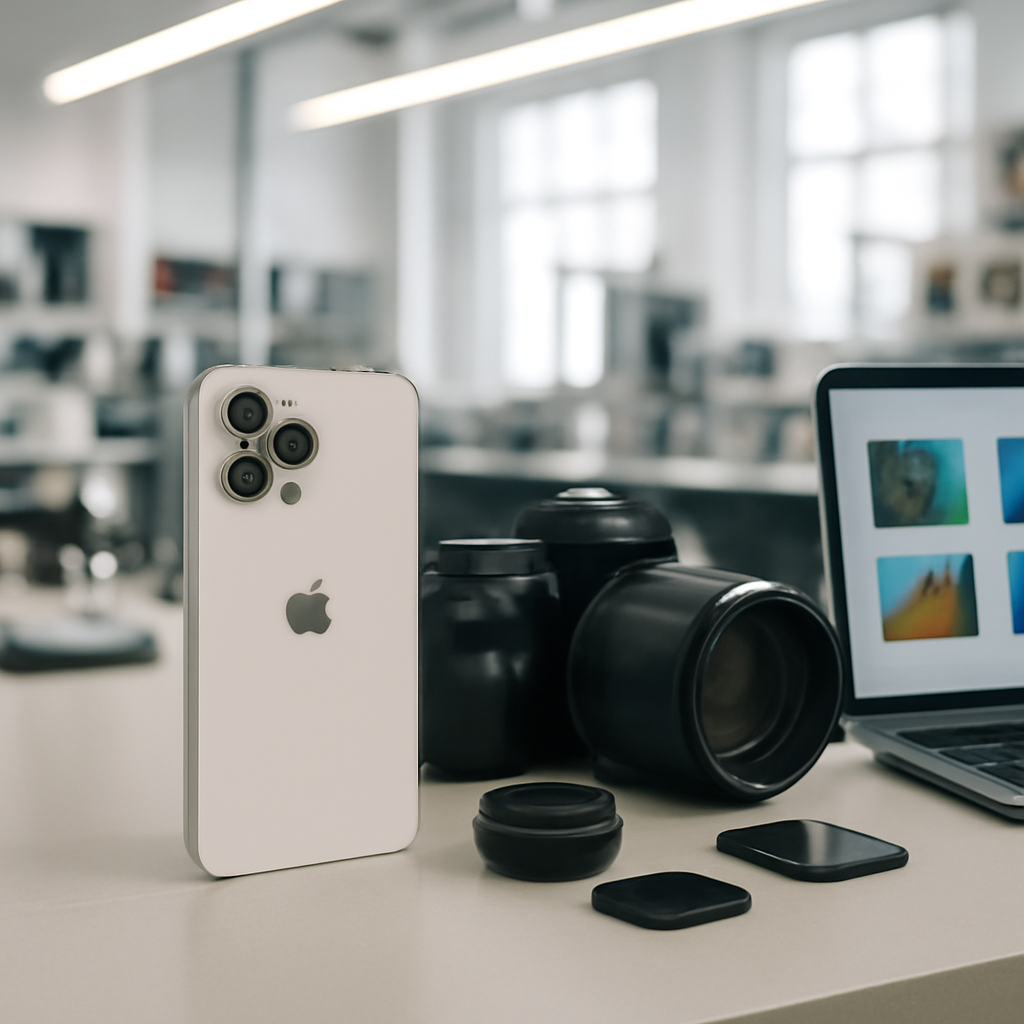
Apple has released a system called "Reference Image" that, the company says, can verify that an image "is exactly as taken by an iPhone—new models only—" without tying that verification to a specific iPhone or to an identified photographer. The system can also confirm that multiple images originated from the same iPhone sensor, while stopping short of creating a public linkage between those images and an individual device or person.
How Apple intends to preserve photographer anonymity
Apple frames Reference Image as a response to industry approaches that require photographers or institutions to vouch for images using their own credentials. "Other industry solutions require a photographer or institution to vouch for an image using their own credentials. We are concerned this puts some photographers, such as those operating in conflict zones, in a difficult position; it should not be necessary to forgo anonymity in order to prove image authenticity," the company writes. In place of photographer-provided credentials, Apple says it built Reference Image to avoid using an explicit, public credential for photographers and to avoid even implicit public association between different photos taken by the same sensor.

Audit-ready is a season. It shouldn't be.
Evidence in spreadsheets, controls drifting between audits, frameworks multiplying on flat headcount. Nubivance runs continuous compliance on Rapid7 Cyber GRC - SOC 2, HIPAA, ISO 27001, PCI, CMMC.
End the scramblePCC validation and Apple's signing service
Apple describes a workflow in which the final "reference image" is signed by Apple's signing service only after validation by PCC. "The final reference image is instead signed by Apple’s signing service, after validation by PCC. That signature is backed by Apple’s strongest technical guarantees," the documentation states. Apple asserts that the system protects the confidentiality of the image during capture and validation: "Merely capturing a reference image should never expose the actual pixels to Apple or anyone else." The company further explains that PCC nodes are architected so that "not even Apple can access image data, just as Apple cannot see the information processed for Apple Intelligence in PCC."
Revocation service and on-device checks
Apple says the system includes a revocation service that must maintain a private record of photo GUIDs and associated sensors to enable revocation. The company emphasizes two constraints on that service: it "never has access to the image data," and it "does not allow for public access to this record." According to Apple, final revocation checks are performed using on-device lists so that "a device never reveals to anyone which photo it’s looking at in order to find out whether it’s still valid."
What this means for photographers, verification teams, and the public
- Photographers operating under risk: Apple explicitly calls out photographers "such as those operating in conflict zones," framing Reference Image as a way to authenticate images without forcing creators to reveal identity or institutional affiliation.
- Verification and security teams: The approach centers on PCC validation and Apple's signing service; those teams will be focused on how those components are implemented and whether the claimed privacy properties—especially node-level protections that deny Apple access to pixels—hold up in practice.
- The general public and consumers of imagery: Apple presents Reference Image as offering provenance and authenticity on "new models only," while maintaining the confidentiality of pixels and preventing public linkage of images to individual devices.
Apple's materials lay out a system that attempts to square two aims often regarded as opposed: verifiable photographic provenance and protection of source confidentiality. The company describes architectural choices—PCC validation, signature by Apple's signing service, private GUID records, and on-device revocation checks—that are intended to deliver both. Whether those technical guarantees function as advertised when the system is deployed at scale, and how verification practitioners will integrate Reference Image into broader workflows, are the next practical questions.