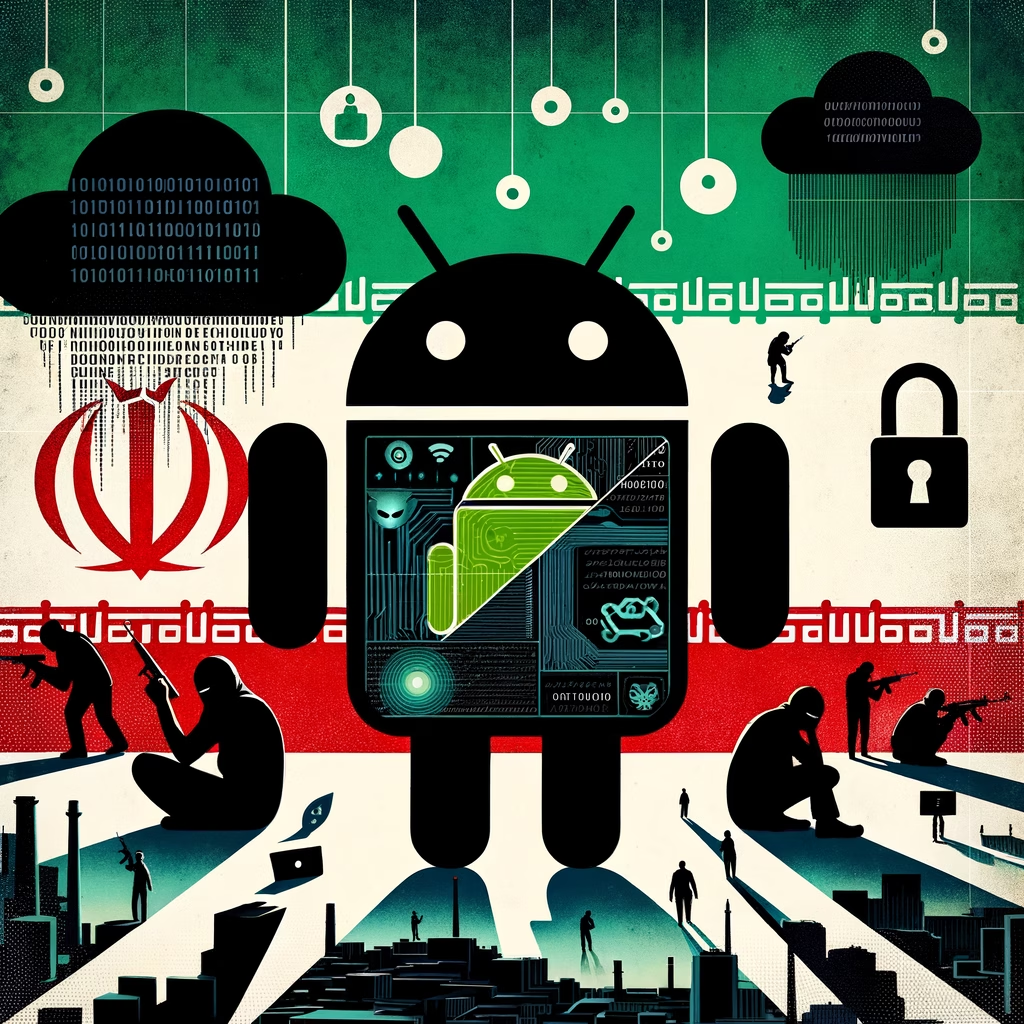
The world is at an unsettling crossroads, where the lines between conflict and cybersecurity blur. In a time when tensions escalate, how far will adversaries go to exploit technology for espionage? Recent findings suggest that Iranian hackers, specifically the Advanced Persistent Threat (APT) group known as MuddyWater, have unveiled updated Android spyware dubbed DCHSpy. This revelation comes on the heels of heightened hostilities between Israel and Iran, raising alarm bells among cybersecurity experts and government officials alike.
The spyware, detected by the cybersecurity firm Lookout, exhibits capabilities that could enable hackers to surveil users without their knowledge, siphoning sensitive information and tracking communications. This latest version of DCHSpy serves not just as an updated tool in an adversarial toolkit but also as a grim reminder of how cybersecurity threats evolve in tandem with geopolitical tensions.
The backdrop for this development is rich with historical context. MuddyWater has been linked to numerous cyber-espionage campaigns, primarily targeting entities associated with the Middle East. Their previous operations have shown a consistent focus on intelligence-gathering rather than disruptive tactics, making them particularly dangerous in contexts where political stability is fragile. As the conflict between Israel and Iran intensifies, it becomes clear that the realm of digital warfare is becoming more sophisticated, with espionage tools like DCHSpy poised to exploit vulnerabilities.
According to Lookout’s analysis, the spyware can infiltrate devices using various social engineering techniques and often masquerades as legitimate applications. This sleight of hand can catch even tech-savvy users off guard, raising questions about the effectiveness of current security measures. “The dangers of mobile spyware are only beginning to be understood,” warns Mike McNerney, a former cybersecurity strategist at the U.S. Department of Defense. “We need to be proactive, not reactive.” His call to action highlights a significant gap between the pace of technological advancement and our ability to safeguard against its misuse.
The implications of this revelation extend beyond individual users. Policymakers must grapple with the broader ramifications of such spyware in the international arena. As technology becomes an extension of national power, the potential for misuse increases. “Cybersecurity is no longer just a technical issue; it’s a national security concern,” notes Laura Dehmlow, head of the FBI’s Cyber Division. “We need an integrated strategy that includes both defense and deterrence.” This perspective underscores the urgent need for a cohesive approach that encompasses diplomatic, technological, and military dimensions in addressing the challenges posed by such sophisticated cyber threats.
Users, too, find themselves at a critical juncture. With the proliferation of mobile devices, many are unaware of how easily their personal information can be compromised. The stakes are high, as a breach can lead to identity theft or worse, exposing individuals to harassment or violence. Cyber hygiene, while essential, is not enough in a landscape where adversaries are continuously honing their craft. How can everyday users arm themselves against such formidable threats?
The updated DCHSpy reveals not just a technical challenge but a broader ethical dilemma in the realms of cybersecurity and international relations. As the line between espionage and warfare grows ever thinner, we must ask ourselves: are we prepared for a future where our devices could be the battleground for nation-states? In a landscape where everyone is potentially a target, the responsibility for vigilance falls on multiple shoulders, from tech companies to governments to individual users.
In the end, this latest revelation should serve as a clarion call for awareness and action. The specter of DCHSpy looms large, but it also opens the door to a necessary discourse about the vulnerabilities inherent in our technology-dependent lives. As we navigate these uncertain waters, the question remains: will we take the necessary steps to safeguard our digital frontiers before it is too late?




