Air Force Unveils Next-Generation Drone Wingmen for Enhanced Combat Readiness
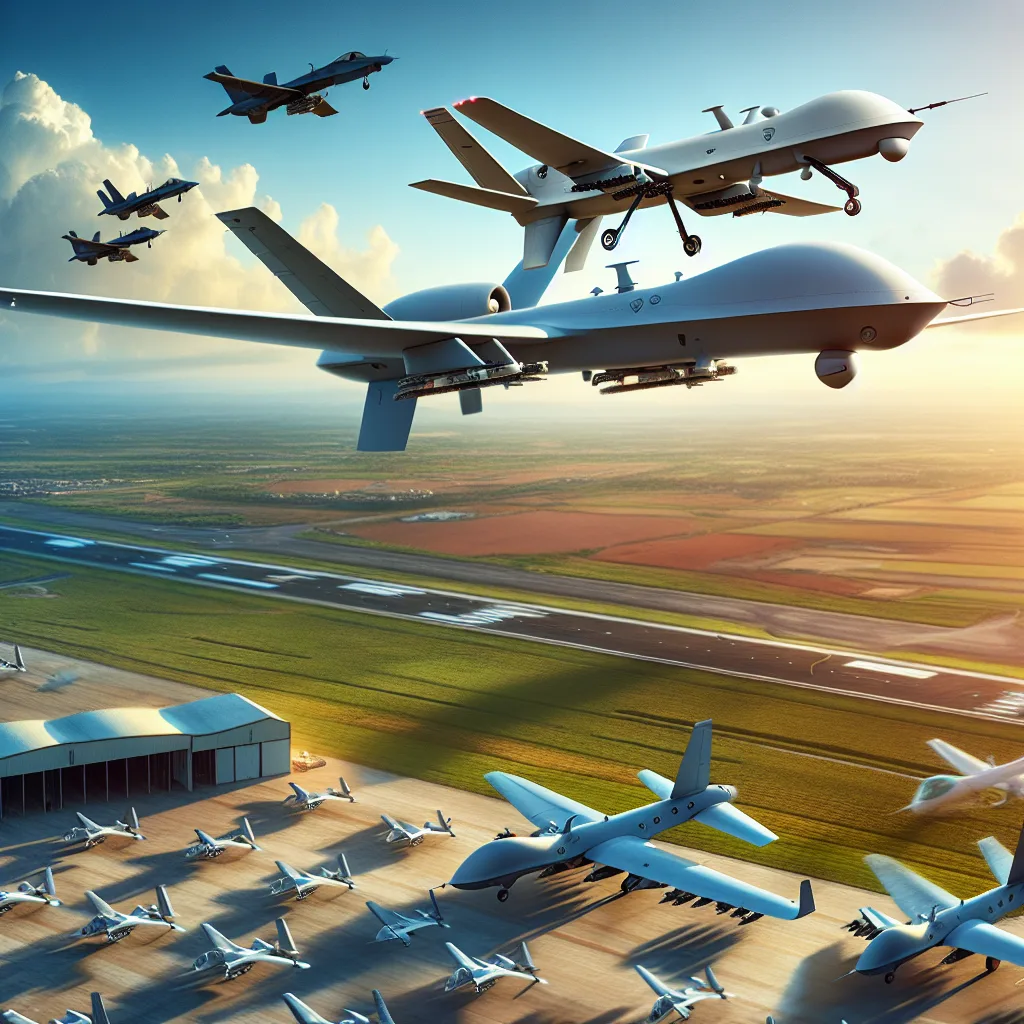
The United States Air Force is setting its sights on a transformative approach to aerial warfare, rolling out cost-effective drone wingmen that could soon fly alongside its advanced fleet of aircraft. Official reports indicate that these unmanned systems, designed to operate with the E-7 radar plane, the upcoming B-21 bomber, and fighter jets, are a response to evolving international security challenges and budgetary constraints alike. This pivot towards innovative technology marks yet another step in the military’s commitment to maintaining air superiority in a rapidly changing global landscape.
In early briefings from Air Force leadership, strategic officials emphasized the twin goals of enhancing mission flexibility and reducing overall costs. The new drone wingmen—officially classified as Collective Combat Aircraft (CCA) in several internal documents—are envisioned as force multipliers capable of executing a variety of combat, reconnaissance, and electronic warfare missions alongside manned aircraft. These developments build upon years of research into drone autonomy and tactical coordination, suggesting a significant evolution in how the service plans to integrate unmanned systems into conventional operations.
Historically, the concept of unmanned wingmen has evolved in parallel with technological advances and shifting doctrinal needs. From early experiments in remotely piloted vehicles to the more nuanced operational tests conducted over the past decade, the Air Force has been keenly aware of the potential cost and risk benefits these systems offer. As budgets tighten and the pace of technological innovation accelerates, officials are increasingly looking to automation and artificial intelligence to not only supplement but also extend the capabilities of human pilots. The planned integration alongside the E-7, known for its advanced radar capabilities, and the stealthier, long-range B-21 bomber, underscores this modern strategic calculus—where agility, affordability, and technology converge to produce a more dynamic fighting force.
At the heart of the discussion is a desire to stay ahead of potential adversaries who are rapidly modernizing their own military assets. The integration of these drone wingmen is expected to provide several tactical advantages:
- Cost Efficiency: The relatively lower production and operational costs of unmanned systems can offset the high expense of advanced fighter jets and bombers.
- Enhanced Mission Capabilities: Drones can take on high-risk tasks or operate in environments that might compromise manned aircraft, thereby preserving human life and ensuring mission continuity.
- Improved Situational Awareness: When flown in coordinated formations, manned and unmanned systems can share real-time data, improving overall battlefield awareness and decision-making speed.
Presently, the Air Force is advancing its testing protocols with these drone wingmen in simulated combat scenarios and field exercises. According to publicly available DoD briefings, several prototypes have already demonstrated the ability to operate semi-autonomously in concert with manned platforms. Officials have noted that while these systems are not intended to replace human pilots, they will significantly augment combat operations by filling critical gaps, such as persistent aerial surveillance and rapid-react defensive maneuvers.
Why does this matter? For one, the planned rollout of cost-effective drone wingmen could recalibrate the balance of power in aerial combat. The integration of such drones is not only a matter of technological modernization but also of strategic necessity. In a world where aerial threats are increasingly diffuse and multifaceted, the ability to deploy mixed fleets can substantially enhance operational flexibility. Moreover, by reducing the financial and risk burdens associated with manned operations, the Air Force could empower itself to maintain high readiness levels without proportionally increasing its budgetary footprint.
Defense analysts, including experts from the Center for Strategic and International Studies (CSIS), have observed that this initiative reflects an ongoing trend among Western military powers to leverage robotics and artificial intelligence. Former Air Force Secretary Michael Wynne has previously articulated that technological innovation is key to countering both peer and asymmetric threats. Such insights underscore the significance of these developments—not merely as an upgrade in hardware, but as an evolution in military doctrine. As the Air Force pioneers this new approach, allied nations and adversaries alike will be closely watching its operational outcomes.
For policymakers and defense strategists, the implications extend beyond the tactical realm. The decision to invest in unmanned wingman capabilities also signals a shift in broader defense priorities: one that prioritizes digital innovation, adaptive responses to modern threats, and a realignment of resources to ensure long-term strategic viability. With each new system tested and deployed, the Air Force is laying the groundwork for a future where high-tech, game-changing solutions drive not only operational performance but also national security policy.
Yet, as with any period of transformation, challenges remain. Integrating unmanned systems into traditionally manned missions carries inherent risks—technical, logistical, and even psychological. Key questions persist regarding the coordination between manned and unmanned platforms, the reliability of autonomous systems in unpredictable combat situations, and the cybersecurity implications of networked drones operating in contested environments. These are not abstract concerns; they are pressing issues that the Air Force must address to fully realize the promise of drone wingmen.
Looking ahead, the coming months will be crucial in observing how operational testing and real-world exercises shape both the capabilities and the limitations of these drone wingmen. Defense budget allocations and Congressional oversight will likely influence the speed and scale of deployment. Analysts at the RAND Corporation predict that within the next five to seven years, if integration challenges are overcome, unmanned wingmen could become a standard element in the U.S. Air Force’s combat arena. At the same time, experts warn that rapid technological evolution may require iterative development cycles and ongoing policy adjustments to keep pace with evolving warfare paradigms.
Ultimately, the advent of cost-effective drone wingmen represents more than a technological upgrade—it embodies a strategic recalibration. As the theory of operations expands to include these potent unmanned assets, the Air Force is set to redefine aerial combat for a new generation. The interplay between manned aircraft and autonomous systems will likely shape military engagements well into the future, with implications that may extend far beyond our current understanding of airpower.
As this ambitious program moves from the test bed to potential deployment, the strategic community is left to ponder: can technological innovation truly offset traditional military expenditures and risks, or will the challenges of integration prove to be a costly stumbling block in an already volatile field of warfare? The answer, like many in the realm of defense innovation, will be closely watched by those at the intersection of military strategy and technological advancement.