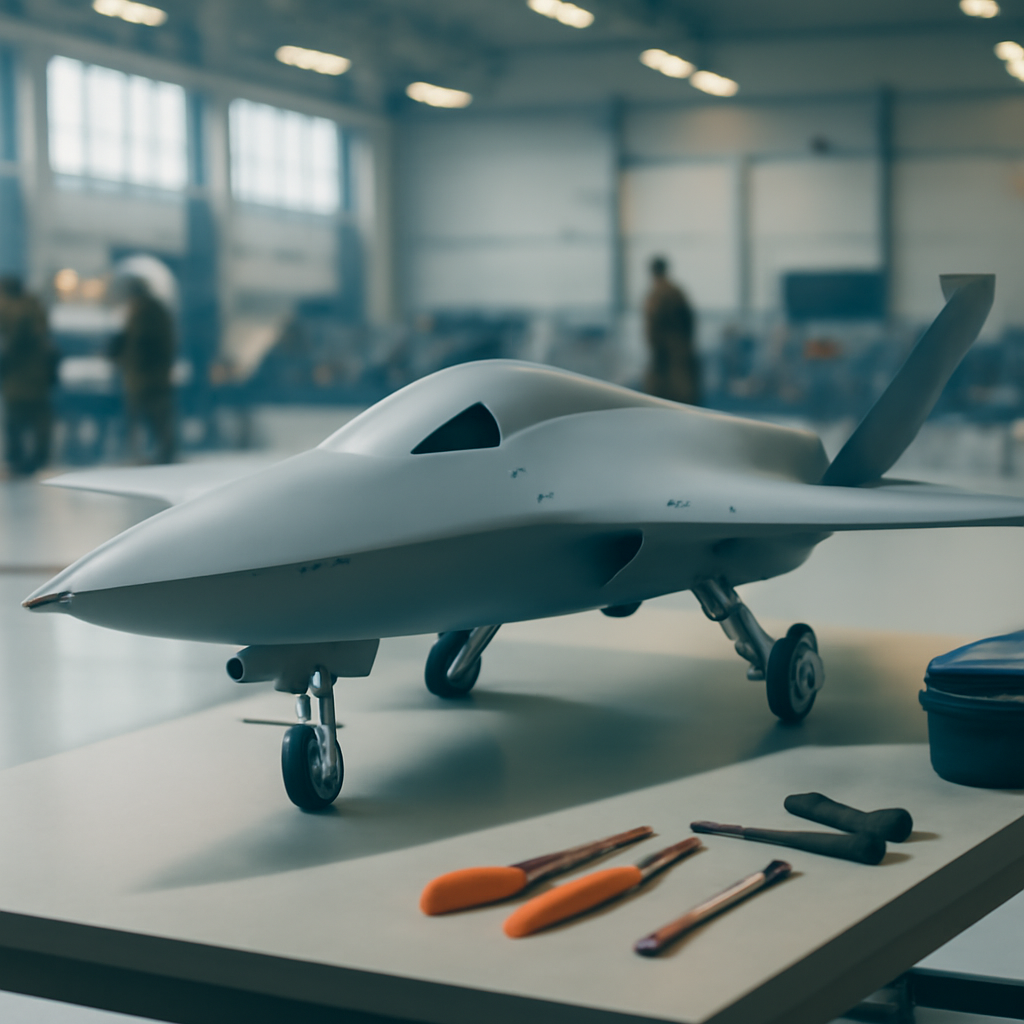
The Air Force is requesting roughly $1.4 billion to develop Collaborative Combat Aircraft (CCA) drones in fiscal 2027, alongside nearly $1 billion for procurement — and it has named who will build and program the first increment.
General Atomics and Anduril win Increment 1 production slots
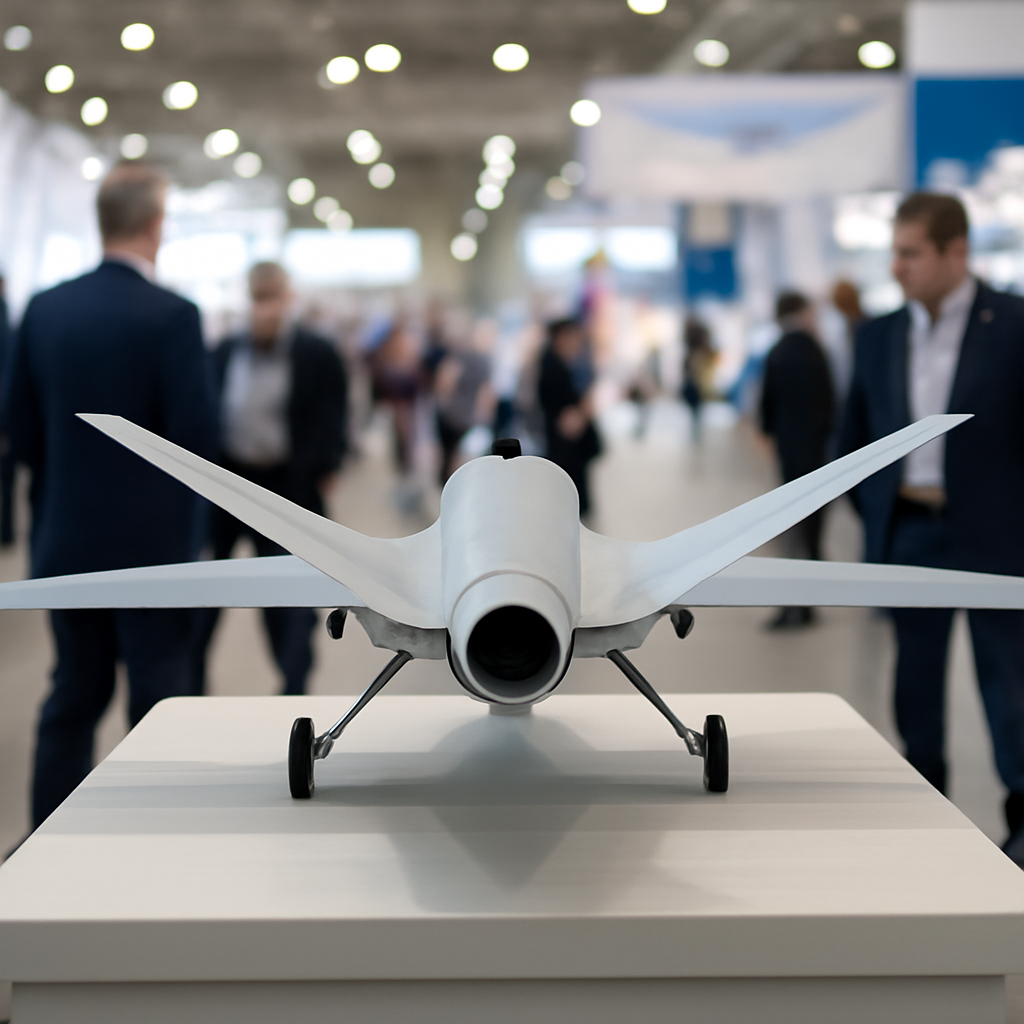
The service announced that General Atomics and Anduril were selected to build the U.S. military’s first CCA, marking movement from prototyping into production for the program’s first increment. Col. Timothy Helfrich, portfolio acquisition executive for Fighters & Advanced Aircraft, said the award represents “a major step forward” and described the selection as the result of “a [completely] new source selection” that re-solicited the original five competitors — Lockheed, Northrop, Boeing, General Atomics, and Anduril.
Helfrich said the Air Force evaluated vendors on their ability to meet schedule, cost criteria and performance sufficient to deliver operational capability of “150-plus aircraft by the end of the decade.” The service declined to disclose the program’s overall cost or the number of vehicles each contractor will receive in the first of three production lots, saying the contract and lot splits are structured to preserve flexibility.
Anduril, Shield AI and RTX/Collins Aerospace advance on autonomy
The Air Force is running a parallel competition to supply the autonomy software that will command the wingman drones. Officials selected Anduril, Shield AI and RTX’s Collins Aerospace to continue in a six-month performance period; after that period, “one or two” of those contractors will advance to a second six-month test and a final downselect to a single vendor in summer 2027. Helfrich said the service will keep the other six initial software vendors in a pool as a backup option and to preserve licensing flexibility.
Previously, the service had assigned autonomy roles to RTX for General Atomics’ drone and Shield AI for Anduril’s during earlier phases; Helfrich’s announcement confirmed a different, competitive path forward with Anduril itself also in the autonomy mix. Shield AI is offering its Hivemind system and said it will “focus on implementing collaborative combat autonomy behaviors involving multiple autonomous aircraft operating together under human supervision.”

This site is the portfolio.
OSINTSights runs on Cloudflare Workers, D1, R2, and Vectorize, with an AI pipeline on Hetzner ARM. Nubivance designed, built, and operates it. We do the same for clients.
See what we buildCost targets, capabilities, and the FY27 production start
The Air Force tied the CCA cost target to a longstanding goal of being “roughly one-third the cost of an F-35.” The story cites a Lot 17 F-35A price of around $82.5 million, which the Air Force said would put the CCA unit cost under $30 million. Helfrich confirmed production funding is being requested for FY27 and said, “We have production money starting in FY27, so as soon as we have funding appropriated, we [should] be able to execute first production lot.”
Capabilities remain largely under wraps, but Helfrich pointed to prior statements of a 700 nautical mile combat radius and confirmed that Increment 1’s mission is air superiority. The Air Force plans multiple production lots; while the initial three tranches will be followed by more, Helfrich said it is not the service’s “intent” to reopen Increment 1 to the defense firms that lost this round.
YFQ-42A crash, designations, and what stayed in the record
Helfrich said the service’s selected air vehicles are, “at the core,” the same designs chosen for prototyping in 2024, though refined based on lessons learned. He noted both aircraft designations — General Atomics’ YFQ-42A and Anduril’s YFQ-44A — will drop the leading “Y” moving forward. Helfrich also said the crash earlier this year of the YFQ-42A prototype and a subsequent month-long grounding “played ‘no’ role in the source selection.”
How the Air Force, General Atomics, and autonomy teams will respond
- The U.S. Air Force acquisition leadership: Will move toward first production execution as soon as FY27 funds are appropriated, continue a separate autonomy downselect process through summer 2027, and hold additional vendors in a licensing pool to retain flexibility.
- General Atomics and Anduril (hardware): Both companies signaled readiness to shift from prototyping to production. General Atomics said manufacturing “is already well underway,” and Anduril said it will deliver an initial set of production FQ-44 semi-autonomous fighters to support testing, validation and operational fielding.
- Autonomy developers (Anduril, Shield AI, RTX/Collins): Will enter a staged six-month performance competition, with one or two advancing to a second phase and a final downselect planned for summer 2027; Shield AI emphasized collaborative autonomy and reduced operator workload in its statement.
Industry reactions were immediate. David Alexander of General Atomics called the decision “an exciting day for our company and the nation.” Anduril’s Mark Shushnar said the firm has been refining production processes in parallel with aircraft development and that prototype work has helped “streamline the transition into production.” Shield AI’s Christian Gutierrez framed mission autonomy as “a foundational capability for future airpower.”
The Air Force’s next steps are procedural and consequential: execute the first production lot once FY27 funding is appropriated, run the six-month autonomy performance phases, and make a single autonomy vendor selection in summer 2027 — all while aiming to meet a target of more than 150 aircraft for air-superiority missions by decade’s end. The program’s cost and capability contours will come into sharper relief as those decisions play out.