"By moving fast from competitive selection into full-scale manufacturing, we position ourselves to field highly credible and combat-ready semi-autonomous systems to stay ahead of the pacing challenge," Air Force Secretary Troy Meink said. The service has taken that rhetoric to task: it awarded initial production contracts for its first collaborative combat aircraft (CCA) to Anduril and General Atomics, and set in motion a multi-vendor competition to supply the autonomy that will pilot them.
Contracts: Anduril and General Atomics cleared for Increment 1 production
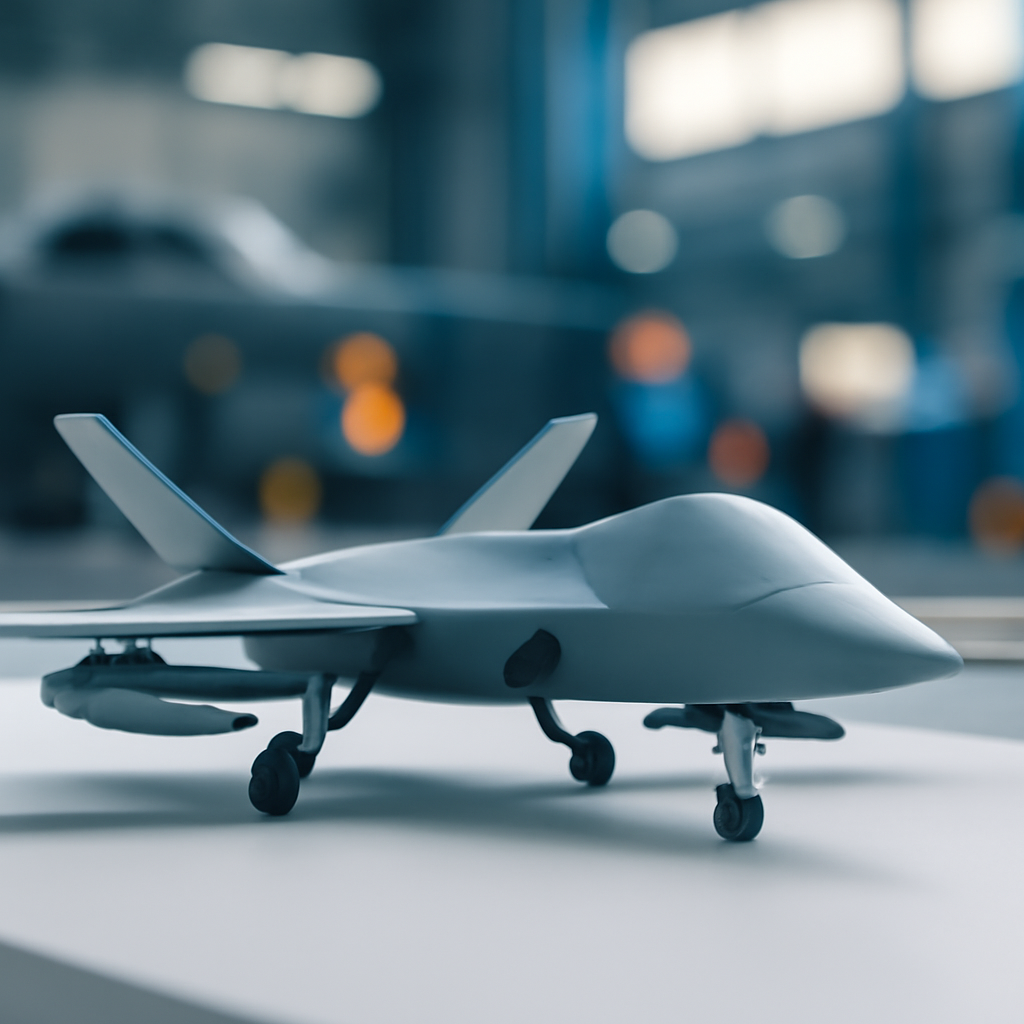
Air Force leaders announced Increment 1 CCA production contracts in three lots and named Anduril and General Atomics as the companies that will build the service’s first drone wingmen. Col. Timothy Helfrich, the portfolio acquisition executive for fighters and advanced aircraft, told reporters the contracts cover three lots but declined to say how many CCAs will be in each lot or how much each lot will cost.
Defense Department budget documents for 2027 show the department is seeking nearly $1 billion to buy CCAs. Helfrich told Defense One in March the Air Force is “beating its goal” of buying each CCA for about one-third of the cost of an F-35. The service’s public messaging aims higher: Meink said the program is on a path “to procure over 150 combat capable CCA by the end of the decade.”
Northrop Grumman’s self-financed offering was not selected for the initial production awards.
Autonomy: a six-year, multi-vendor pool tied to warfighter reviews
The Air Force extended a baseline six-year contract vehicle to six companies — Anduril, General Atomics, Lockheed Martin, Shield AI, Northrop Grumman, and RTX Collins — to create a vendor pool eligible to build CCA autonomy software. The service described this pool as the starting point for a competitive, multi-vendor approach.
From that pool, Anduril, Shield AI, and RTX Collins received additional production options and will compete to supply the CCA’s final autonomous software. The service plans to review those firms’ initial performance after six months and conduct a second selection, with a final autonomy provider expected by Summer 2027. The Air Force said it will tie payment of the full software licensing fee to whether a vendor delivers a combat capability aligned with warfighter needs and feedback.
Earlier this year the service tested its government-owned Autonomy Government Reference Architecture (A-GRA) by placing RTX Collins software on General Atomics’ YFQ-42 and Shield AI software on Anduril’s YFQ-44. Compliance with the A-GRA is mandatory so the Air Force can mix and match autonomy and airframes as required.
Gen. Kenneth Wilsbach, the Air Force chief of staff, framed the technical approach: “Open systems architecture is critical in modern warfare,” he said. The requirement for a compliant reference architecture underpins the service’s stated goal of leveraging multiple autonomy providers inside the same hardware ecosystem.

Audit-ready is a season. It shouldn't be.
Evidence in spreadsheets, controls drifting between audits, frameworks multiplying on flat headcount. Nubivance runs continuous compliance on Rapid7 Cyber GRC - SOC 2, HIPAA, ISO 27001, PCI, CMMC.
End the scramblePrototype hiccups, production readiness, and naming
Both selected firms experienced setbacks during prototyping. In April, General Atomics’ YFQ-42A Dark Merlin crashed at the company’s California airport after what the company called an autopilot program error; the incident halted flight testing for a little more than a month. General Atomics President David Alexander said production work was already underway and described the award as “an exciting day for our company and the nation.”
Anduril faced months of delay before its semi-autonomous software allowed a first flight; the company’s YFQ-44A Fury flew in late October. Mark Shushnar, Anduril’s vice president for autonomous airpower, said the company had been building full-rate production processes alongside prototype work and noted that the Air Force’s decision marked “the first time that a new company has won a fighter aircraft program since the 1970s.”
The Air Force will drop the “Y” prefix from the platforms’ names to indicate they are no longer prototypes.
What this means for technologists, procurement leaders, and airmen
- Technologists and security teams: Mandatory compliance with the Autonomy Government Reference Architecture and the mix-and-match tests with RTX Collins and Shield AI place emphasis on interoperability. The six-vendor pool and phased selections create a competitive environment where A-GRA conformance will determine whether autonomy software can be integrated across different airframes.
- Procurement leaders and budget offices: The service’s plan for three production lots, a nearly $1 billion 2027 budget request for CCAs, and the target to buy CCAs at roughly one-third the cost of an F-35 set financial guardrails. But the Air Force has not disclosed lot sizes or per-unit costs, leaving budget execution dependent on forthcoming contract details.
- Airmen and operational commanders: The Air Force is tying autonomy payments to warfighter feedback and scheduled a six-month performance review of initial autonomy production options. Those mechanisms signal that operational acceptance and real-world capability will determine which vendor(s) receive full licensing fees and longer-term roles in the program.
Near-term milestones and remaining specifics
Production is already being readied: General Atomics says manufacturing is “well underway,” and Anduril reports implementing full-rate production processes on prototype aircraft. The Air Force will monitor autonomy providers over the next six months and expects a final autonomy selection by Summer 2027. Meanwhile, nine vendors remain in contention for Increment 2, though Col. Helfrich provided no timeline updates for that competition.
Two concrete near-term facts to watch: the results of the six-month autonomy reviews that will shape who pilots the CCAs in operational scenarios, and how many aircraft are manifest in each of the three initial production lots — details the Air Force has not yet disclosed. Those answers will determine whether the program meets its stated numerical and fiscal targets through the end of the decade.