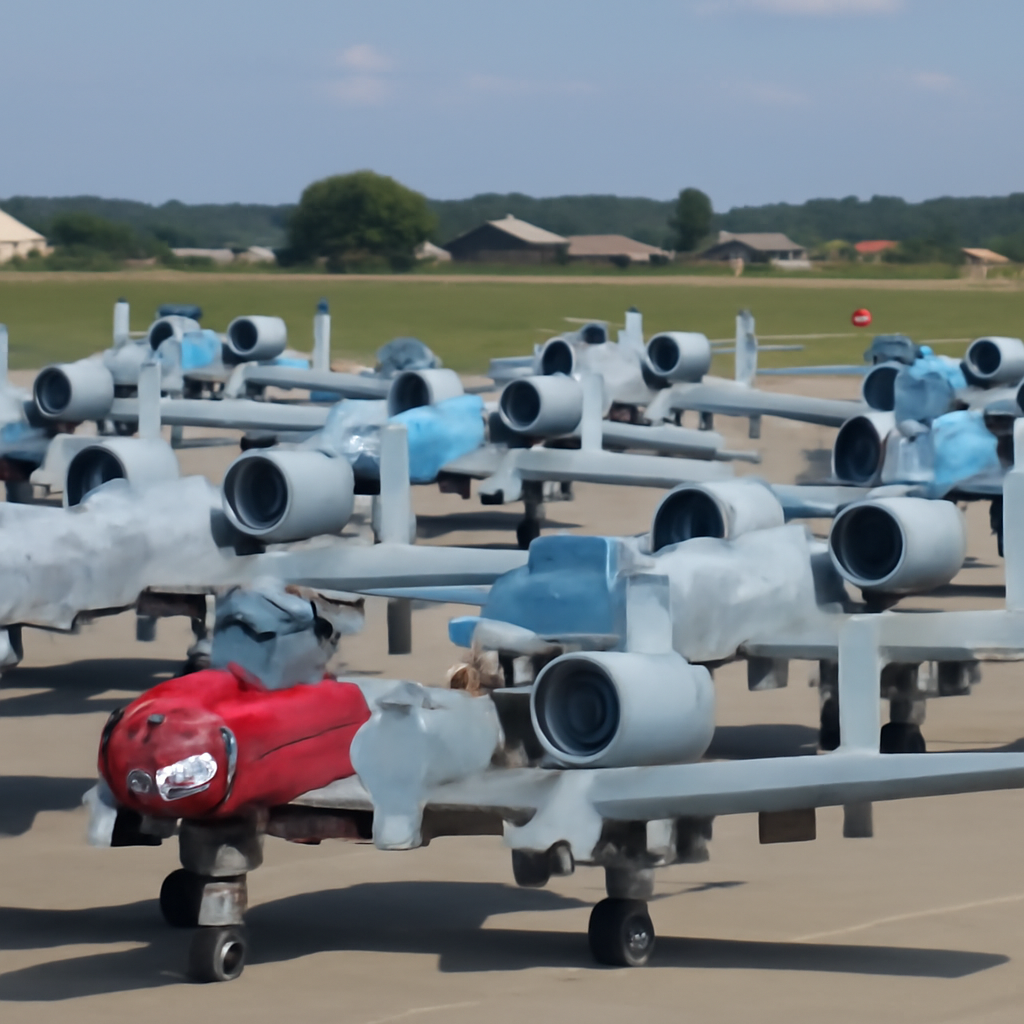
"11 Warthogs landed at Lakenheath at about 3 p.m. local time."
RAF Lakenheath arrival and unit movements
Eleven A-10C Thunderbolt II attack aircraft from the 75th Fighter Squadron touched down at RAF Lakenheath after transiting through Aviano Air Base in Italy from Muwaffaq Salti Air Base in Jordan, aviation photographer Andrew McKelvey told the reporting outlet. McKelvey photographed the jets on arrival and shared images showing the formation and detailed markings. The reporting outlet also noted that it reached out to the 75th Wing for additional information.
Nose art: classic aviation personalization meets video-game culture
The aircraft were festooned with colorful nose art and squadron markings, continuing a long tradition of personalizing combat aircraft. The images show homages to video-game characters — Ridley, Diddy Kong, King Dedede, Samus Aran, Star Fox and Little Mac — alongside non-video-game references such as Macho Man, Doc Holiday and the Reaper. The story notes personnel previously applied nose art during other deployments to Muwaffaq Salti, suggesting the practice has become more visible in that theater. It also points out that F-15Es from RAF Lakenheath are well known for often comical nose art designs, a practice now allowed after long-standing USAF restrictions that limited nose art to very particular circumstances.

Audit-ready is a season. It shouldn't be.
Evidence in spreadsheets, controls drifting between audits, frameworks multiplying on flat headcount. Nubivance runs continuous compliance on Rapid7 Cyber GRC - SOC 2, HIPAA, ISO 27001, PCI, CMMC.
End the scrambleMission markings linked to Operation Epic Fury
The jets displayed mission markings that map directly onto weapon systems used in strikes described in prior reporting about Operation Epic Fury. The markings include representations of Small Diameter Bombs (SDBs), GBU-12 Paveways, Advanced Precision Kill Weapon System (APKWS) laser-guided rockets, AGM-65 Maverick missiles, Miniature Air-Launched Decoys (MALDs) and generic bombs likely signifying Joint Direct Attack Munitions (JDAMs). The A-10’s GAU-8 gun is also represented among the markings.
There are target ‘kill’ symbols as well — a pair of boats and a truck marked with a mushroom-cloud-style secondary explosion — linking visual tailoring on the jets to maritime and ground strike effects. The report reiterates previous accounts that A-10s were pressed into service in Operation Epic Fury to help destroy elements of the Iranian Navy, strike Iranian proxies in Iraq and Syria, and to participate in combat search-and-rescue work.
One particularly notable photo shows an A-10 bearing an F-15E tail marking, green footprints associated with Air Force Pararescue Jumpers (PJs) and the words “So others may live,” identified in the story as the PJs’ motto. The report connects that imagery to the daring rescue of two F-15E crewmembers whose Strike Eagle was shot down over Iran: A-10s provided the “Sandy” low-altitude escort role for the rescue package, and one A-10 in that episode was struck by Iranian fire and crashed, with the pilot surviving. The presence of the F-15E tail mark makes it possible the pictured Warthog participated in that CSAR operation or in another mission not otherwise specified in the reporting.
Congressional language, Air Force debate, and the A-10’s future
The arrival comes amid an ongoing debate between the Air Force and Congress about the A-10’s future and survivability in future conflicts. The report highlights an amendment added to the House Armed Services Committee’s version of the National Defense Authorization Act that would require the Secretary of the Air Force to continue supporting A-10 training, testing, experimentation, maintenance and sustainment through the jet’s planned retirement date. The same amendment calls for preserving lessons learned and operational expertise from A-10 missions to inform future replacement systems. The report frames the aircraft’s visible mission marks as evidence that the Warthogs “still provided a lot of value” in the most recent fight regardless of longer-term decisions.
What this means for the 75th Wing, RAF Lakenheath, and the Air Force
- 75th Wing: The unit is the focal point for follow-up questions — the reporting outlet stated it reached out to the 75th Wing for comment — and the photographed markings serve as a public record of deployments and mission effects for that squadron.
- RAF Lakenheath: Hosting A-10s routed from Aviano and Muwaffaq Salti visually underscores the base’s role as a nexus for forward-deployed tactical aircraft and their return movements to the United Kingdom.
- The Air Force and Congress: The markings and documented missions feed directly into legislative language preserved in the House Armed Services Committee’s NDAA amendment, offering concrete examples that supporters can point to in debates about training, sustainment and lessons-learned retention for the A-10 fleet.
The photographs and unit markings link a small, vivid visual record to larger operational and policy debates: these A-10s arrived in England bearing both the cultural imprint of squadrons and the tactical record of recent missions. The 75th Wing’s response to queries and the fate of the NDAA amendment will be the next concrete items to watch as the markings themselves remain on view.