Latest Analysis
Cybersecurity intelligence, threat analysis, and national security reporting.

SharePoint RCE flaw: Urgent Critical Must-Have Patch
A newly disclosed SharePoint RCE is being actively exploited—apply Microsoft’s emergency patches immediately and scan for signs of compromise. Then harden access controls, rotate credentials, and verify backups so a single flaw can’t turn into a major breach.

Hard-Coded Credentials: Risky HPE Flaw — Must-Read
HPE Instant On access points were found to contain unchangeable, hard‑coded credentials (CVE‑2025‑37103, CVSS 9.8), effectively creating a built‑in backdoor—if you manage these devices, inventory affected models, apply vendor patches, and lock down remote access now. This wake‑up call proves why secure‑by‑design firmware and rapid patching are nonnegotiable.

Hard-Coded Credentials: Stunning, Critical Threat
HPE Instant On access points were found to contain unchangeable, hard‑coded admin credentials (CVE‑2025‑37103, CVSS 9.8), a flaw that could let attackers bypass authentication and seize control. If you use these devices, inventory them, apply HPE’s patches, and tighten admin access immediately.

cryptojacking websites: Must-Have Guide to Best Defenses
Imagine visiting a harmless site and unknowingly lending your device’s power to hidden crypto miners — over 3,500 legitimate webpages were recently found doing just that. Stay alert: update your browser, use trusted blockers, and check for unexplained slowdowns to protect your performance, privacy, and battery life.

SharePoint zero-day attack: Must-Have Best Defenses
Microsoft’s admission that three on‑prem SharePoint Server versions are being hit by a zero‑day—after previous patching failures—is a wake‑up call for organizations to urgently protect sensitive data and rethink the risks of clinging to legacy systems.

fake AI schemes: Stunningly Risky Threats to Web3
Web3 developers are being targeted by a sophisticated scam—EncryptHub (aka LARVA-208/Water Gamayun) uses fake AI platforms like Norlax AI and Teampilot to deliver info-stealers disguised as job offers or portfolio reviews. Learn how to spot these impersonations and protect your projects, reputation, and community before it’s too late.

SharePoint zero-day vulnerability: Urgent Critical Threat
Microsoft confirmed a SharePoint zero-day in on‑prem servers that’s already being exploited — if you run on‑prem SharePoint, now’s the time to inventory systems, apply Microsoft’s mitigations, and tighten access controls. Don’t wait for a patch: quick steps like network segmentation, MFA, and enhanced monitoring can stop attackers from turning this flaw into a major breach.

Web3 cyber threats: Critical Must-Have Defense Guide
EncryptHub is targeting Web3 developers with convincing fake AI platforms, so learn to spot spoofed sites, verify domains and social profiles, and never share private keys. Use hardware wallets, multisig, and secure development practices to keep your projects and funds safe.

Microsoft malware threat: Stunning, Alarming Risks
Imagine your inbox becoming a spying ground — UK officials warn Fancy Bear-linked hackers are using new malware to hijack Microsoft email accounts and siphon private messages and sensitive documents. Take it seriously: enable MFA, tighten access controls, and monitor for unusual logins to stay one step ahead.

Microsoft malware: Stunning Critical Threats Exposed
Russian state-backed hackers have unleashed stealthy Microsoft-targeted malware to hijack Outlook accounts—exposing how fragile our email defenses can be. Now’s the time to tighten security with phishing-resistant MFA, vigilant monitoring, and smarter user habits to stay one step ahead.

SharePoint zero-day vulnerability: Critical Stunning Threat
A critical SharePoint zero-day (CVE-2025-53770) is actively exploited across 75+ companies—if you manage SharePoint, act now: prioritize patching, tighten monitoring, and test your incident response to protect sensitive documents and limit damage.

SharePoint zero-day exploit: Stunning Critical Alert
More than 75 organizations are already being targeted by a newly weaponized SharePoint zero-day that lets attackers run code, plant webshells, and quietly siphon sensitive data—so if your SharePoint servers are internet-facing or integrated with critical systems, treat this as an immediate emergency. Start inventorying exposed instances, enforce MFA, apply patches or mitigations, and hunt for signs of compromise now before attackers move deeper into your environment.

npm package malware: Must-Have Best Defenses
Think a routine dependency update is harmless? The recent npm malware attack—where phishers stole maintainer tokens to publish malicious versions of five popular packages—proves supply-chain trust can be shattered and why maintainers, consumers, and registries must act now to enforce 2FA, rotate tokens, and verify publish provenance.
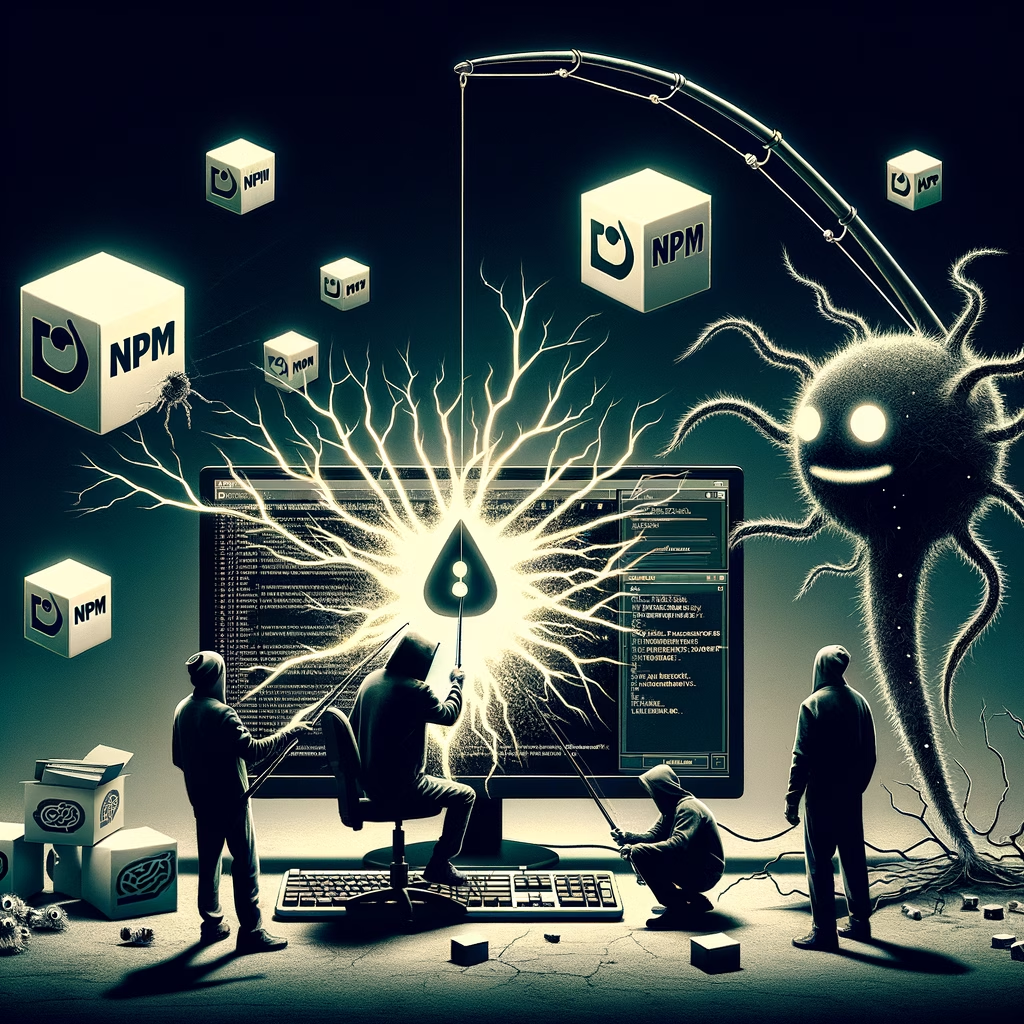
npm package security: Must-Have Guide to Risky Breaches
A targeted phishing attack that slipped malicious code into five npm packages shows how easily supply chains can be weaponized. Treat publish tokens like private keys—enable 2FA, rotate credentials, and demand package signing and provenance to stop the next breach.

CrushFTP vulnerability: Critical Must-Have Fix Now
A critical CrushFTP flaw (CVE-2025-54309, CVSS 9.0) is being actively exploited to gain admin access—if you run versions before 10.8.5 or 11 before 11.3.4_23 and don’t use the DMZ proxy, patch immediately. Inventory your instances, enable DMZ proxy where applicable, and ramp up monitoring now to block attackers.

Iran Cyber Threats: Stunning Risk to Global Security
Iran’s rapidly evolving cyber campaigns—mixing technical skill with sophisticated social engineering—now threaten critical infrastructure, economies, and public trust worldwide. Tackling this growing risk means investing in people, smarter technology, and stronger international cooperation before the next attack lands.

Mobile forensics tool: Stunning Privacy Risk Revealed
The newly exposed tool Massistant reveals how easily our phones—packed with messages, photos, health data and location history—can be harvested by authorities, forcing a fresh look at the balance between public safety and personal privacy. We need clear laws, transparency, and oversight to make sure powerful forensic tools protect people instead of prying into their lives.

Massistant tool: Stunning, Dangerous Surveillance Threat
Imagine if every tap and deleted photo on your phone could be reconstructed: the Massistant tool, reportedly used to extract deep data from seized phones, highlights how powerful forensics can solve crimes — and how easily they can erode privacy without proper oversight.

UNG0002 cyber espionage Exclusive Critical Threat
UNG0002 is a stealthy cyber-espionage campaign using CV-themed phishing, LNK/VBScript exploits, and post-exploitation tools to target organizations in China, Hong Kong, and Pakistan—putting strategic data and finances at risk. Stay vigilant: harden email defenses, enforce MFA, patch systems, and train staff to spot realistic résumé and job-offer lures.

Ivanti Zero-Days: Risky Threat — Must-Have Fixes
Ivanti Connect Secure appliances were recently abused via two zero-days to install MDifyLoader and unleash Cobalt Strike, turning trusted VPN gateways into powerful footholds for attackers. Act now: patch immediately, enforce MFA and segmentation, and ramp up monitoring and threat hunting to stop this fast-moving threat.

Ivanti zero-day exploits: Stunning Urgent Alert
If you use Ivanti Connect Secure, the string of zero-day attacks exploiting CVE-2025-0282 and CVE-2025-22457 — amplified by the new MDifyLoader and Cobalt Strike — shows how quickly unpatched gear can become an attacker’s beachhead. Act fast: patch, tighten access, and boost monitoring to stop these stealthy, two-stage intrusions before they escalate.

Public Wi-Fi security: Must-Have Best Protections
Enjoy free café Wi‑Fi? Think twice—over 5 million public networks are vulnerable, so use a VPN, avoid sensitive transactions, and check for HTTPS to keep your data safe.

Public Wi-Fi security: Must-Have Tips to Stay Safe
Free public Wi‑Fi is convenient, but that coffee-shop connection could be an open door for attackers — learn simple, must-have tips like using a trusted VPN, verifying network names, avoiding sensitive transactions, and enabling 2FA to keep your data safe.

ICS vulnerabilities: Must-Have Defenses for Risky Threats
CISA’s new advisory exposes critical ICS flaws in power, water, and industrial systems that could disrupt services or even endanger lives—operators, vendors, and policymakers should act now. Start with pragmatic steps like asset inventorying, patching and compensating controls, stronger remote-access policies, network segmentation, and better OT monitoring to sharply reduce risk.