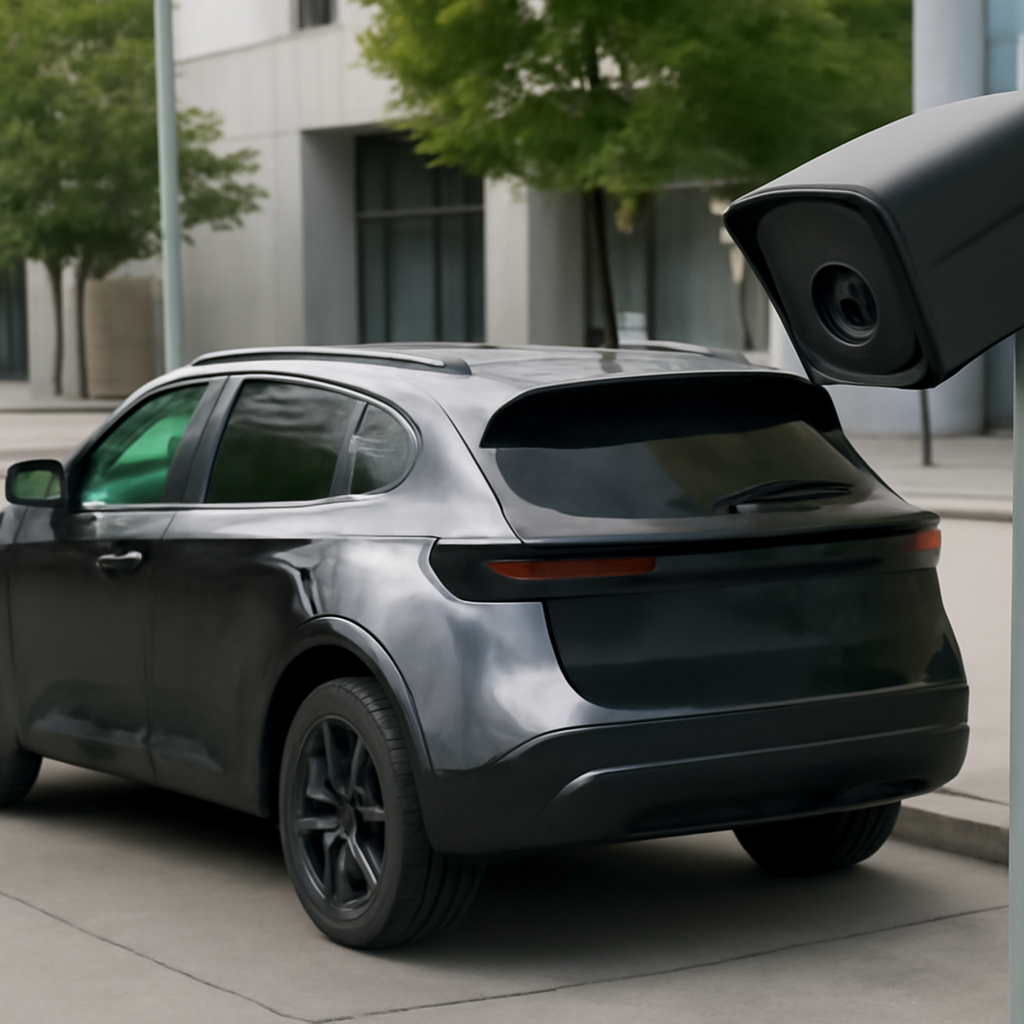
"He's specifically tested it against Flock, and Axon body cameras."
Flock and Axon body cameras: the test that prompts questions
The post reports that a camouflage experiment was "specifically tested" against Flock and Axon body cameras and raises a raft of follow‑on questions. The author asks directly: "What about Axon ALPRs, and all the other plate readers?" That same passage presses whether upgrades to camera systems will change how a visually altered vehicle is detected: "An upgrade is being offered for Flock that reads all of the RF MAC addresses of a target: does that trigger if the camera thinks it sees something?" The source frames these as open, practical questions rather than definitive findings.
Automoderator, anti‑crawler defenses, and the human user
The post begins with a long complaint about automated moderation and web anti‑crawler protections. The commenter writes that the "automoderator filter ... blocks every reasoned technical comment I make, but it lets through genuine spam," and details repeated troubleshooting attempts: switching browsers, toggling NoScript‑like plugins, enabling and disabling browser fingerprinting, and changing user‑agent strings. The post identifies common network and identity constraints as complicating factors: the commenter reports being "behind a CGNAT," notes the shared IPs "seem to have bad reputations," and says VPN exit nodes suffer the same reputation problems as large shared CGNAT pools.

This site is the portfolio.
OSINTSights runs on Cloudflare Workers, D1, R2, and Vectorize, with an AI pipeline on Hetzner ARM. Nubivance designed, built, and operates it. We do the same for clients.
See what we buildCamouflage, plate recognition, and the limits of visual training
The post moves from web defenses to vehicle camouflage and asks whether camera‑based recognition systems would be fooled. It asks bluntly, "does this mean autodriving cars that use cameras rather than LIDAR are not going to see these as vehicles?" and speculates that "certain visual inputs might crash Tesla software." The author also wonders whether "the shape of vehicle glass can’t be readily identified" and whether "the cameras ... could be trained to recognize letters and numbers and ignore all else." The post further asks how non‑Latin scripts would perform, noting: "I wonder how the cameras will do if the plate is written in Thai."
Flock upgrade: RF MAC addresses as a non‑visual cue
One concrete non‑visual capability cited in the source is an upcoming Flock upgrade that "reads all of the RF MAC addresses of a target." The post poses a specific causal question: if a camera's visual model fails to register a vehicle, will that RF‑based detection still "trigger" a response? The source does not answer this; it merely links the presence of RF‑collection capability to the broader uncertainty about whether visual camouflage will defeat a multi‑sensor system.
What this means for technologists, law enforcement, and end users
- Technologists and security teams: The post implies a need to test combined detection modalities. It asks whether visual camouflage that defeats one sensor will still be captured by other data — for example, RF MAC addresses — and whether recognition systems trained narrowly on characters will miss altered or foreign plates.
- Law enforcement and camera vendors (Flock, Axon): The source directly raises the question of functional scope for devices and upgrades, asking whether upgrades that add RF collection alter detection outcomes and whether ALPR systems such as "Axon ALPRs" would respond differently from body cameras.
- End users and the public: The complainant frames broader access problems tied to automated defenses — CGNAT, VPN reputations, and automated moderation — which, in their view, can exclude legitimate human users. That part of the post links online discrimination against certain network configurations or operating systems to practical harms in access to information and services.
The source delivers more questions than answers: it documents a hands‑on curiosity about how visual camouflage interacts with camera models and notes a concrete non‑visual capability in circulation (RF MAC collection). It also ties those technical anxieties to everyday friction — websites that treat real people as crawlers and the difficulty of proving personhood online. The unanswered throughline is simple and consequential: when visual models, radio signals, and web‑side heuristics overlap, who — or what — will be recognized?