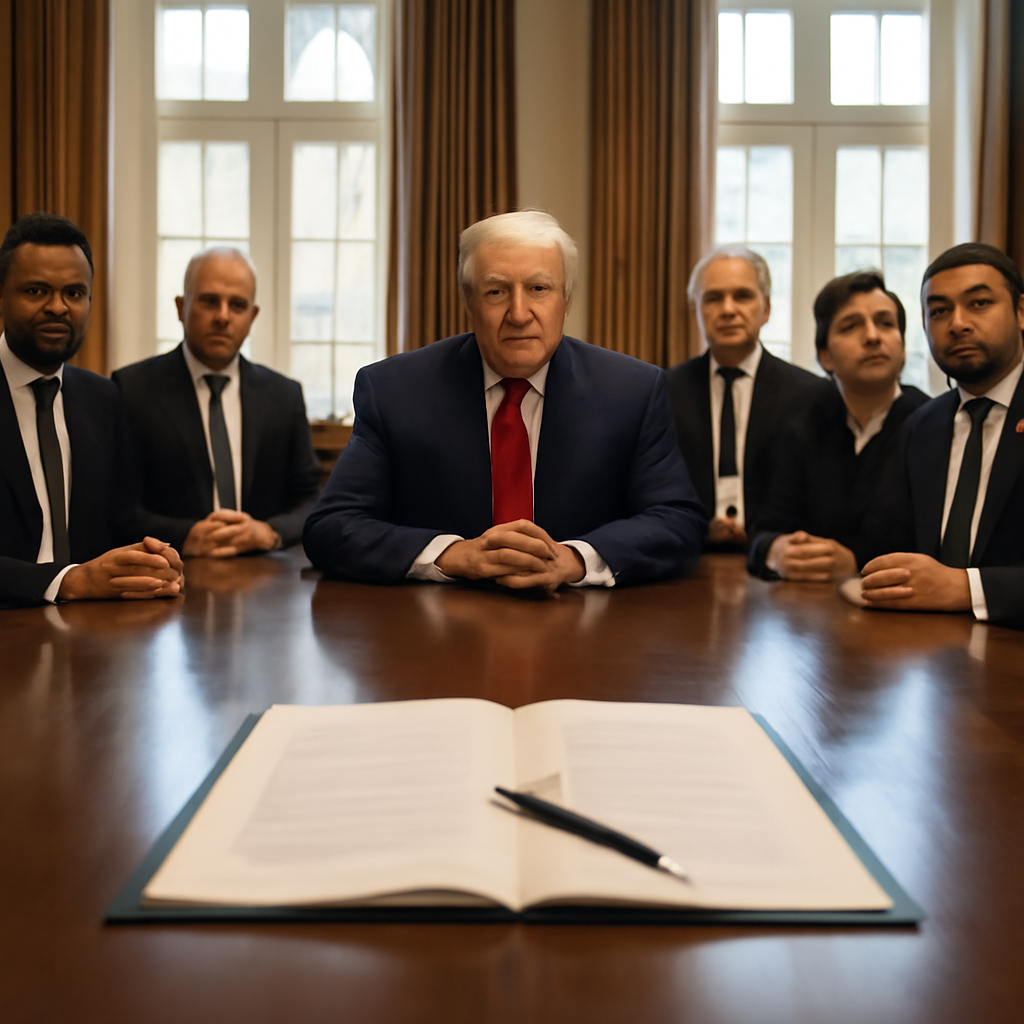
"To date, the government has only given us verbal evidence of a potential narrow, non‑universal jailbreak, which essentially consists of asking the model to read a specific codebase and fix any software flaws," Anthropic wrote in response to the directive.
The export‑control directive and what it does
The U.S. government has ordered Anthropic to suspend foreign‑national access to two of its newest models, Fable 5 and Mythos 5. The directive, issued as an export‑control measure, explicitly bars access by any foreign national — including foreign nationals inside the United States and foreign‑national employees of the company — and prompted Anthropic to disable both models for all customers while it works to comply. Anthropic said the order does not affect access to its other models.
How Anthropic characterized the government's evidence
Anthropic pushed back on the rationale for the order, saying the government had presented only “verbal evidence” of a single, narrow potential jailbreak. The company described that reported jailbreak as one in which the model was asked to read a specific codebase and fix software flaws. Anthropic said it reviewed the report it believes underlies the directive and concluded the level of capability displayed there is “widely available from other models (including OpenAI’s GPT‑5.5), and is used every day by the defenders who keep systems safe.”

The cyber insurance questionnaire just landed. Now what?
SOC 2, HIPAA, insurance renewals - someone has to own security strategy. Nubivance provides fractional CISO leadership without the full-time salary.
Get a security leadWhat prompted the action: a reported jailbreak and Commerce Department involvement
According to reporting cited by Anthropic, the Commerce Department moved after another company claimed it had jailbroken Mythos, a development that reportedly alarmed officials about national‑security risks. The directive follows only days after Anthropic released Fable 5 — made publicly available with restrictions on sensitive uses — and Mythos 5, which Anthropic had offered through a limited trusted‑access program called Project Glasswing for cyber defenders and critical infrastructure operators. The administration's action has been characterized in the source as one of its most aggressive steps to control access to frontier AI models with significant cybersecurity capabilities.
Responses from defense technology leaders and policy advocates
Senior defense technology officials publicly supported the move. Kirsten Davies, the Department of Defense’s chief information officer, wrote on X that the department “fully support[s] @POTUS and @SecWar in prioritizing national security and the security of our warfighters, [Defense Industry Base] partners, critical infrastructure, international partners and allies,” adding, “Some things are simply more important than revenue cycles, clickbait, and pre‑IPO valuation. America First. Always.”
Other voices criticized the measure. Brad Carson, president of Americans for Responsible Innovation, argued the decision “fails that test, and as a result, risks America’s edge in AI innovation.” Carson said AI regulation must be “done consistently across industry, without favor, and according to a clear, rules‑based process,” and warned that blocking Anthropic’s model without such care risks political favoritism.
Impact on federal cyberdefense, critical infrastructure, and deployment
Mythos 5 was designed and distributed specifically to support cyber defenders and critical‑infrastructure operators through Project Glasswing. The suspension will likely complicate near‑term plans to test or deploy Anthropic’s cyber‑focused systems for federal agencies and those critical partners. The administration has recently discussed giving its main civilian cyberdefense agency full access to Mythos to aid federal cyberdefense, but agency technology leaders have struggled both to access and to implement Mythos, citing lack of transparency from the White House’s cyber office.
The action follows months of frictions between Anthropic and the federal government: Anthropic previously refused to allow its products to be used for domestic surveillance or autonomous lethal weaponry; the Pentagon designated the company a supply‑chain risk; and the president ordered federal agencies to stop using its products. A federal judge on March 27 issued a temporary injunction against both the Pentagon’s designation and the presidential order.
The directive raises a central, explicit tension the source highlights: how to maintain trusted access for U.S. agencies and allies while preventing adversaries or unauthorized users from misusing the same capabilities. Anthropic is now working to comply with the export‑control order while it keeps other models online, and Washington must decide whether this episode will set a durable process for handling frontier tools — or remain a high‑stakes, case‑by‑case intervention.