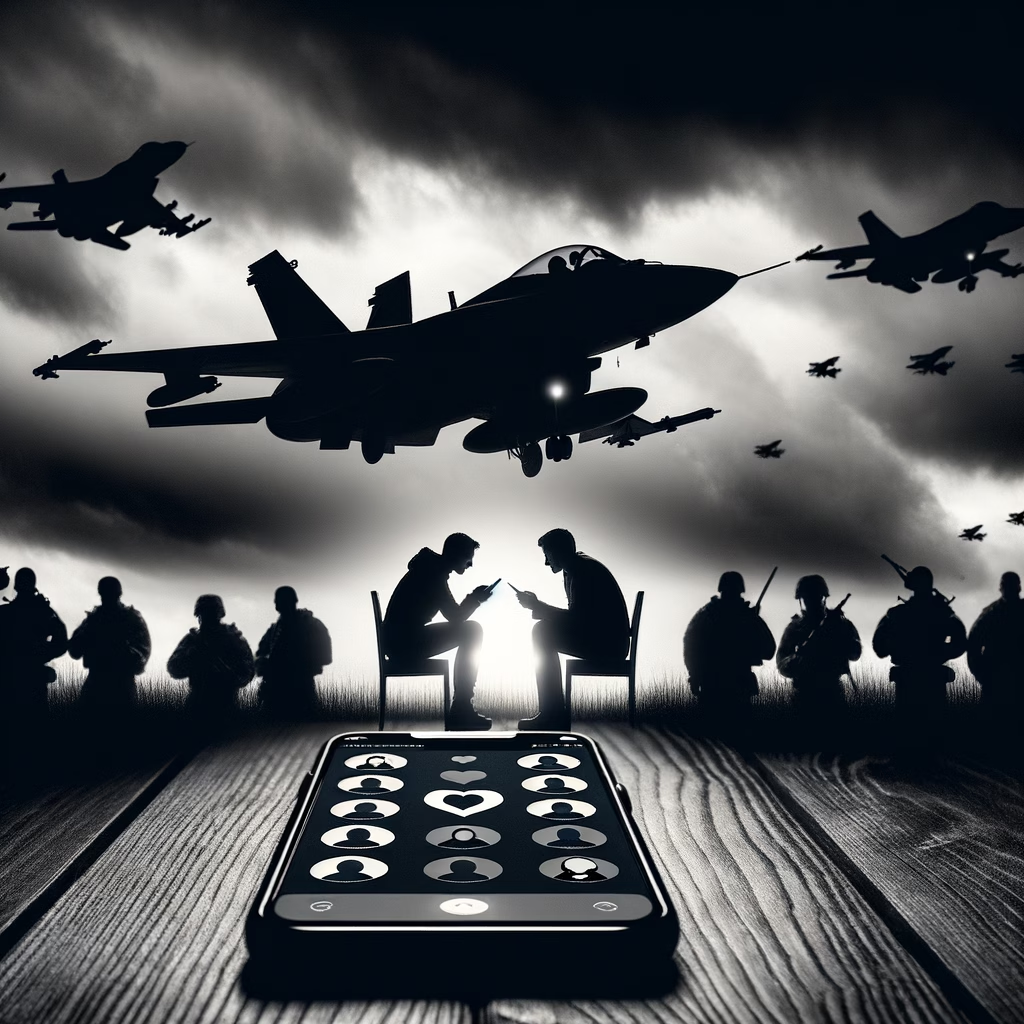
“What happened in that NATO meeting today?” The question, whispered in a private chat on a dating app, would soon unravel a troubling chapter of espionage cloaked in digital romance. A U.S. Air Force worker, entangled by affection and secrecy, has admitted guilt in leaking sensitive military information concerning the Russia-Ukraine conflict to an individual he met online. This revelation raises profound questions about operational security, personal vulnerabilities, and the evolving nature of intelligence threats in the digital age.
The accused, whose identity remains protected due to the sensitive nature of the case, pleaded guilty to conspiring to transmit confidential national defense information. According to the Department of Justice, the defendant provided classified details regarding U.S. and NATO deliberations on the ongoing war between Russia and Ukraine. These disclosures occurred through exchanges on a popular dating platform, where emotional connection intersected disastrously with national security.

Espionage within the military is not new, yet this incident underscores the increasing role of social media and dating applications as unconventional vectors for leaking classified intelligence. The Pentagon’s cybersecurity chief, General John Thompson, stated in a recent briefing, “We are contending with adversaries who exploit both technology and human relationships. Trust, once broken in these channels, compromises the very fabric of our defense.”
This case must be understood against the backdrop of the broader Russia-Ukraine war, where information is a critical front. U.S. military support and intelligence sharing with NATO partners have been pivotal in shaping the conflict’s trajectory. Consequently, any breach in this flow of information endangers not only tactical operations but the strategic posture of Western alliances.
From a policy perspective, this incident puts a spotlight on the challenges of balancing personal freedom and stringent security protocols for military personnel. Experts like Dr. Emily Carter, a national security analyst at the Brookings Institution, emphasize that “While vetting and surveillance are necessary, they must be complemented by comprehensive education on the risks of digital interaction. Human error remains the weakest link in cybersecurity.”
Technologists echo this concern, advocating for enhanced secure communication tools and continuous monitoring to detect unauthorized disclosures early. Yet, the question remains: how do you guard against breaches born from genuine human connection and emotional vulnerability?
For users of dating apps, this story serves as a cautionary tale about the complexities of trust and privacy. Platforms themselves face scrutiny over their responsibility to safeguard users and prevent exploitation by hostile actors. Meanwhile, adversaries keenly watch for cracks in the armor, exploiting both cutting-edge hacking techniques and social engineering maneuvers to acquire valuable intelligence.
As we reflect on this episode, it becomes clear that the intersection of personal lives and professional duties in the digital era demands renewed vigilance. The Air Force worker’s confession reveals not just a breach of law but a poignant human dilemma: where does loyalty lie when love and duty collide?
In a world increasingly defined by blurred boundaries—between the virtual and the real, between intimacy and information—how can security frameworks evolve to protect secrets without sacrificing the humanity of those entrusted to keep them?



