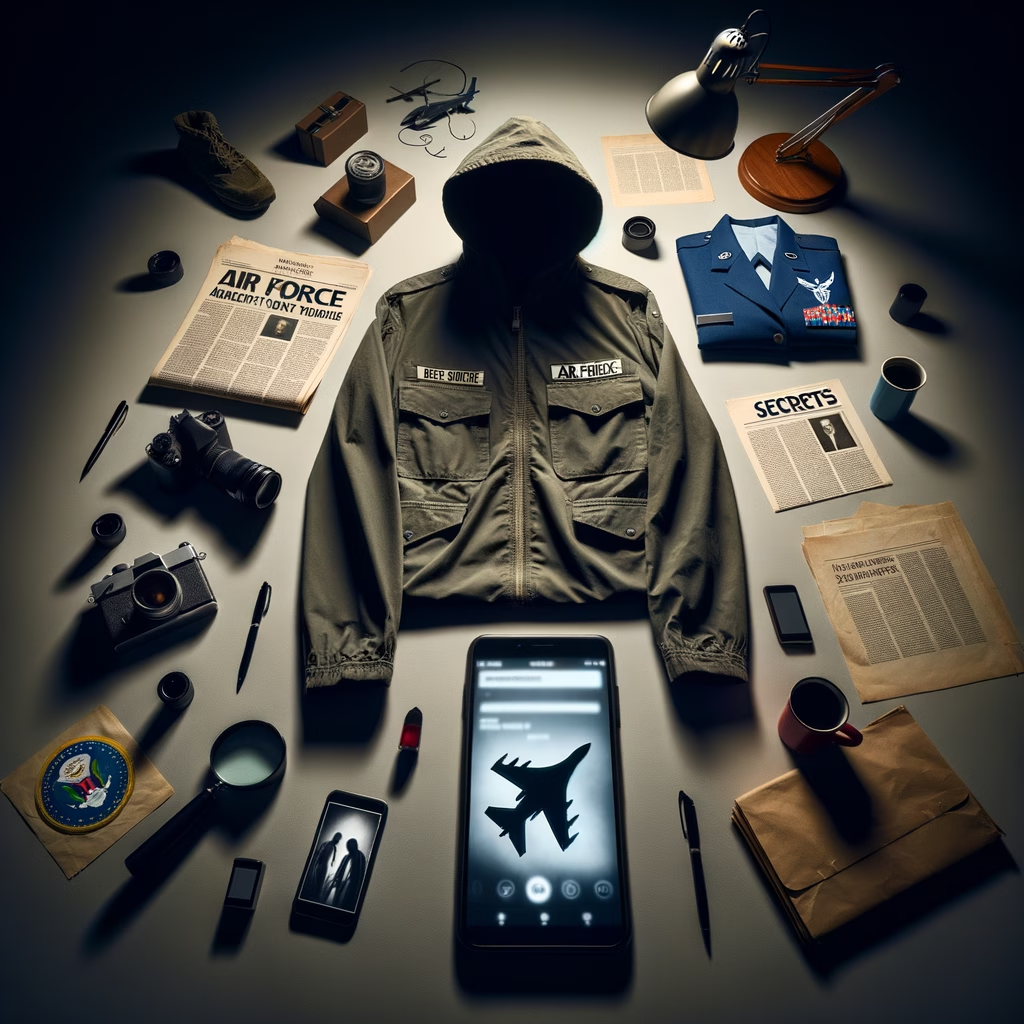
“Oh my sweet secret informant lover, what happened in that NATO meeting today?” This chilling message, revealed in court documents, encapsulates a betrayal not only of trust but of national security. A US Air Force civilian employee has pleaded guilty to conspiring to transmit confidential national defense information — a breach that underscores the vulnerabilities lurking within even the most secure institutions.
The defendant, whose identity remains partially sealed due to ongoing investigations, reportedly met a woman on a popular dating app. Over time, their relationship blurred the lines between personal affection and espionage, leading to the unauthorized sharing of sensitive details related to the Russia-Ukraine war. This conflict, already a fulcrum of global geopolitical tension, has been the subject of intense intelligence monitoring by NATO and the United States. The leak, therefore, strikes at a particularly sensitive nerve.

According to the Department of Justice, the Air Force worker admitted to willfully conspiring to disclose classified information that could potentially aid adversaries. The charges, filed earlier this month, highlight how personal vulnerabilities and digital platforms can converge with dangerous consequences. “Our national security depends not only on advanced technology but on the integrity and vigilance of each individual with access to classified information,” said a spokesperson from the Air Force Office of Special Investigations.
This incident shines a harsh light on the complex intersection of human factors and cybersecurity within the military sphere. As the United States and NATO rely heavily on classified intelligence to respond effectively to the Russian aggression in Ukraine, safeguarding this information is paramount. Yet, even with stringent clearance protocols and surveillance, insiders remain a significant threat vector.
From a technological perspective, security experts emphasize that while encrypted communication and monitoring software play crucial roles, they cannot fully mitigate the risk posed by an insider with emotional or psychological motivations. “Technology is only as effective as the people using it,” noted Dr. Karen Li, a cybersecurity analyst at the Center for Strategic and International Studies. “When personal relationships, especially those forged in the often-anonymous digital world of dating apps, come into play, traditional defenses may falter.”
Policymakers are now grappling with how to strengthen counterintelligence measures without infringing on privacy rights or creating a culture of distrust within the armed forces. The balance is delicate. “We must foster an environment where personnel feel supported and are regularly reminded of their responsibilities,” said Senator Mark Warner, chair of the Senate Intelligence Committee. “At the same time, we need robust monitoring to detect suspicious behavior early.”
The implications extend beyond the military. For users of dating apps, this case serves as a stark reminder that digital relationships can have real-world consequences, sometimes with national security at stake. Meanwhile, adversaries may be emboldened by such breaches, perceiving cracks in the armor of US intelligence efforts.
As the investigation continues, one question remains: In an era where personal lives intertwine increasingly with digital platforms, how can a democracy protect its secrets without sacrificing the very freedoms that define it? The answer may lie not only in policy and technology but in the quiet, sometimes frail, human heart at the center of every security system.



