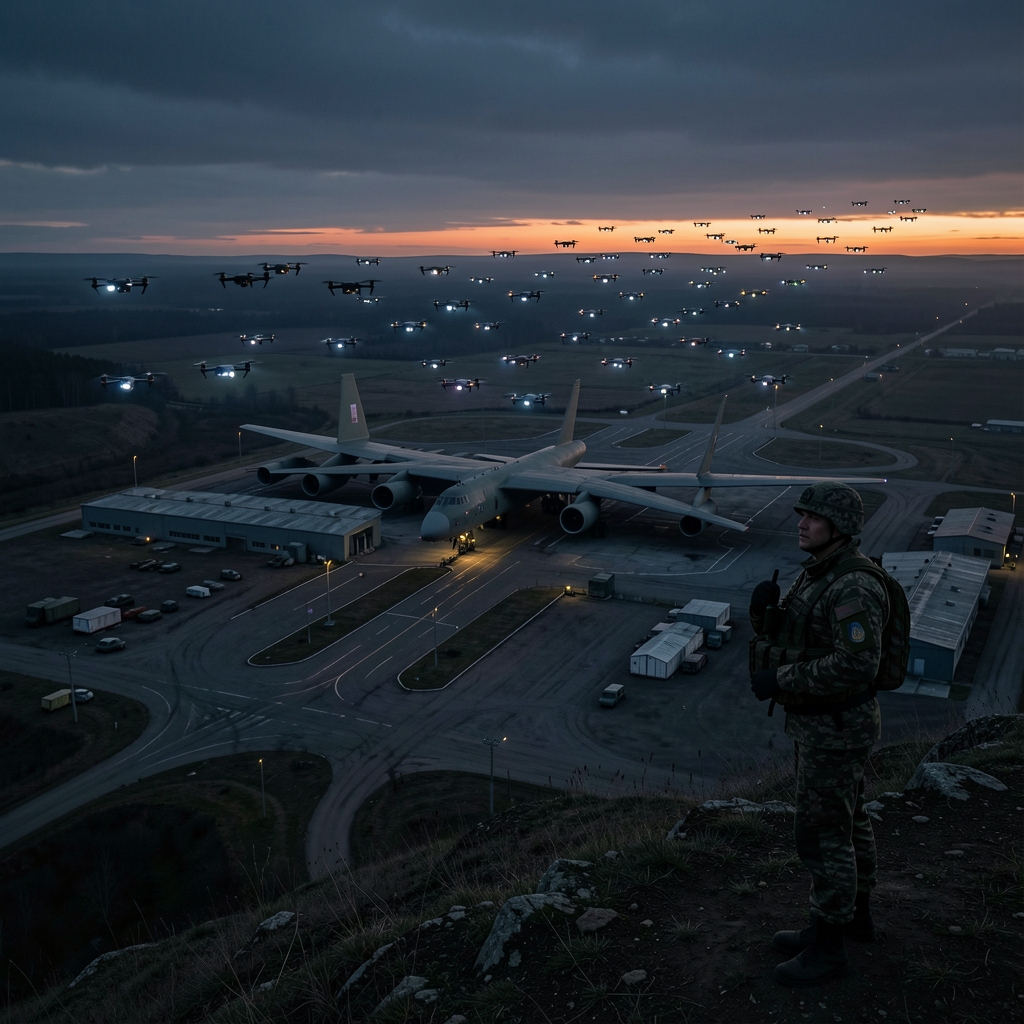
Ukrainian Drone Swarm Rattles Russian Strategic Bomber Fleet
In what many defense analysts are calling a turning point in modern drone warfare, Ukrainian intelligence has executed one of its most complex cross-border strikes to date. In an operation reportedly code-named “Pavutýna” (“Web”), the Security Service of Ukraine (SBU) has managed to target and either damage or destroy 41 of Russia’s strategic aircraft, including longstanding working horses like the Tu-95 and Tu-22M3 bombers. The operation, confirmed by multiple Ukrainian intelligence sources and featured on Defence Blog, underscores both the evolving tactics in the ongoing Ukraine-Russia conflict and the broader implications for power balances in the region.
On a brisk morning that belied the intensity of military planning behind the scenes, Ukraine’s defense forces harnessed a combination of stealth, precision, and technological innovation. A swarm of drones, coordinated with meticulous timing and armed with highly accurate munitions, breached a complex network of airfields and radar installations to hit a historically critical asset in Russia’s long-range strike capability. Given the strategic significance of aircraft such as the Tu-95 and Tu-22M3 bombers in maintaining nuclear deterrence and power projection, the strike sends a clear signal to global military strategists about the shifting nature of modern conflict.
The roots of this operation can be traced back to Ukraine’s broader reorientation towards unconventional warfare—a path that has steadily gained ground amid asymmetric conflicts of the past decade. The SBU, long known for its counterintelligence prowess, along with contributions from other Ukrainian defense agencies, appears to have adapted lessons from previous engagements. This adaptation is marked by an increasing reliance on unmanned systems to deliver strikes with surgical precision, reducing the risk to personnel while maximizing surprise in hostile environments.
Historically, long-range bombers have served as symbols of a nation’s strategic might. The Tupolev Tu-95 “Bear,” renowned for its distinctive propeller sound and global reach, and the supersonic Tu-22M3, a key element of Russian aerial strategy, have been integral parts of Russia’s military architecture. Their disruption not only affects operational capability but also sends psychological ripples through conventional strategic doctrines. The Ukrainian operation, combining both intelligence acumen and advanced drone technology, signals a calculated effort to exploit vulnerabilities quickly identified through years of evolving digital surveillance and modern battlefield reconnaissance.
The specifics of “Pavutýna” remain as much shrouded in secrecy as they are celebrated by insiders. Ukrainian intelligence reports confirm that the drones, equipped with state-of-the-art targeting systems, penetrated deeply into territory controlled by Russian forces. While official Russian assessments have yet to emerge in detail, the calculated disruption of 41 aircraft is expected to temporarily hamper Russia’s bomber readiness and raise questions about the security of its air bases. According to verified sources within Ukraine’s military apparatus, the operation not only underscores the maturity of Ukraine’s drone tactics but also tests the limits of Russian air defense and counterintelligence measures.
Beyond the immediate military implications, this operation casts a long shadow on the evolving landscape of modern warfare. For decades, strategic bombers have offered a blend of conventional might and nuclear deterrence, operating on the premise of invulnerability through reach and speed. However, the precision and cost-effectiveness of unmanned systems are reshaping that paradigm. As military experts from institutions such as the International Institute for Strategic Studies (IISS) have noted in recent analyses, the integration of swarm-based drone tactics could redefine air combat and strategic deterrence concepts in the 21st century.
Observers note that the disruption of Russia’s bomber fleet may lead to several cascading effects:
- Operational Disruption: With a significant number of bombers momentarily out of commission, Russian long-range operational capabilities may be temporarily degraded, impacting future strategic decisions.
- Technological Contest: This strike is emblematic of a technological contest, where battlefield innovation now often outweighs sheer numeric superiority.
- Psychological Impact: Both on the frontline and among national leadership, this demonstration of drone capability challenges long-held assumptions about the invulnerability of strategic assets.
Experts are divided on the broader implications, citing both immediate tactical gains and longer-term strategic uncertainties. General Mark Milley, former Chairman of the Joint Chiefs of Staff, has discussed how modern conflicts now prioritize rapid, targeted actions over prolonged engagements. Although he has not directly commented on the Ukrainian operation, his analyses on drone warfare underscore the transformative nature of such techniques, a view echoed in recent think-tank reports produced by the RAND Corporation.
Within this context, Ukraine’s move is less an isolated tactical maneuver and more an emblem of strategic recalibration. Policies that once favored large-scale conventional operations are now being supplanted by agile deployments and electronic warfare capabilities. In the midst of political turmoil and conflicting narratives from both sides of the conflict, Ukraine’s use of drone swarming technology is setting a new benchmark for what is operationally possible under pressure.
Why does this matter? In strategic terms, the Ukrainian operation demonstrates that even state-of-the-art military assets, such as Russia’s bomber fleet, are not immune to evolving tactics and relentless technological innovation. The ability to disable or destroy critical components of an adversary’s military infrastructure not only erodes immediate operational strength but also forces a reassessment of defense postures on all sides.
Political analysts and defense strategists now find themselves examining a new battlefield dynamic. The draconian challenges of securing, monitoring, and continuously protecting fixed strategic installations highlight the inherent vulnerabilities in an era defined by asymmetric conflict. Ukrainian success hints at a future where smaller, agile forces equipped with autonomous systems might contend with, and potentially outmaneuver, larger state-sponsored military complexes.
International leaders and policymakers are taking note. U.S. Secretary of Defense, as well as Western military strategists, have often emphasized the importance of adaptive strategies in modern warfare. In a climate where technological and informational dominance can shift regional balances overnight, the Ukrainian operation is being scrutinized as a potential blueprint for future engagements. The ripple effect could be profound, impacting arms control discussions, NATO’s defense planning, and even diplomatic negotiations in conflict zones across Europe and beyond.
Yet, as the tactical dust settles, questions linger about the long-term strategic cost and the potential for escalation. Russian military analysts, experts at institutions such as the Military Academy of the General Staff, are likely to reassess both their defensive strategies and the resilience of their command infrastructure. In turn, Ukraine’s reliance on unmanned systems may drive further investments in drone swarm technology, a move with implications extending from local encounters to global defense industries.
Looking ahead, the international community is poised to monitor several key developments:
- Tactical Evolution: Both sides may accelerate their use of autonomous systems, prompting new doctrines in aerial warfare.
- Defense Recalibration: As Russian assets become more susceptible to precision strikes, there could be a reinvigoration of counter-drone measures and revamped base security protocols.
- Diplomatic Signaling: The operation may serve as leverage in diplomatic arenas, where questions of military parity and deterrence are central to negotiations.
While definitive long-range outcomes remain uncertain, the operation’s immediate disruption to Russia’s strategic bomber capabilities is indisputable. In the words of a noted defense analyst from the Atlantic Council, modern warfare now belongs to those who can integrate intelligence, technology, and operational flexibility into cohesive actions. Such narratives are unlikely to fade as long as the specter of unmanned warfare continues to redefine conflict.
Ultimately, the covert drone operation illustrates a broader truth about modern military engagement: the interplay between technology and strategy is constantly evolving, forcing established powers to adapt or risk obsolescence. For Ukraine, a nation already hardened by years of conflict, embracing innovation may not only level the playing field but also recalibrate the inherent risks and rewards on any battlefield. As the dust settles on this audacious strike, the enduring question remains: In the relentless march of technology, who truly masters the art of war?