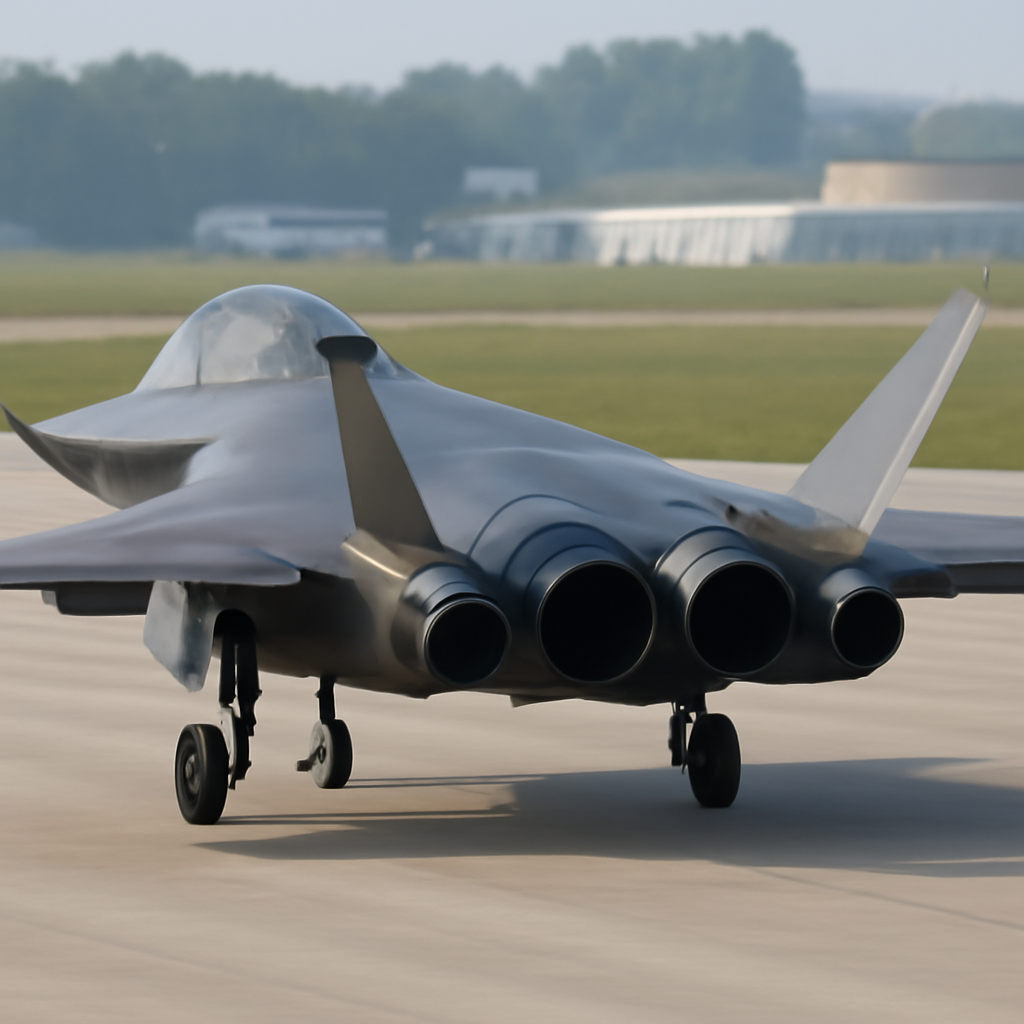
"No. 3 SES [Space Effects Squadron] will disrupt, degrade and deny hostile activity," said Harv Smyth.
No. 3 Space Effects Squadron: mission and posture
Announced at the UK Space Power Conference in London, the new No. 3 Space Effects Squadron (No. 3 SES) was presented by Harv Smyth, the UK Chief of the Air Staff, as a unit that will take on both offensive and defensive space missions. Smyth said the squadron will be run by "specialist personnel" and framed its creation as a deterrent: "No one wants a war in space. We are positioned to deter this," he said, while warning the UK is seeing "more and more irresponsible and provocative actions" from its enemies across the domain.
The timing of the announcement also came amid wider disclosures in the space domain: the source noted senior US military officials had recently acknowledged on-orbit "space control weapons capable of defending the joint force against hostile adversary action," a revelation that Smyth's remarks referenced as part of a shifting operational environment.
How No. 3 SES fits with No. 1 and No. 2 squadrons
No. 3 SES is an addition to an existing UK space squadron structure. The No. 1 Space Ops Squadron works alongside the National Space Operations Centre to track hazardous objects, and the No. 2 Space Warning Squadron was established to provide missile warning and space tracking capabilities. Smyth said planners are preparing more squadrons beyond No. 3, describing an expansion program that would build out Nos. 4, 5 and 6 and include a space tactics and training branch.

This site is the portfolio.
OSINTSights runs on Cloudflare Workers, D1, R2, and Vectorize, with an AI pipeline on Hetzner ARM. Nubivance designed, built, and operates it. We do the same for clients.
See what we buildDeep Space Advanced Radar Capability (DARC) as a cornerstone
The UK Ministry of Defence (MoD) describes the UK-US-Australia Deep Space Advanced Radar Capability (DARC) program as the "cornerstone" of Britain's capacity to detect and track items in Earth orbit, including satellites, space debris and asteroids. According to a MoD overview cited at the announcement, "The use of three sites for DARC (in the UK, US and Australia) will enable 360 degree coverage of the sky at all times of day and under any weather conditions."
Smyth indicated that future squadrons will include units "which will deliver the Deep Space Advanced Radar Capability," linking the radar program directly to the planned force structure.
Defence Investment Plan: funding, the new operations centre, and timelines
The squadron announcements sit alongside funding commitments in the UK Defence Investment Plan (DIP). The announcement described a planned "Space Defence function" that will be developed as part of a newly established Integrated Air, Space and Missile Defence Operations Centre — a future hub that is characterized as an upgrade to the UK's national air and missile defense operations center. The DIP sets a £400 million ($530 million) commitment to replace aging command-and-control systems and sensors, and it commits an "initial investment" of £40 million toward the modernized centre.
More broadly, the DIP allocates £3.2 billion in support of space capabilities over the next four years, split between £2.3 billion for satellite communications and £880 million for space-based Intelligence, Surveillance and Reconnaissance (ISR). From 2030 to 2035, the DIP plans a minimum of £9 billion on "new capabilities" for the space domain. Separately, the UK 2027–2035 national space strategy outlined an interagency spending plan of "more than" £7.8 billion out to 2030, a figure reported earlier in the month.
What this means for technologists, policymakers, and adversaries
- Technologists and security teams should track the roll‑out of DARC and the planned squadrons, since the MoD frames the three‑site DARC network as enabling continuous, all‑weather coverage — a capability that will affect space situational awareness, tracking of hazardous objects, and radar‑based sensing architectures.
- Policymakers and procurement leaders will need to manage the DIP's allocations: an initial £40 million to modernize the operations centre sits within a £400 million C2 modernization envelope, while £3.2 billion is earmarked for satcom and space ISR over four years and a minimum of £9 billion is planned for 2030–2035 to develop "new capabilities."
- Adversaries and threat actors were directly addressed in Smyth's language of deterrence: the stated intent to "disrupt, degrade and deny" hostile activity and the plan to build additional squadrons and a Space Defence function signpost a UK posture that aims to raise the operational cost of provocative actions in space.
The announcement places the UK on a path toward a layered, funded space force posture: a new operational squadron with offensive and defensive tasks, integration with existing No. 1 and No. 2 squadrons, a three‑site DARC program described as the "cornerstone" of detection and tracking, and a DIP that commits billions through the coming decade. Smyth said "we are planning more" squadrons and specified the forthcoming Integrated Air, Space and Missile Defence Operations Centre as the institutional home for a new Space Defence function — concrete next steps that will be visible as initial investments flow and the DARC sites and additional squadrons are developed and stood up.