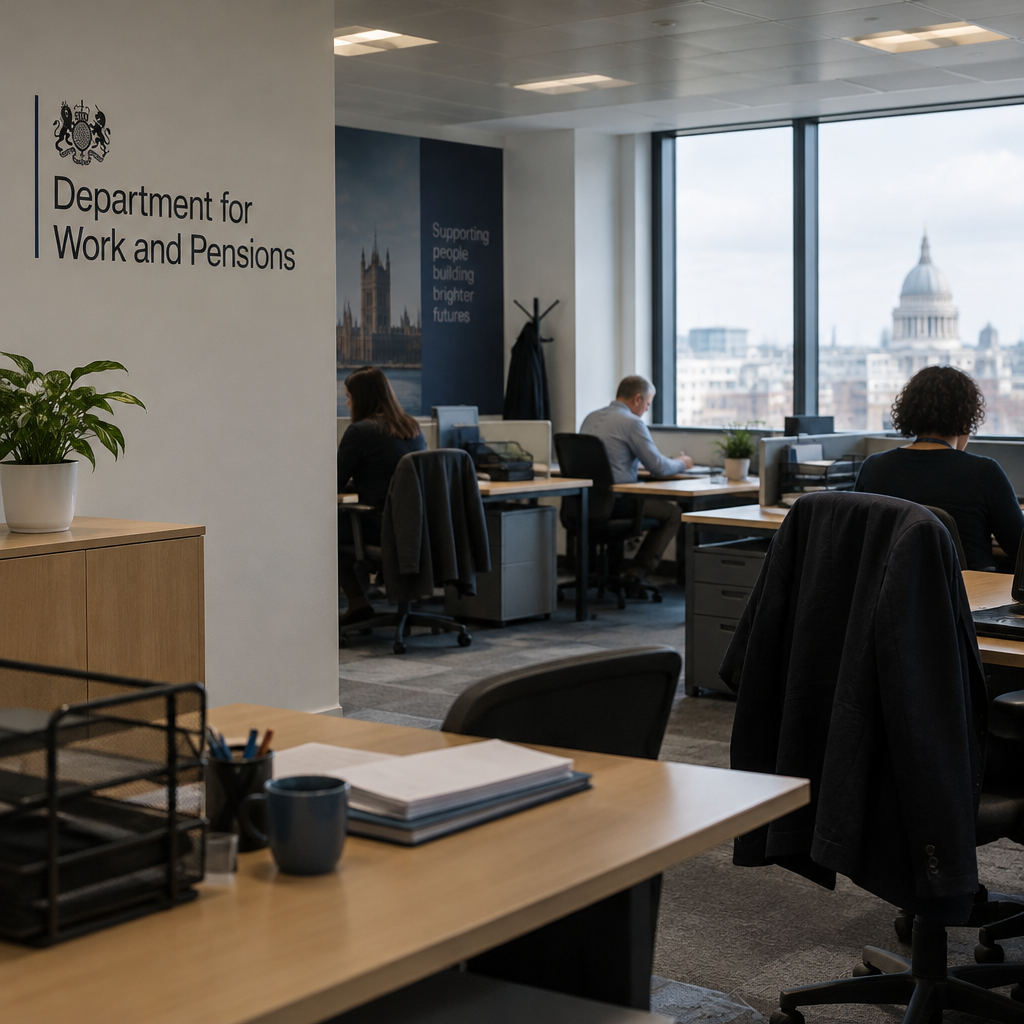
"We are working closely with the National Cyber Security Centre and Government Cyber Coordination Centre to investigate and to bring services back online as quickly as possible and to minimise any disruption," the Department for Work and Pensions said on November 27, after taking its online services offline following a cyber incident.
Department for Work and Pensions: services taken offline as a precaution
The Department for Work and Pensions (DWP) announced on the official gov.uk website on November 27 that online services had been taken offline “as a precaution.” The short statement made clear regular benefit and pension payments were not affected and “will be paid as normal,” but it warned that claimants could not sign into online accounts for services such as universal credit and state pensions while the outage persists.
Journalist Steven Swinford of The Times reported on X that the DWP took down all online services at around 21:00 GMT on November 26 and that, while routine payments would continue, people would be unable to make new claims while online services remained unavailable.
Payments continue, but access and new claims are disrupted
The DWP emphasised two practical points for the public: regular benefit and pension payments continue unhindered, and users should not respond to messages asking for bank details or for them to click on links. The department advised: “If an online service you need is unavailable, please try again later. As always, we will never message you to ask for bank details or ask you to click on links.”
Beyond the interruption to account sign-in and the inability to lodge new claims, the department has not provided further operational detail about the outage.

The cyber insurance questionnaire just landed. Now what?
SOC 2, HIPAA, insurance renewals - someone has to own security strategy. Nubivance provides fractional CISO leadership without the full-time salary.
Get a security leadCoordination with NCSC and Government Cyber Coordination Centre
The DWP said it is working “closely with the National Cyber Security Centre and Government Cyber Coordination Centre” to investigate the incident and restore services. No information has been released about how the incident occurred or any alleged perpetrators.
Context: recent warnings and earlier site protections
This outage comes against a backdrop of government warnings about the evolving cyber threat landscape. In October, the Secretary of State for Defence, Wes Streeting, told the public to be prepared for cyber incidents that could remove access to everyday services such as mains water, sewage, phones and the internet. In November, NCSC CEO Richard Horne warned that AI-powered malware is strongly expected to feature in ransomware attacks on the UK’s critical national infrastructure by 2028.
Separately, it was reported in October that a number of UK government websites had been taken offline in response to the ‘PHP2Shell’ vulnerabilities being disclosed ahead of planned security patches, explicitly to prevent exploitation of those services. The DWP incident follows those recent disruption-mitigation decisions.
Expert view — Trevor Dearing on “pulling the plug” and its limits
Trevor Dearing, senior director of critical infrastructure at Illumio, framed the DWP’s action in operational terms: public sector networks are “huge, interconnected and full of legacy systems, so when you can't be sure how far an attacker has moved, the only safe option is to pull the plug.” He warned, however, that repeatedly using shutdowns as the primary mitigation is not a sustainable long-term approach, especially for critical services like pensions and welfare on which millions depend.
What this means for claimants, technologists, and policymakers
- Claimants: Those relying on online accounts for access to universal credit and state pension services cannot sign in and cannot currently make new claims; however, the DWP has stated regular benefit and pension payments will continue to be paid as normal.
- Technologists and security teams: The DWP’s coordination with the National Cyber Security Centre and Government Cyber Coordination Centre signals a standard incident-response posture. Teams will be watching restoration timelines and any post-incident disclosures about cause and scope to inform mitigations, particularly where legacy systems or interconnected services are involved.
- Policymakers and service planners: The outage underscores tension between immediate protective measures—taking services offline—and the risk of disrupting critical social safety-net functions. Voices such as Trevor Dearing’s suggest pressure to develop alternatives to repeated shutdowns for ensuring continuity of essential public services.
The DWP has not released technical details, timelines for restoration, or attributions. For now, the department’s public guidance is to wait and to beware unsolicited requests for bank details. The coming days will test how quickly the DWP, supported by the National Cyber Security Centre and Government Cyber Coordination Centre, can bring services back online without creating new risks for the millions who depend on them.