Frontline fighter aircraft cost upwards of A$60,000 per flight hour — a figure that frames a simple but consequential question for the Royal Australian Air Force: how to generate more combat-ready pilots without simply buying more jets.
RAAF fighter training pipeline today
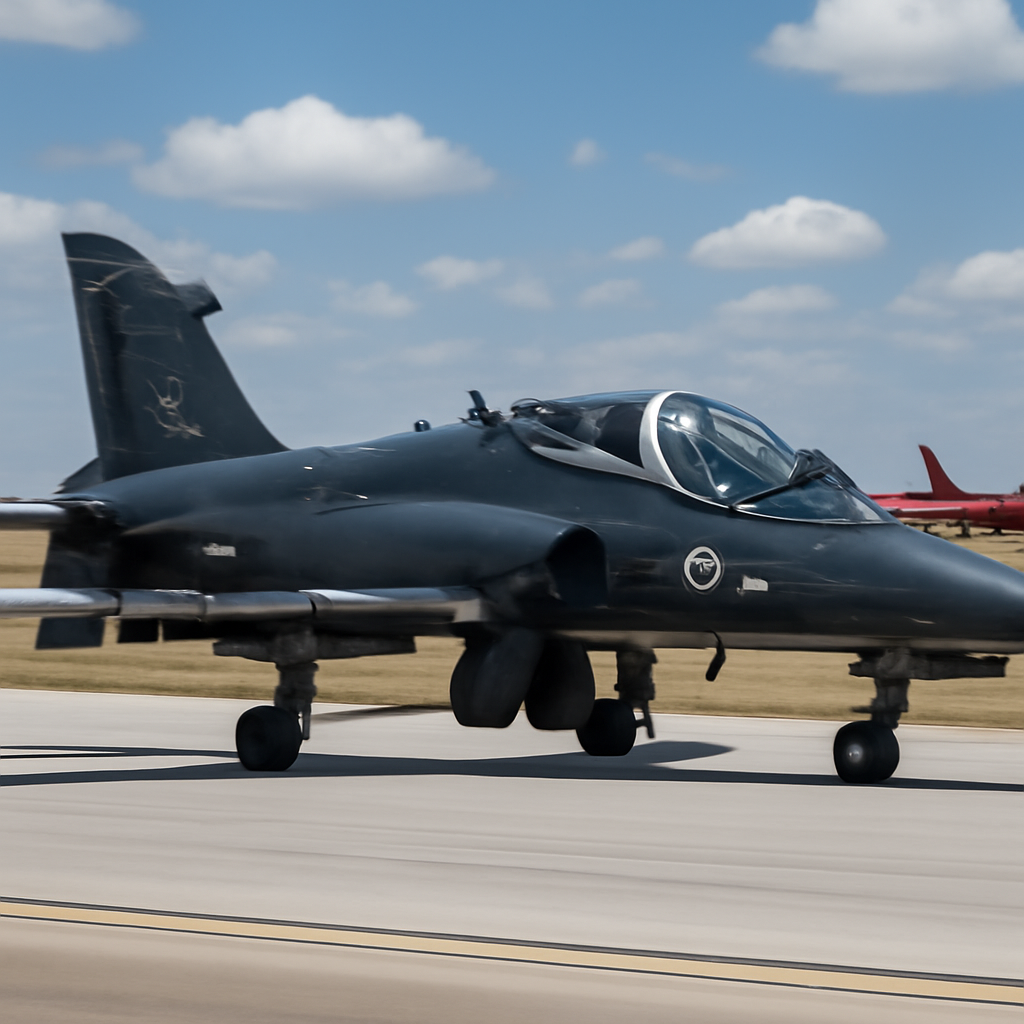
The Royal Australian Air Force currently moves students from basic and advanced flying training on the Pilatus PC-21 turboprop to lead‑in fighter training (LIFT) on the BAE Systems Hawk 127, then to operational conversion on frontline aircraft such as the Lockheed Martin F‑35A and the Boeing F/A‑18F. Defence’s Integrated Investment Program identifies a need for greater pilot generation capacity. The Hawk was selected for LIFT in 1996.
Why high‑performance turboprops now claim more of the syllabus
The author argues that changes in aircraft and training technology have narrowed the gap that once made jets essential at every stage. Modern combat aircraft place increasing weight on information processing, situational awareness and decision‑making under pressure; air combat has “shifted from a problem dominated by kinematics to one increasingly shaped by cognition,” the piece says. High‑performance turboprops now routinely cruise at more than 600 km/h (330 knots), climb faster than 20 metres per second (4,000 feet per minute), and roll at rates comparable to fighters.
Beyond raw performance, contemporary turboprops incorporate advanced avionics, embedded simulation, synthetic sensors and tactical scenarios generated within the cockpit. With these systems, students can learn to use radars, datalinks and weapons that the training aircraft does not carry, building the cognitive and behavioural patterns fighter pilots employ on operational jets before they arrive there. The author discloses: “I recognise these developments partly because I work for a company that manufactures high‑performance turboprop trainers.” The article also notes several manufacturers now operate in this market.

Audit-ready is a season. It shouldn't be.
Evidence in spreadsheets, controls drifting between audits, frameworks multiplying on flat headcount. Nubivance runs continuous compliance on Rapid7 Cyber GRC - SOC 2, HIPAA, ISO 27001, PCI, CMMC.
End the scrambleWhere jets still matter
The piece is explicit that turboprops are not a full replacement for jets. Certain training activities—particularly those involving high‑energy manoeuvring and some advanced air combat elements—benefit from jet performance. LIFT, however, also teaches tactics, mission management, formation responsibilities and weapons fundamentals. The author points out that while jets and turboprops approach surface features, missiles or other aircraft at different rates and ranges, mission design can scale those interactions so trainees spend comparable decision time in either platform.
Costs, maintenance and capacity trade‑offs
The economics of training drive the central argument. Frontline fighters cost upwards of A$60,000 per flight hour. Jet trainers are substantially cheaper at about A$20,000 per hour. Advanced turboprop trainers cost around A$5,000 per hour. Acquisition costs, the piece notes, track similarly. Turboprops generally spend less time in or awaiting maintenance, and that maintenance is cheaper.
Because instructors, aircraft and flying hours are finite resources, reallocating portions of the LIFT syllabus to turboprops could increase capacity: more flying for a given budget, fewer hours eaten from the Hawks’ operational lives, and more hands‑on control time for trainees. The author argues that greater flying exposure remains the most effective way to develop airmanship and proficiency.
International precedents and Project Air 6002
The article cites recent national examples. France replaced its former jet‑based training pipeline entirely with turboprops. Switzerland trains fighter pilots on turboprops and plans to transition to the F‑35 without a jet trainer. Those precedents are offered as evidence that a hybrid or turboprop‑heavy model can produce pilots for modern fighters.
As Defence considers its Future Lead‑In Fighter under project Air 6002, the author reframes the core procurement question: Australia does need a new fleet of jet trainers, but how much of fighter preparation genuinely requires jet performance? “Thirty years ago the answer was ‘most of it.’ Advances in simulation, training systems and turboprop aircraft performance suggest a different answer today,” the piece concludes.
What this means for defence planners, instructors and trainees
- Defence planners: Must weigh lifetime flying‑hour economics, Hawk airframe fatigue and the Integrated Investment Program’s call for more pilots when deciding the scale and role of any new jet trainer under Air 6002.
- Instructors and training commands: Will need curriculum redesign that assigns each learning outcome to the simplest aircraft that credibly delivers the training effect, and consider how embedded simulation in turboprops alters instructor roles.
- Trainees: Could gain more time on controls and earlier exposure to tactical systems through cockpit simulation, even if some high‑energy jet work remains reserved for later conversion stages.
The policy choice is therefore granular, not binary: reserve jets for tasks that require their unique performance, and use turboprops where cognitive and systems‑based training can be achieved more cheaply and more frequently. The next clear decision point for Australia is how Defence defines those tasks in Air 6002 and how much pilot preparation it assigns to turboprops versus jets.
Source: To lift capacity and save money, shift some fighter training to turboprops — The Strategist