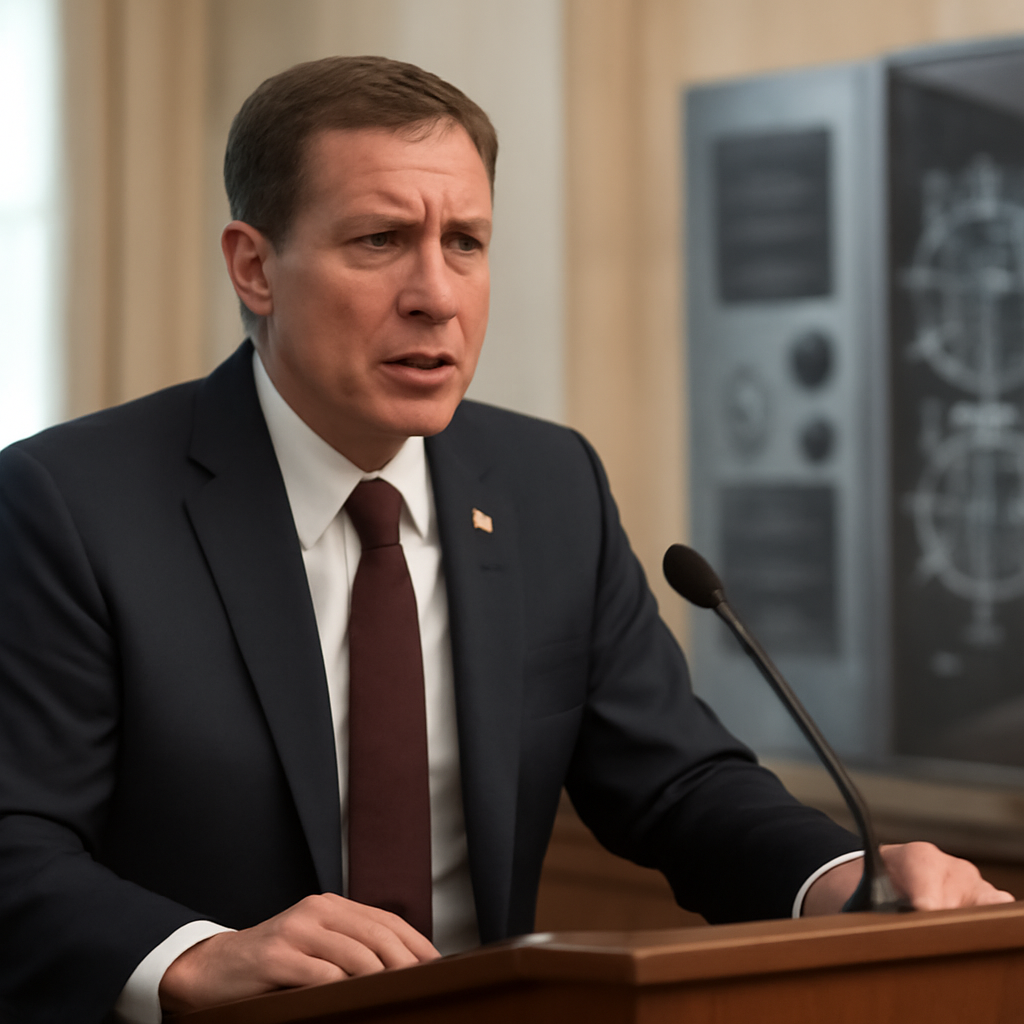
“How do we fix a system designed to amplify its own noise?” That is the blunt question circulating through the schedules and publicity for Bruce Schneier’s public appearances this autumn—and it points to a dilemma that is at once technical, civic, and political: can public conversation about artificial intelligence and democratic resilience be moved from diagnosis into practicable policy and community action? The calendar of talks—ranging from a congressional-facing briefing in Washington to a community technical session in Minnesota—offers a small test of that translation.
Schneier will join coauthor Nathan E. Sanders at the Rayburn House Office Building in Washington, DC at noon Eastern on November 17, 2025 for an event hosted by the POPVOX Foundation titled “AI and Congress: Practical Steps to Govern and Prepare.” A few days later, on Friday, November 21, 2025 at 2:00 PM Central, Schneier speaks at North Hennepin Community College in Brooklyn Park, Minnesota on “Integrity and Trustworthy AI,” an event cohosted by the college and The Twin Cities IEEE Computer Society. Those two dates bracket a set of other public-facing appearances earlier in the season that emphasize the authors’ effort to bring technical diagnosis into civic prescription .
Background matters. Schneier and Sanders’ recent work, Rewiring Democracy, frames many of these appearances: it argues that digital infrastructure, corporate incentives, and opaque data practices reshape public life and reconfigure trust in institutions. The events sequence—policy briefings, academic talks, public library signings, and community-level technical conversations—reflects a strategy of addressing distinct audiences with the same core problem and complementary solutions, from regulatory levers to grassroots literacy and engineering fixes .
Why these particular venues matter:
- Rayburn House Office Building, Washington, DC — A noon briefing at Rayburn places the discussion where staffers, committee members, and legislative aides can ask operational questions: which agencies would take the lead, how would proposed rules interact with existing statutes, and what resources will be required to implement oversight?
- North Hennepin Community College, Brooklyn Park, MN — A 2:00 PM presentation cohosted by an IEEE chapter situates “Integrity and Trustworthy AI” within a local, technical, and educational context: practical standards, curriculum implications, and community-oriented explanations for non-expert users.
- Other campus and civic spaces earlier in the season (Harvard’s Ash Center, Cambridge Public Library, Data & Society virtual events) demonstrate an intent to address policy, public, and research communities in sequence, widening the conversation’s reach .
From a technologist’s vantage, the events are opportunities to insist on technical clarity. Engineers and system designers will want precision on what “integrity” entails for machine-learning pipelines, data provenance, auditing tools, and fallback mechanisms. Questions likely to surface include: what specifications can meaningfully constrain misuse, which evaluation frameworks are trustworthy, and how to design systems that degrade gracefully under adversarial pressure.
Policymakers will look for practicable governance instruments. At Rayburn, the audience’s calculus is different: they must weigh enforceability, jurisdictional reach, and the trade-offs between regulation that protects civic information flows and rules that inadvertently freeze innovation or privilege incumbent platforms. Legislators and staff will press on questions of jurisdiction, funding, and statutory fit—how does “trustworthy AI” translate into rules that can survive oversight and judicial review?
For users—the students, librarians, local officials, and everyday citizens in Brooklyn Park and beyond—the imperative is translation. Events at community colleges and libraries ought to prioritize accessible explanations of risk, guidance for verifying information, and steps citizens can take to participate in governance: public comment, civic education, and tools for local resilience.
Adversaries—whether malicious technical actors or institutional actors that profit from opacity—face a different set of incentives. Public scrutiny, multi-audience briefings, and a record of recommendations raise the reputational and operational costs of stealth. But history shows that transparency alone does not deter all bad actors; it reshuffles the landscape, creating new vectors for exploitation unless governance and engineering proactively close gaps.
There are tensions worth naming. Technical solutions often require resources, and regulatory proposals can be blunt instruments. Civil-society actors worry that well-meaning rules may centralize control or create compliance burdens for smaller actors. Technologists urge that governance be informed by technical realities; policymakers insist that governance must be workable at scale. The venues and the range of audiences Schneier and Sanders have chosen reflect an awareness of those trade-offs and an attempt to make the debate plural, not merely high-level or purely technical .
What to watch for at these events: clarity about which institutions should hold responsibility for different classes of risk; concrete proposals for auditing and accountability that engineers can implement and legislators can fund; and an insistence on public-facing translation so that ordinary users can understand and influence the direction of governance. The stakes are practical: decisions made now about standards, procurement, and oversight will shape the incentives of platforms and the resilience of democratic information environments for years to come.
If the schedule tests a single hypothesis, it is this: that moving between halls of power and community rooms helps turn technocratic insight into civic action. That is a modest ambition—and a necessary one.
Will policymakers, technologists, and citizens align enough to turn prescriptions into durable practice, or will the system continue to amplify its own noise faster than institutions can adapt? The answer will be found as much in the questions asked at Rayburn and North Hennepin as in the answers offered there.
Source: https://www.schneier.com/blog/archives/2025/11/upcoming-speaking-engagements-50.html